
ReSound hearing aids review: Our audiologists’ top picks in 2026
With several prescription hearing aid models, advanced microphone systems, AI-powered sound processing, and technology aimed at recreating natural hearing, ReSound is a preferred brand among many audiologists.


We’re reader-supported. When you click on our chosen products, we may receive a commission. Learn more.
The 3 key takeaways
- Sensia is the newest ReSound hearing aid — Its advanced AI sound processing is designed to make speech easier to understand in background noise.
- ReSound offers options for a wide range of hearing needs — Our audiologists have their favorite models, but if you’re interested in ReSound, speak to your hearing care professional about your specific needs.
- Both tech-savvy and tech-wary users can enjoy them — While some models allow users to stream music and take phone calls, premium-level models scan the environment and automatically make changes rather than require the user to do it manually through the app.
Why trust audiologists.org?


The writers, editors and staff of audiologists.org know the value of accurate, trustworthy information when it comes to hearing health. Everything we create is reviewed, approved, and even written by licensed audiologists, guaranteeing that what you read is factual and science based.
How We Review Hearing Aids
Our methodology is built around four commitments to our readers:
Human-first evaluation: Our editors and reviewers assess products for everyday usability—not just feature lists.
Clinical guardrails: Licensed audiology review helps ensure our guidance aligns with appropriate use, realistic expectations, and consumer safety.
Verified buyer details: We verify pricing, trial/return periods, warranty terms, and support policies using primary sources and retailer/manufacturer documentation whenever available.
Ongoing updates: We refresh content to reflect new releases, discontinued models, pricing shifts, and updated policies.

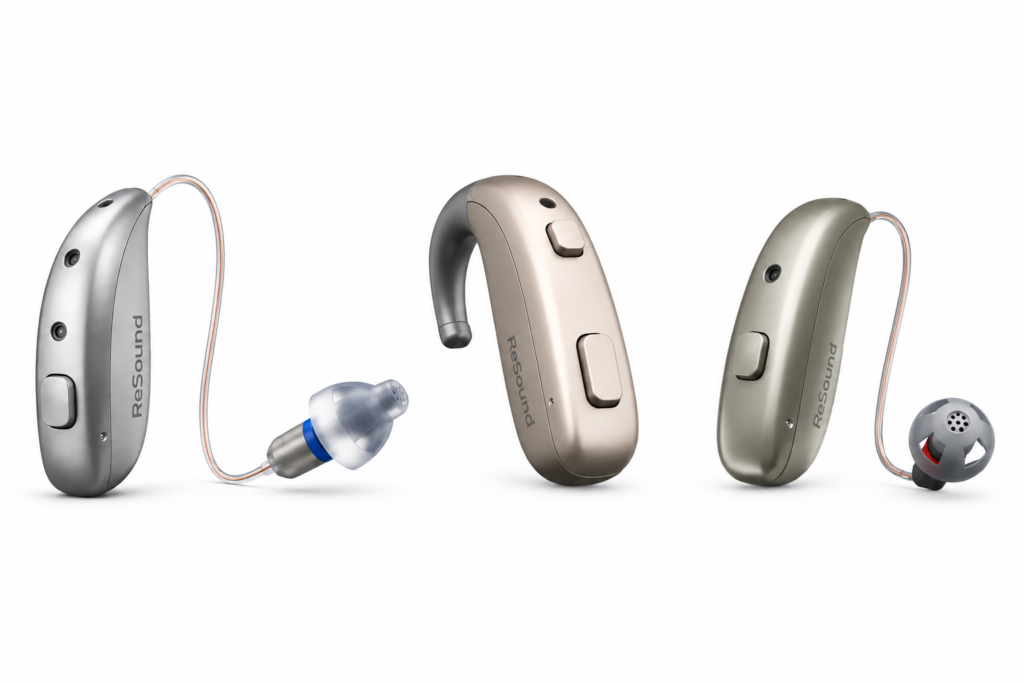
With several ReSound hearing aids to choose from, it can be hard to know where to start. ReSound’s current lineup includes Sensia, Vivia, Enzo IA, Savi, Nexia, Key, and ENZO Q. We also review older models, including OMNIA and LiNX Quattro.
ReSound hearing aids stand out for advanced sound processing and connectivity, including Bluetooth Low Energy (LE) Audio and Auracast on newer models. The main drawbacks are cost and access: They must be purchased and fitted through a hearing care professional. Overall, our audiologists consider ReSound a strong prescription option, especially for people who need help understanding speech in noisy places or want advanced wireless features.
In this ReSound hearing aids review, we’ll compare the brand’s current models, including their pros, cons, and standout features to help you narrow down which may fit your hearing needs and lifestyle.
ReSound hearing aids compared
ReSound hearing aids vary in their technology, styles, battery options, and the degrees of hearing loss they’re designed for. Here’s how the models in our review compare.
| Model | Best for | Style | Battery | Type of hearing loss | Price per pair* |
|---|---|---|---|---|---|
| ReSound Sensia | Premium Hearing in background noise | RIE/micro RIE | Rechargeable or disposable | Mild to profound | $2,798 |
| ReSound Vivia | AI-powered speech clarity in noise with a discreet design | microRIE, RIE | Rechargeable or disposable | Mild to profound | $3,198 |
| ReSound Enzo IA | Severe-to-profound hearing loss with advanced connectivity | Super Power BTE | Rechargeable | Severe to profound | $2,200-$4,000 |
| ReSound Savi | Value, comfort, and modern Bluetooth connectivity | miniRIE, ITC, CIC | Rechargeable or disposable | Mild to profound | $1,500-$3,000 |
| ReSound Nexia | Versatile style options and strong speech-in-noise performance | microRIE/RIE, BTE, Power BTE | Rechargeable or disposable | Mild to profound | $2,998 |
| ReSound OMNIA | Automatic listening adjustments for everyday environments | Power BTE | Re chargeable | Mild to profound | $2,200-$4,000 |
| ReSound Linx Quattro | Natural sound quality and reliable rechargeable performance | RIE, BTE | Rechargeable or disposable | Mild to profound | $2,200-$3,600 |
| ReSound Key | Budget-conscious users who want essential features and connectivity | RIE, BTE | Rechargeable or disposable | Mild to profound | $1,400-$2,200 |
| ReSound ENZO Q | Severe-to-profound hearing loss and bimodal Cochlear implant users | BTE | Disposable | Severe to profound | $3,000-$5,000 |
*Prices for prescription hearing aids vary by provider, technology level, location, and services included.
ReSound Sensia review
Best for background noise

ReSound Sensia
-
$2,798 per pair
-
Rechargeable or disposable
-
Mild to profound hearing loss
ReSound Sensia is ReSound’s newest premium hearing aid, designed to make conversations easier to follow in noisy and complex listening environments. Its Intelligent All-Around technology combines automatic environmental sensing, four-microphone beamforming, and DNN-based noise reduction to help bring speech forward while making competing noise less distracting.
Sensia is available in receiver-in-ear and custom in-ear styles, with rechargeable and disposable battery options. It also supports Bluetooth LE Audio and Auracast on compatible configurations and works with the ReSound Smart 3D app.
| Criteria | ReSound Sensia |
| Bluetooth | Bluetooth LE Audio and Auracast on compatible styles and devices |
| Styles | microRIE and RIE |
| Sound quality | Designed to make speech clearer and background noise less distracting while automatically adapting to the listening environment |
| Technology | Intelligent All-Around combines automatic environmental sensing, four-microphone beamforming, and DNN-based noise reduction |
| App | ReSound Smart 3D; supports sound controls, DNN noise-reduction adjustments, Auracast Assistant, battery information, and remote care |
What we like about the ReSound Sensia
- Advanced support for hearing in noise. Sensia combines environmental sensing, four synchronized microphones, and DNN-based noise reduction to automatically emphasize speech while reducing distracting background noise.
- Small, discreet design. ReSound says the rechargeable Sensia microRIE is the world’s smallest AI hearing aid, making it a strong option for people who want advanced technology in a less noticeable design.
- Automatic adjustments. Intelligent All-Around continuously monitors the listening environment and adjusts to changing sounds, reducing the need to manually switch programs.
- Up to 24 hours of rechargeable battery life. ReSound says its rechargeable Sensia models can provide up to 24 hours of use, including streaming.
- Modern connectivity. Sensia supports Bluetooth LE Audio and Auracast, with Auracast Assistant available through the ReSound Smart 3D app.
What we don’t like about the ReSound Sensia
- Some features vary by style. Bluetooth LE Audio is available across most Sensia styles, but the custom CIC doesn’t support it, and some hands-free calling features are also limited by style and smartphone compatibility.
- Premium technology may be more than some people need. If you spend most of your time in relatively quiet listening environments, ask your audiologist whether a less advanced ReSound model could meet your needs for less.
What our audiologists say about ReSound Sensia
Dr. Ruth Reisman says she likes Sensia’s combination of strong speech-in-noise technology, automatic environmental adaptation, and a very discreet design. “For patients with active lifestyles and challenging listening environments, those features can make a meaningful difference,” she adds.
For patients considering Sensia CROS, Dr. Jessica Hinson, AuD, particularly likes the ability to adjust the CROS balance through ReSound’s app. “Related to the CROS specifically, I love that the easy-to-use app allows for CROS volume adjustments,” she says.
Who are ReSound Sensia hearing aids ideal for?
Sensia may be a strong option for people who frequently struggle to follow conversations in restaurants, meetings, social gatherings, and other noisy environments. Dr. Reisman recommends Sensia for active patients who move between quiet and complex listening environments often and want the hearing aids to make those transitions automatically.
Sensia is also an option for people with single-sided hearing loss who need a CROS or BiCROS hearing system. ReSound offers a rechargeable microRIE CROS transmitter that pairs with compatible Sensia hearing aids and allows users to adjust the CROS balance through the ReSound Smart 3D app.
ReSound Vivia review
Best for discreet AI hearing aids

ReSound Vivia
-
$3,198 per pair
-
Rechargeable or disposable
-
Mild to profound hearing loss
The ReSound Vivia, available in technology levels 9, 7, 5, and 4, is a small, AI-powered hearing aid designed to improve speech understanding in background noise. Vivia uses ReSound’s renowned sound processing technology, while the premium Vivia 9 adds a dedicated Deep Neural Network (DNN) chip designed to separate speech from competing sounds.
Like other premium ReSound hearing aids, Vivia analyzes the listening environment and adjusts its settings as sounds change. This can reduce the need to switch programs manually throughout the day.
| Criteria | ReSound Vivia |
| Bluetooth | Bluetooth LE Audio and Auracast; streaming and calling features depend on the compatible smartphone or device |
| Styles | microRIE and RIE |
| Sound quality | Designed for speech clarity in background noise while maintaining awareness of surrounding sounds |
| Technology | Vivia 9 uses a dedicated DNN chip and Intelligent Focus to help separate speech from competing sounds |
| App | ReSound Smart 3D; supports sound adjustments, battery information, remote care, and Auracast Assistant on compatible devices |
What we like about the ReSound Vivia
- Strong support in background noise. The Vivia family is designed to improve speech understanding in noisy environments. The premium Vivia 9 uses a dedicated DNN chip to help separate speech from competing sounds.
- Small, discreet design. Vivia is available in ReSound’s compact micro receiver-in-ear (microRIE) style, which fits behind the ear.
- Bluetooth LE Audio compatibility. Vivia supports Bluetooth Low Energy (LE) Audio for streaming and hands-free calls with compatible devices.
- Easy access to Auracast broadcasts. The Auracast Assistant in the ReSound Smart 3D app helps users find and connect to compatible public and private Auracast audio streams.
- Rechargeable and disposable battery options. Depending on the style, Vivia is available with a rechargeable battery or a disposable battery.
What we don’t like about the ReSound Vivia
- Premium price. Like many prescription hearing aids, Vivia is expensive. A pair typically costs several thousand dollars, depending on the technology level, provider, and services included.
- The most advanced AI features aren’t available at every level. If the DNN-based noise processing is your main reason for choosing Vivia, ask your audiologist which technology level includes the features you want.
What our audiologists say about ReSound Vivia
Dr. Jessica Hinson says, “the ReSound Vivia performs exceptionally well in background noise and other complex listening environments. It offers four technology levels to fit different budgets and numerous receiver options to accommodate a wide range of hearing losses, including ReSound’s unique M&RIE (Microphone & Receiver-In-Ear) receiver, which places a microphone inside the ear for better sound localization while reducing wind and hair noise. The premium Vivia 9 also features a dedicated AI chip to further enhance speech clarity.”
Dr. Ruth Reisman likes that ReSound offers a well rounded ecosystem for people with hearing loss, including advanced hearing aids, wireless accessories, intuitive smartphone controls, and remote support options. “I also appreciate features that address real-world listening needs, including speech in noise, tinnitus management, and connectivity across everyday environments,” she says.
Who are ReSound Vivia hearing aids ideal for?
Vivia is a strong option for people who want AI-powered speech-in-noise technology in a small, discreet receiver-in-ear design. It may also appeal to people who want advanced wireless streaming through Bluetooth LE Audio and Auracast.
If you don’t spend much time in challenging listening environments, you may not need Vivia’s premium features. A lower-cost ReSound model, such as Savi or Key, may offer enough support for your needs. If hearing in background noise is your biggest concern and you want ReSound’s newest technology, compare Vivia with the equally small Sensia before deciding.
ReSound Enzo IA review
Best for severe-to-profound hearing loss

ReSound Enzo IA
-
$2,200–$4,000 per pair
-
Rechargeable
-
Severe to profound hearing loss
ReSound Enzo IA is our top ReSound pick for people with severe to profound hearing loss who need more amplification than a standard hearing aid can provide. It is a rechargeable Super Power behind-the-ear (BTE) hearing aid designed to make speech easier to hear without blocking out important sounds around you.
Enzo IA also brings several of ReSound’s newer features to its high-powered hearing aid line. These include technology for managing feedback and background noise, Bluetooth LE Audio, Auracast, and the ReSound Smart 3D app.
| Criteria | ReSound Enzo IA |
| Bluetooth | Bluetooth LE Audio and Auracast; MultiConnect can pair the hearing aids with two compatible smart devices |
| Styles | Super Power BTE |
| Sound quality | Designed to provide powerful amplification while supporting speech understanding in challenging listening environments |
| Technology | Directional sound processing and feedback management designed for the needs of people with severe to profound hearing loss |
| App | ReSound Smart 3D; supports sound adjustments, remote care, and Auracast Assistant on compatible devices |
What we like about the ReSound Enzo IA
- Built for severe to profound hearing loss. Enzo IA is designed specifically for people who need powerful amplification rather than adapting a standard hearing aid to more advanced hearing loss.
- Rechargeable battery. One full charge provides up to 28 hours of use, according to ReSound. Battery life falls to about 20 hours when streaming is used 50% of the time.
- Feedback management. Powerful hearing aids can be more prone to feedback, or the whistling sound that sometimes comes from a hearing aid. Enzo IA uses ReSound’s feedback-management technology to help control it.
- Support for hearing in noise. Its directional microphone technology can focus more closely on speech in front of you when background sounds make conversation difficult.
- Modern connectivity. Enzo IA supports Bluetooth LE Audio and Auracast. It can also pair with two compatible smart devices at once.
What we don’t like about the ReSound Enzo IA
- Only available as a BTE hearing aid. Enzo IA doesn’t offer the same range of discreet in-ear or receiver-in-ear styles as Savi or Nexia.
- Some connectivity features depend on your device. Bluetooth LE Audio and hands-free calling aren’t available with every smartphone, so check compatibility before choosing Enzo IA for its wireless features.
What our audiologists say about ReSound Enzo IA
Dr. Ruth Reisman, AuD, recommends ReSound Enzo IA for patients with severe to profound hearing loss who need powerful amplification, improved speech understanding in noisy environments, and reliable feedback management. She also considers it a strong option for patients who want modern wireless connectivity and for appropriate bimodal users who wear a hearing aid in one ear and a cochlear implant in the other.
Who are ReSound Enzo IA hearing aids ideal for?
Enzo IA is designed for people with severe-to-profound hearing loss who need more powerful amplification than a standard hearing aid can provide. It may be particularly useful for people who also struggle to understand speech in noise or experience feedback with high-powered hearing aids.
People with milder hearing loss might want to consider Sensia, Vivia, Savi, Nexia, or Key instead. An audiologist can use your hearing test to determine how much amplification you need.
ReSound Savi review
Best value

ReSound Savi
-
$1,500–$3,000
-
Rechargeable or disposable
-
Mild to profound hearing loss
ReSound Savi is our value pick because it combines many of ReSound’s newer connectivity features with a lower typical price than premium models. It is available for mild to profound hearing loss and comes in small receiver-in-ear and custom styles.
Savi supports Bluetooth LE Audio and Auracast on compatible styles but doesn’t include Vivia’s premium DNN-based Intelligent Focus feature. That makes Savi worth considering if connectivity, comfort, and everyday speech clarity matter more to you than ReSound’s most advanced AI processing.
| Criteria | ReSound Savi |
| Bluetooth | Bluetooth LE Audio and Auracast on compatible styles; hands-free calling isn’t available with the ITC and CIC styles |
| Styles | miniRIE, RIE, ITC, and CIC |
| Sound quality | Designed for clear everyday speech and listening across changing environments |
| Technology | Automatic sound processing for everyday listening; doesn’t include Vivia 9’s dedicated DNN chip |
| App | ReSound Smart 3D; supports sound adjustments, remote care, and Auracast Assistant on compatible devices |
What we like about the ReSound Savi
- Good value within the ReSound lineup. Savi offers newer ReSound technology without requiring you to step up to a premium model such as Sensia or Vivia.
- Several style choices. Savi is available in receiver-in-ear and custom in-the-ear options, giving users more choices for fit and appearance.
- Rechargeable and disposable batteries. The rechargeable miniRIE offers all-day battery life, while the RIE 61 uses a size 312 disposable battery.
- Strong connectivity. Compatible Savi styles support Bluetooth LE Audio and Auracast, including access to broadcasts through the ReSound Smart 3D app.
- Built for everyday listening. Savi automatically adapts to different listening situations to help improve speech clarity while maintaining access to surrounding sounds.
What we don’t like about the ReSound Savi
- It doesn’t have ReSound’s most advanced AI technology. People who frequently struggle with speech in difficult background noise may want to compare Savi with Sensia or Vivia.
- Features vary by style. Not every Savi design offers the same wireless features. For example, some connectivity and hands-free calling features aren’t available on its smallest custom styles.
What our audiologists say about ReSound Savi
Dr. Ruth Reisman, AuD, says ReSound Savi is a strong option for patients with mild-to-moderate hearing loss who primarily communicate in quiet or moderately noisy environments and want reliable prescription amplification at a more accessible price point.
“For patients with significant speech-in-noise difficulty or demanding listening environments, the additional speech-in-noise technology in Sensia or Vivia may justify the higher cost,” she says. “Otherwise, Savi can provide excellent value without paying for advanced features the patient may not routinely need.”
Who are ReSound Savi hearing aids ideal for?
Savi may be a good fit for people with mild-to-moderate hearing loss who spend most of their time in quiet or moderately noisy environments and want prescription hearing aids without paying for ReSound’s most advanced speech-in-noise technology. If background noise is one of your biggest challenges, Sensia or Vivia may be worth considering instead.
ReSound Nexia review
Best for style options
ReSound Nexia
-
$2,998 per pair
-
Rechargeable or disposable
-
Mild to profound hearing loss
ReSound Nexia stands out for its range of styles, making it worth considering if fit, size, or appearance is a priority. Options range from receiver-in-ear (RIE) devices to custom hearing aids that sit partly or completely inside the ear.
Nexia also offers technology designed to improve speech understanding in noisy places, along with Bluetooth Low Energy (LE) Audio and Auracast on compatible models. Its rechargeable microRIE provides up to 24 hours of use on one charge, depending on streaming.
While Sensia is now our preferred ReSound option for people whose main concern is background noise, Nexia remains worth considering if you want more choices in hearing aid styles.
| Criteria | ReSound Nexia |
| Bluetooth | Bluetooth LE Audio and Auracast on compatible models; available features depend on the hearing aid and connected device |
| Styles | microRIE, RIE, BTE, and custom in-ear styles |
| Sound quality | Designed for speech clarity and hearing in background noise |
| Technology | Directional sound processing and a Hear in Noise program; doesn’t include Vivia 9’s dedicated DNN chip |
| App | ReSound Smart 3D; supports personalized sound controls, the Hear in Noise program, and remote assistance |
What we like about the ReSound Nexia
- Wide range of styles. Nexia offers behind-the-ear, receiver-in-ear, and custom in-ear options for different preferences and fitting needs.
- Good speech clarity. Nexia is designed to help make speech easier to understand, including in noisy listening situations.
- Modern connectivity. Compatible Nexia models support Bluetooth LE Audio and Auracast for streaming from supported devices and broadcasts.
- Rechargeable and disposable options. Battery choices vary by style, giving you more flexibility than hearing aids that are only rechargeable.
What we don’t like about the ReSound Nexia
- People who frequently struggle in challenging background noise may benefit more from one of ReSound’s newer premium models.
- Features vary by model and technology level. Not every Nexia style offers the same battery, connectivity, or feature set.
What our audiologist says
Dr. Reisman, AuD, says ReSound Nexia hearing aids are a strong choice because they provide clear, natural sound quality, effective speech-in-noise support, advanced connectivity, and flexible programming across a broad range of hearing losses. “An additional clinical benefit is their compatibility with select Cochlear implant processors, which can provide a more integrated bimodal listening experience for patients who use a hearing aid in one ear and a cochlear implant in the other,” she adds.
Dr. Jessica Hinson, AuD views ReSound’s Nexia line very highly, saying they are quality products that produce excellent results. With durable hearing aids that are easy to manage and simple to charge, these devices are incredibly user-friendly.
Dr. Hinson appreciates ReSound’s app and the fact that users can make adjustments on their own from the comfort of their homes.

Dr. Ruth Reisman performs an evaluation of the ReSound Nexia on a Verifit 2 test box.
Who are ReSound Nexia hearing aids ideal for?
These devices are a good prescription choice for those who are tech-savvy, want modern connectivity, and may benefit from a wide variety of hearing aid types and styles. The ReSound Nexia provides options for people on the go and those who need to hear well in noisy environments.
ReSound Omnia review
Best for automatic adjustments

ReSound Omnia
-
$2,200-$4,000 per pair
-
Rechargeable or disposable
-
Mild to profound hearing loss
ReSound OMNIA is an older premium ReSound hearing aid designed to automatically adjust as your listening environment changes. This can reduce the need to manually switch programs as you move between quiet conversations and noisier places.
OMNIA may appeal to people who prefer not needing to make manual adjustments, as well as tech-savvy individuals who are able to fine-tune their settings through the ReSound Smart 3D app.
| Criteria | ReSound OMNIA |
| Bluetooth | Direct streaming with compatible iOS and Android devices; doesn’t support the newer Auracast technology found in Vivia, Savi, Enzo IA, and Nexia |
| Styles | RIE, BTE, and custom in-ear styles |
| Sound quality | Designed to automatically adjust to changing environments and support speech understanding in noise |
| Technology | Automatic environmental sound processing and directional microphone technology; doesn’t include Vivia 9’s dedicated DNN chip |
| App | ReSound Smart 3D; supports sound adjustments and remote fine-tuning on compatible devices |
What we like about the ReSound OMNIA
- Automatic adjustments. OMNIA can respond to changes in your listening environment without requiring frequent manual program changes.
- Options for different hearing needs. The OMNIA family includes several styles and technology levels for mild to profound hearing loss.
- Streaming capabilities. Compatible OMNIA models can stream audio from supported smartphones and other devices.
- ReSound Smart 3D app support. Users can make certain listening adjustments through ReSound’s smartphone app.
What we don’t like about the ReSound OMNIA
- It’s an older generation. People buying new hearing aids should compare OMNIA with newer models before deciding.
- Some newer connectivity is missing. OMNIA predates ReSound’s Bluetooth LE Audio and Auracast hearing aids.
- Features vary by model. Battery type, style, and technology features differ across the OMNIA family.
What our audiologist says
Dr. Reisman, AuD, says “ReSound OMNIA is another strong option for patients who struggle in background noise, offering effective directional processing while maintaining a natural, open sound quality and good environmental awareness.”
Dr. Jessica Hinson, AuD says that users who love technology will also enjoy these hearing aids since they can make a ton of changes in the smartphone app to optimize listening.
According to Dr. Hinson, “Patients who struggle in reverberant rooms like churches or business meetings, those who struggle in spaces with a lot of background noise, such as restaurants and shopping centers, and those who need help with one-on-one conversations will all benefit from this product because each person’s hearing aid is programmed differently and specifically for their [hearing] loss.”
Who are ReSound OMNIA hearing aids ideal for?
Dr. Reisman says ReSound OMNIA is ideal for active adults with mild-to-severe hearing loss who have particular difficulty understanding speech in background noise and want a natural, comfortable sound quality with strong connectivity. “It is also an excellent consideration for patients using, or potentially transitioning to, a Cochlear implant, because of its bimodal compatibility,” she says.
OMNIA may make sense for someone who is already using the model successfully or can purchase it for substantially less than a newer ReSound hearing aid. New buyers should also compare it with Sensia, Vivia, Savi, and Nexia, which offer newer technology and connectivity.
ReSound LiNX Quattro review
Best for natural sound

ReSound LiNX Quattro
-
$2,200-$3,600 per pair
-
Rechargeable or disposable
-
Mild to profound hearing loss
ReSound LiNX Quattro hearing aids are premium-level devices and perfect for those looking for a more natural hearing experience. ReSound has a proprietary custom device called the “mic-in-helix,” which is available in the LiNX Quattro line.
This kind of device allows for the separation of the microphone and receiver to reduce feedback in custom devices. Most importantly, the mic-in-helix device attempts to restore the acoustic benefits of the pinna or the outer ear, which can make for a more natural listening experience.
| Criteria | ReSound LiNX Quattro |
| Bluetooth | Direct streaming from compatible iOS and Android devices; doesn’t support Bluetooth LE Audio or Auracast |
| Styles | RIE, BTE, and custom in-ear styles, including an MIH option |
| Sound quality | Designed for clear, natural sound, with select styles using microphone placement in the outer ear to preserve natural sound cues |
| Technology | Wide Dynamic Range and select microphone-in-helix (MIH) designs; predates ReSound’s newer DNN-based processing |
| App | ReSound Smart 3D; supports sound personalization and remote-care features |
What we like about the ReSound LiNX Quattro
- Natural sound positioning. The MIH option uses the shape of the outer ear to help preserve natural sound-location cues.
- Rechargeable options. Select LiNX Quattro models offer rechargeable batteries and a portable charging case with up to 30 hours of battery use after one charge.
- Direct streaming. Compatible models can stream audio from supported smartphones.
- Remote adjustments. ReSound’s remote-care tools allow a hearing care professional to make some adjustments without an office visit.
What we don’t like about the ReSound LiNX Quattro
- It’s an older ReSound generation. New buyers now have access to models with newer sound processing and connectivity.
- It doesn’t offer ReSound’s newest wireless technology. LiNX Quattro predates Bluetooth LE Audio and Auracast support.
- Compatibility varies. Smartphone streaming and other wireless features depend on the device you use.
What our audiologist says
Dr. Ruth Reisman, AuD says, “I’ve found LiNX Quattro to be a dependable device with good overall sound quality and connectivity, although it is now an older platform compared with newer ReSound models such as Nexia, Vivia, and Sensia. For patients already doing well with Quattro, I would not necessarily recommend changing devices solely because newer technology is available, but for a new fitting I would generally compare it with the current ReSound platforms.”
Who are ReSound LiNX Quattro hearing aids ideal for?
LiNX Quattro may be a good fit for existing users who are happy with their hearing aids and don’t need the latest ReSound technology. It offers options for a range of hearing needs, along with rechargeable models and Bluetooth connectivity.
If you’re buying new hearing aids, it’s worth comparing LiNX Quattro with ReSound’s newer models, particularly if Bluetooth LE Audio, Auracast, or newer speech-in-noise processing is important to you.
ReSound Key review
Best budget option

ReSound Key
-
$1,400-$2,200 per pair
-
Rechargeable
-
Mild to profound hearing loss
ReSound Key is our budget pick for people who want the same high standards as the brand’s other hearing aids at a more affordable price point. With varying styles to choose from, these rechargeable hearing aids work quite well with the company’s app, where users can customize their settings.
Key is best suited to relatively quiet or moderately noisy listening environments. If understanding speech in busy restaurants, gatherings, or other challenging environments is a major concern, Sensia or Vivia offers more advanced speech-in-noise technology.
| Criteria | ReSound Key |
| Bluetooth | Direct streaming on compatible wireless models; doesn’t support Bluetooth LE Audio or Auracast |
| Styles | RIE, BTE, and custom in-ear styles |
| Sound quality | Designed for clear everyday listening, with less advanced support in difficult background noise than ReSound’s premium models |
| Technology | ReSound’s essential sound-processing technology; doesn’t include Vivia 9’s dedicated DNN processing |
| App | ReSound Smart 3D on compatible models; supports sound adjustments and remote fine-tuning |
What we like about the ReSound Key
- Lower price. Key gives budget-conscious buyers access to ReSound’s prescription fitting and core sound-processing technology for less than its premium models.
- Several styles. The Key family includes receiver-in-ear, behind-the-ear, and custom options for different fitting needs.
- ReSound Smart 3D support. Compatible Key models work with ReSound’s app for adjustments and other hearing aid controls.
- Rechargeable and disposable options. Battery type varies by style, allowing you to choose the option that works best for your routine.
What we don’t like about the ReSound Key
- Less advanced in background noise. Key doesn’t offer the same speech-in-noise technology as premium ReSound models such as Sensia and Vivia.
- It’s an older platform. Savi may be a better value for some buyers who want newer connectivity and technology without moving up to a premium ReSound model.
- Features vary by style and technology level. Ask your audiologist which features are included in the specific Key model you’re considering.
What our audiologist says
Dr. Ruth Reisman, AuD says that ReSound Key is a practical option for patients with mild-to-severe hearing loss who want dependable amplification, comfortable sound quality, and essential connectivity without the cost of ReSound’s premium technology. “It is especially well suited for patients with relatively straightforward listening needs who spend most of their time in quiet to moderately complex environments,” she says.
Dr. Jessica Hinson, AuD appreciates ReSound’s less-expensive option for patients with stricter budgets. She notes that this device still provides quality features from ReSound and works well for speech clarity in quiet and moderate noise.
However, Dr. Hinson would suggest something with improved technology for those seeking excellent support in background noise. More benefits include the fact that this model is small, easy to charge, and works well with the user-friendly app.
Who are ReSound Key hearing aids ideal for?
The Key is ideal for those with a lower budget who still want a quality hearing aid that’s customized to their level of hearing loss. Users with mild to profound loss who only struggle mildly with noise will be best suited for this model. If your budget allows, compare Key with Savi before buying, since Savi offers newer technology and connectivity. You can also see our best affordable hearing aids for more options.
ReSound ENZO Q review
Best older power option

ReSound ENZO Q
-
$3,000-$5,000 per pair
-
Disposable
-
Severe to profound hearing loss
Why we picked ReSound ENZO Q
ReSound ENZO Q is an older power hearing aid designed specifically for people with severe to profound hearing loss. It comes in two behind-the-ear (BTE) hearing aid styles: a High Power model and a Super Power model for people who need greater amplification.
ENZO Q remains part of ReSound’s hearing aid lineup, but people buying new hearing aids should also compare it with Enzo IA. Enzo IA is ReSound’s newer Super Power option and adds a rechargeable battery, Bluetooth Low Energy (LE) Audio, Auracast, and newer sound-processing technology.
| Criteria | ReSound ENZO Q |
| Bluetooth | Direct streaming from compatible iOS and Android devices; doesn’t support Bluetooth LE Audio or Auracast |
| Styles | High Power BTE 88 and Super Power BTE 98 |
| Sound quality | Designed to provide powerful amplification with clear, comfortable sound for severe to profound hearing loss |
| Technology | Automatic environmental adjustments, noise management, and feedback management for severe to profound hearing loss |
| App | ReSound Smart 3D; supports program and sound adjustments, Find My Hearing Aids, tinnitus controls, and remote care |
What we like about the ReSound ENZO Q
- It’s made for severe to profound hearing loss. ENZO Q provides the higher levels of amplification some people need when standard hearing aids aren’t powerful enough.
- There are two power options. The High Power BTE 88 uses a size 13 battery, while the Super Power BTE 98 uses a larger size 675 battery.
- It supports direct streaming. ENZO Q can stream audio directly from compatible iOS and Android devices, so you can hear phone calls, music, and other audio through your hearing aids.
- It has a built-in telecoil. The telecoil can connect to compatible hearing loop systems in places such as theaters, lecture halls, and other public venues.
- It can work with compatible Cochlear implants. ReSound and Cochlear share wireless technology that allows compatible devices to stream audio to a ReSound hearing aid and Cochlear implant at the same time.
What we don’t like about the ReSound ENZO Q
- It’s an older ReSound model. Enzo IA offers newer sound processing and connectivity for people with severe to profound hearing loss.
- There isn’t a rechargeable option. People who prefer rechargeable hearing aids should consider other ReSound models or our guide to the best rechargeable hearing aids.
- It doesn’t support Bluetooth LE Audio or Auracast. ENZO Q supports direct streaming with compatible smartphones, but ReSound’s newer Bluetooth LE Audio and Auracast technology is limited to newer models such as Sensia, Vivia, Enzo IA, Savi, and Nexia.
- Style choices are limited. ENZO Q is available as a BTE hearing aid rather than the smaller receiver-in-ear or custom styles available elsewhere in ReSound’s lineup.
What our audiologists say
Dr. Reisman says, “I would still consider ReSound ENZO Q for patients with severe-to-profound hearing loss who need reliable high-power amplification and may benefit from a more cost-conscious option. However, for a new fitting, I would generally favor ENZO IA when budget allows, particularly for patients who need the latest speech-in-noise processing, connectivity, and overall performance in complex listening environments.”
Who are ReSound ENZO Q hearing aids ideal for?
ENZO Q may still be worth considering for people with severe to profound hearing loss who need powerful amplification and prefer disposable batteries. Its telecoil may also be useful if you regularly use hearing loop systems.
However, most people comparing ReSound’s power hearing aids should also ask their audiologist about Enzo IA. It offers newer speech-in-noise technology, rechargeable batteries, Bluetooth LE Audio, and Auracast while serving the same broad severe-to-profound hearing loss population.
Custom ReSound hearing aids

Custom ReSound hearing aids
-
$2,000-$7,000/pair
-
Rechargeable or disposable
-
Mild to profound hearing loss
If you are a candidate for custom ReSound hearing aids, they can offer a comfortable, personalized fit and more natural sound.
Like other prescription hearing aids, custom ReSound hearing aids are likely to run you $1,000 to $3,500 per device, but they are designed specifically to fit the shape of your ear and your hearing needs and preferences.
ReSound offers custom hearing aids in completely-in-canal (CIC), in-the-canal (ITC), and in-the-ear (ITE) styles. Depending on the style, options include rechargeable batteries, Bluetooth connectivity, and direct streaming from compatible smartphones.
What our audiologists say about the ReSound custom hearing aids
Dr. Ruth Reisman, AuD says ReSound is a highly reputable company, and she does not hesitate to recommend their products to her patients. Owned by GN, a well-known audio device company, ReSound was among the first to market telehealth for hearing aid users.
Dr. Reisman believes ReSound’s custom hearing aids are both reliable and innovative.
Who are ReSound custom hearing aids ideal for?
According to Dr. Reisman, there are several benefits to custom hearing aids. She says the device is easy to insert into the ear, even for some people with dexterity challenges.
She also says the microphones sit in the ear, allowing for a more natural sound. Many custom ReSound devices are rechargeable and come with Bluetooth capabilities.
The ReSound custom hearing aids are compatible with Android and iPhone devices, and some models* pair with cochlear implants, allowing for two modes of hearing assistance.
*ReSound Sensia Bimodal, ReSound Enzo IA Bimodal, ReSound Nexia, ReSound OMNIA, ReSound LiNX Quattro, and ReSound ENZO Q all pair with cochlear implants.
Our verdict on ReSound hearing aids
ReSound is worth considering if you want professionally fitted hearing aids with strong sound processing and wireless connectivity. Its lineup covers a wide range of hearing needs. Newer models such as Sensia, Vivia, Savi, Nexia, and Enzo IA also support Bluetooth LE Audio and Auracast in compatible configurations.
The trade-off is that ReSound isn’t an affordable hearing aid brand you can simply order online and set up yourself. You’ll need a current hearing test and an appointment with an audiologist or another hearing care professional. Your provider will help select, fit, and program the hearing aids for your hearing loss.
ReSound may be a good fit if you:
- Often have trouble following conversations in background noise. Sensia and Vivia are designed to improve speech understanding in challenging listening environments, with Sensia offering ReSound’s newest premium AI technology.
- Want to easily customize the devices to fit your needs. ReSound uses a mold of your ear to create a custom-fit hearing aid that fits your unique ear anatomy. It can be an invisible-in-canal, completely-in-the-canal, in-the-canal, in-the-ear, or mic-in-helix hearing aid, depending on your preference.
- Want to stream calls, music, or other audio. Newer ReSound models support Bluetooth LE Audio and Auracast, although compatibility depends on your hearing aids and device.
- Have mild to profound hearing loss. ReSound offers different models, styles, and power levels for a broad range of hearing needs.
- Want your hearing aids professionally customized. An audiologist or other hearing care professional can program prescription hearing aids to match your hearing test and listening needs.
- Use a compatible Cochlear implant. Some ReSound devices can work as part of a bimodal hearing solution with compatible Cochlear implants.
ReSound won’t be the right choice for everyone. You may want to compare other hearing aids if you:
- Want an over-the-counter (OTC) hearing aid. ReSound hearing aids require professional fitting rather than a direct-to-consumer setup.
- Have a limited budget. Prescription hearing aids can cost thousands of dollars per pair, depending on the model, technology level, provider, and services included.
- Don’t want an in-person fitting. ReSound offers remote support for compatible devices, but the initial evaluation and fitting are typically handled by a hearing care professional.
- Use a phone that isn’t compatible with your preferred model. Bluetooth and hands-free calling features vary by hearing aid and smartphone, so check compatibility before buying.
- Would benefit more from another manufacturer’s technology. Your audiologist may recommend another brand based on your hearing test, ear anatomy, lifestyle, or listening needs.
ReSound technology explained
ReSound uses several technologies to help its hearing aids adjust to different listening situations and connect to other devices. Which features you get depends on the hearing aid model, style, and technology level you choose.
AI and speech in noise
ReSound’s newer premium hearing aids use Deep Neural Network (DNN) technology to help distinguish speech from background noise. A DNN is a type of artificial intelligence (AI) trained to recognize patterns in sound. In practice, the goal is simple: make it easier to focus on the person speaking when other sounds compete for your attention.
Both Vivia 9 and Sensia use DNN processing and four-microphone beamforming, but they use the technology differently. Vivia provides AI-assisted focus in difficult background noise, while Sensia uses a newer AI and environmental sensing system to automatically coordinate its beamforming and DNN noise reduction as your surroundings change.
As Dr. Ruth Reisman, AuD, explains, “Vivia gives strong AI-assisted focus in noise, while Sensia is designed to automate more of that decision making throughout the day.”
M&RIE and ReSound’s microphone technology
Most receiver-in-ear hearing aids have microphones behind the ear. ReSound’s microphone and receiver-in-ear (M&RIE) design adds a third microphone inside the ear canal.
Your outer ear naturally helps you judge where sounds are coming from. By placing an additional microphone in the ear, M&RIE uses the natural shape of your outer ear to collect sound, which can support a more natural listening experience. ReSound also says the placement can help reduce wind noise. M&RIE is available with select ReSound hearing aids and receivers, so ask your audiologist whether it’s appropriate for your hearing loss.
Bluetooth LE Audio and Auracast
Bluetooth Low Energy (LE) Audio is a newer form of Bluetooth designed to stream sound while using less power. Compatible ReSound hearing aids can use it for activities such as streaming music, listening to videos, and taking calls from supported devices.
Auracast uses Bluetooth LE Audio to let compatible hearing aids connect to audio broadcasts. For example, a theater, airport, place of worship, or other public venue could broadcast audio that you can hear directly through your hearing aids. You may also be able to use Auracast with compatible personal devices at home.
Not every ReSound hearing aid, phone, or audio source supports the same Bluetooth features. Check your specific hearing aid and device compatibility before buying if streaming, hands-free calling, or Auracast is important to you.
Customer service
Because ReSound hearing aids are prescription devices, your hearing care professional will typically be your main point of contact for fittings, adjustments, and ongoing hearing care.
Dr. Ruth Reisman also highlights ReSound’s remote-care capabilities. Through ReSound Assist in the Smart 3D app, your hearing care professional can provide remote fine-tuning and send updated hearing aid settings without requiring an in-office visit. ReSound Assist Live Assistance also allows for video appointments and real-time adjustments when available.
ReSound also provides video tutorials and user guides online. You can also reach the company by phone or email with customer support questions.
ReSound hearing aid accessories
ReSound offers a catalog of accessories designed for their hearing aids:
- ReSound multi mic. Working in conjunction with a ReSound hearing aid, this microphone can extend the range of listening up to 80 feet.
- ReSound Phone Clip+. This device provides an easy way to make sure users never miss a phone call by streaming calls and audio from a smartphone to the hearing aid for clear and precise listening.
- ReSound TV Streamers. Rather than continuously turning up the TV volume, this device streams the audio directly to the user’s hearing aids.
- ReSound Remote Controls. A perfect solution for users with dexterity issues, the large buttons on this remote control allow users to adjust their hearing aids without fiddling with small buttons and controls on the device.
ReSound apps
ReSound offers users three different apps:
- ReSound Smart 3D App. Compatible with many current and previous ReSound hearing aids, including Sensia, Vivia, Enzo IA, Savi, Nexia, Omnia, Key, and ENZO Q, the Smart 3D app allows users to connect with a hearing health professional on a live video call through ReSound Assist.
- ReSound Smart App. Available on the Apple app store and Google Play, ReSound Smart enables ReSound LiNX, ENZO, and Up Smart hearing aid users to create and save their unique sound settings and adjust them as needed.
- ReSound Relief App. This program can be used on any iOS or Android device and is designed to provide relief to tinnitus sufferers by streaming soothing sounds such as white noise and running water into the hearing aids.
Some quick facts about ReSound hearing aids
Know who you’re buying from and what sets them apart. Explore the history, features, and technology of the ReSound brand with these quick fun facts.
- Danavox, the company that became ReSound, released its first hearing aid in 1947. ReSound is a Danish company founded by Gerd Rosenstad in 1943.
- ReSound works with Veterans Affairs clinics to provide hearing solutions for veterans. Many veterans suffer from tinnitus and other hearing conditions after their service, and ReSound donates to foundations and works with clinics to support them.
- They offer every type of hearing aid. Whether you want a behind-the-ear, in-the-ear, in-the-canal, or receiver-in-the-ear device, you can find it at ReSound.
- A technology called Organic Hearing emulates the natural hearing process. The models our audiologists have recommended use Organic Hearing to create a better listening experience.
What our audiologists say about ReSound hearing aids

Dr. Ruth Reisman
“ReSound has some great tools for the hearing-impaired, including state-of-the-art devices, accessories, and smartphone apps, remote care via the Assist Live app, video tutorials and phone and online support, a tinnitus relief app, custom hearing aids, a wide variety of colors, a 360-degree surround sound, a three-microphone system to restore natural hearing, and hands-free calls, with no external microphone required.”

Dr. Jessica Hinson
“ReSound’s newest technology in the Nexia hearing aids are specifically designed to perform better in background noise and complex listening situations. With rechargeable options for behind-the-ear and in-the-ear styles, you’ll be sure to find something that’s equally comfortable and effective. There are three technology levels to fit your budget; each offering different features to improve the naturalness and clarity of speech. These hearing aids are shipped blank to an audiologist or hearing aid dispenser who then programs each device for your specific hearing test and listening needs.”
What customers say about ReSound hearing aids
Customers say their favorite feature is…
Online reviewers of ReSound hearing aids appreciate the level of comfort and quality sound these hearing aids provide. Others say they enjoy the different settings and the ability to control the hearing aids with the smartphone app. They also say that they filter noise exceptionally well.
Customers say their least favorite feature is…
The biggest complaint from customers across the board is the expense, but this is a common complaint for all prescription hearing aids. Some users have said they have issues with Bluetooth connectivity, and others say that devices haven’t improved their ability to hear conversations on the television.
Frequently asked questions
How much do ReSound hearing aids cost?
ReSound hearing aids typically cost several thousand dollars per pair, although prices vary widely by model, technology level, provider, and services included. ReSound doesn’t set one universal retail price, so ask your hearing care provider whether the quoted price includes fittings, follow-up visits, warranties, and accessories.
Which ReSound hearing aid is best?
It depends on your hearing needs. We recommend Sensia or Vivia for people who frequently struggle with background noise, Enzo IA for severe to profound hearing loss, and Savi for people who want newer connectivity at a lower price. Nexia and Key may also be worth considering depending on your preferred style and budget.
Is ReSound Vivia better than Nexia?
Vivia has newer sound-processing technology than Nexia, including a dedicated Deep Neural Network (DNN) chip in the premium Vivia 9 to help separate speech from background noise. However, Nexia offers a broader selection of hearing aid styles. Your audiologist can help determine whether Vivia’s newer technology provides a meaningful benefit for your hearing needs. If you’re considering a new premium ReSound hearing aid, you may also want to compare both models with the newer Sensia.
What is the difference between ReSound Vivia and Savi?
Vivia is the more advanced option for people who prioritize hearing speech in background noise. The premium Vivia 9 includes ReSound’s DNN-based sound processing. Savi doesn’t include that premium AI feature but offers many of ReSound’s newer connectivity features, making it a potentially lower-cost option for everyday listening.
Are ReSound hearing aids good for tinnitus?
ReSound hearing aids may help some people manage tinnitus, especially when tinnitus occurs alongside hearing loss. Compatible ReSound hearing aids offer tinnitus-management features through the ReSound Smart 3D and Relief apps. These tools include sound therapy and relaxing sounds that can help shift your attention away from tinnitus. Your audiologist can help determine which settings or strategies are appropriate for you.
If tinnitus is one of your main reasons for considering hearing aids, compare ReSound with our audiologists’ picks for the best hearing aids for tinnitus.
Are ReSound hearing aids good for background noise?
Yes. Several ReSound hearing aids are designed to make speech easier to understand when competing sounds are present. Sensia is ReSound’s newest premium hearing aid designed for hearing in background noise, combining DNN-based noise reduction with four-microphone technology. Vivia is another strong option, with the premium Vivia 9 using a dedicated DNN chip to help separate speech from surrounding sounds. Results will vary depending on your hearing loss and fitting.
Are ReSound hearing aids good for severe hearing loss?
Yes. ReSound Enzo IA is specifically designed for severe to profound hearing loss and provides more amplification than standard hearing aids. ENZO Q is an older High Power and Super Power option for this degree of hearing loss. An audiologist can determine how much amplification you need based on your hearing test.
Do ReSound hearing aids work with iPhone and Android?
Many ReSound hearing aids can stream audio from compatible iPhones and Android phones, but available features depend on the hearing aid model and smartphone. Some newer devices also support hands-free calling and Bluetooth LE Audio. Check ReSound’s official device compatibility information before choosing a hearing aid based on smartphone features.
Do ReSound hearing aids have Bluetooth?
Many ReSound hearing aids have Bluetooth connectivity for streaming calls, music, and other audio from compatible devices. Newer models, including Sensia, Vivia, Enzo IA, Savi, and Nexia, support Bluetooth Low Energy (LE) Audio in compatible configurations. Some also support Auracast broadcasts. Features vary by model, style, and smartphone.
Do ReSound hearing aids help with tinnitus?
ReSound hearing aids may help some people manage tinnitus when it occurs alongside hearing loss. Making environmental sounds easier to hear can make tinnitus less noticeable for some users. ReSound also offers tinnitus-management tools through its apps. Hearing aids don’t cure tinnitus, and results vary. See our guide to the best hearing aids for tinnitus for more options.
Does insurance cover ReSound hearing aids?
Coverage depends on your health insurance plan. Some plans provide a hearing aid benefit or discount, while others don’t cover hearing aids. Before buying ReSound hearing aids, check your plan’s coverage, preferred providers, and out-of-pocket costs. Learn more about insurance and hearing aid coverage.
Does Medicare cover ReSound hearing aids?
Original Medicare generally doesn’t cover hearing aids or routine exams for fitting hearing aids. Some Medicare Advantage plans offer hearing benefits that may help pay for hearing aids or related services. Coverage varies by plan, so check your specific benefits and whether your hearing care provider is in network.
How long do ReSound hearing aids last?
Prescription hearing aids often last about three to seven years, but there’s no set replacement date. How long your ReSound hearing aids last depends on care, moisture exposure, wear, maintenance, and changes in your hearing. Daily battery life is different and varies by model, battery type, streaming use, and other features.
Can you buy ReSound hearing aids over the counter?
No. ReSound hearing aids are prescription devices that are selected and fitted through a hearing care professional. If you have mild to moderate hearing loss and want to buy hearing aids without a prescription, you can compare ReSound with over-the-counter hearing aid options.