
Cearvol Hearing Aids Review (2026)
We tested the Cearvol Wave ourselves and compared the entire Cearvol lineup—including the Wave Lite and Nano 2—to help you decide whether these affordable OTC hearing aids are worth considering.

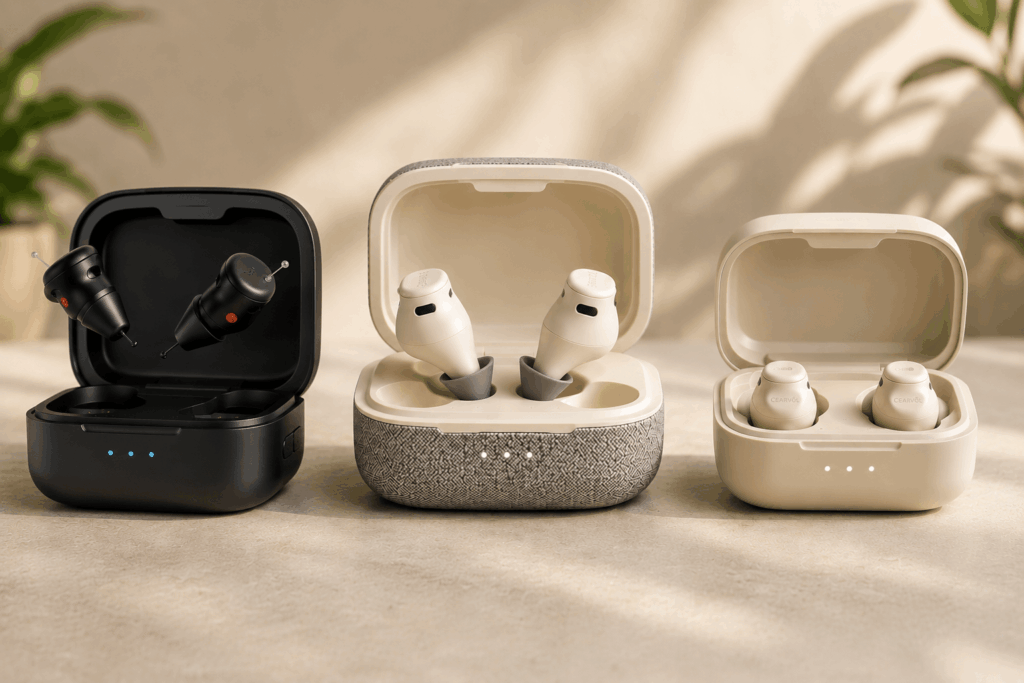
Cearvol packs features like Bluetooth streaming, app-based customization, and AI-powered sound processing into hearing aids priced well below prescription devices. But an impressive feature list doesn’t always translate into better hearing in everyday life.
If you’re considering Cearvol for its price, connectivity, or modern design, this review will help you decide whether it’s the right fit. We break down the current Cearvol lineup and share results from audiologist Dr. Jessica Hinson’s two-week hands-on test of the Cearvol Wave, including how it performed for sound quality, speech in noise, comfort, streaming, and everyday use.
The 3 key takeaways
- The Cearvol Wave stands out for streaming and controls — Its touchscreen charging case doubles as a remote control and remote microphone, while Bluetooth streaming performed reliably in our testing.
- Wave sound quality was mixed — Our hands-on testing found less natural sound quality and limited improvement in speech understanding in background noise.
- Cearvol offers several affordable options — The Wave Lite may appeal to shoppers who want Bluetooth at a lower price, while the Nano 2 prioritizes discretion, battery life, and simpler controls.
Why trust audiologists.org?


The writers, editors and staff of audiologists.org know the value of accurate, trustworthy information when it comes to hearing health. Everything we create is reviewed, approved, and even written by licensed audiologists, guaranteeing that what you read is factual and science based.
How We Review Hearing Aids
Our methodology is built around four commitments to our readers:
Human-first evaluation: Our editors and reviewers assess products for everyday usability—not just feature lists.
Clinical guardrails: Licensed audiology review helps ensure our guidance aligns with appropriate use, realistic expectations, and consumer safety.
Verified buyer details: We verify pricing, trial/return periods, warranty terms, and support policies using primary sources and retailer/manufacturer documentation whenever available.
Ongoing updates: We refresh content to reflect new releases, discontinued models, pricing shifts, and updated policies.

Cearvol hearing aids at a glance
This review focuses on three of Cearvol’s current OTC hearing aids: the Wave, Wave Lite, and Nano 2. All three are over-the-counter hearing aids intended for adults with perceived mild to moderate hearing loss. They include rechargeable batteries and self-fitting technology through the Cearvol app and come with a 45-day return period, three-year warranty, and one-on-one remote support from hearing professionals via phone, email, and live chat.
The biggest differences between the models are their design, Bluetooth streaming, controls, battery life, and price. However, all models are affordable hearing aid options, currently priced under $400, with financing options available.
The Wave and Wave Lite support Bluetooth streaming for phone calls and music, while the Nano 2 is only able to connect to the Cearvol app for setup and sound adjustments. The Wave also stands out for its touchscreen charging case that functions as a remote control and remote microphone.
Cearvol hearing aid comparison chart
| Model | Price* | Style | Bluetooth streaming | Standout features | Best for |
|---|---|---|---|---|---|
| Wave | $397 | ITE / earbud-style | ✓ | Touchscreen charging case, remote microphone, NeuroFlow AI 2.0, up to 40 dB gain | Buyers who want Cearvol’s most advanced features |
| Wave Lite | $299 | ITE / earbud-style | ✓ | NeuroFlow AI 2.0, dual-device Bluetooth, AUX-IN | Buyers who want streaming at a lower price |
| Nano 2 | $249 | ITC | — | Compact in-the-canal design, UV-cleaning charging case | Buyers who prioritize a smaller, more discreet fit |
*Prices shown on Cearvol’s website at the time of writing and may change with promotions.
Cearvol also sells the original Nano, Diamond X1, and FjordVibe AON1. This review focuses on the Wave, Wave Lite, and Nano 2 because they represent Cearvol’s newer mainstream options across different price points and designs.
Our testing: We have only tested the Cearvol Wave firsthand. Audiologist Jessica Hinson wore the device for 15 days, approximately 8–10 hours per day, and tested it in a variety of settings (loud, noisy, indoors, outdoors, restaurants) and while streaming. The Wave Lite and Nano 2 information in this review is based on Cearvol’s published specifications unless otherwise noted.
About Cearvol
Cearvol is a direct-to-consumer hearing technology brand focused on making hearing aids more affordable and less medical-looking. According to the company, its broader team has worked in acoustics for nearly 20 years, initially focusing on headphones and serving as an original design manufacturer for audio brands including JBL and Sennheiser before applying that experience to hearing technology.
Cearvol’s products emphasize rechargeable designs, app-based customization, modern styling, and lower prices than prescription hearing aids. The company has also previewed concepts including open-ear hearing aids and hearing glasses as part of its push toward combining fashion, comfort, and hearing tech.
Cearvol Wave hearing aids hands-on review

Cearvol Wave
-
$397
-
Rechargeable
-
Mild to moderate hearing loss
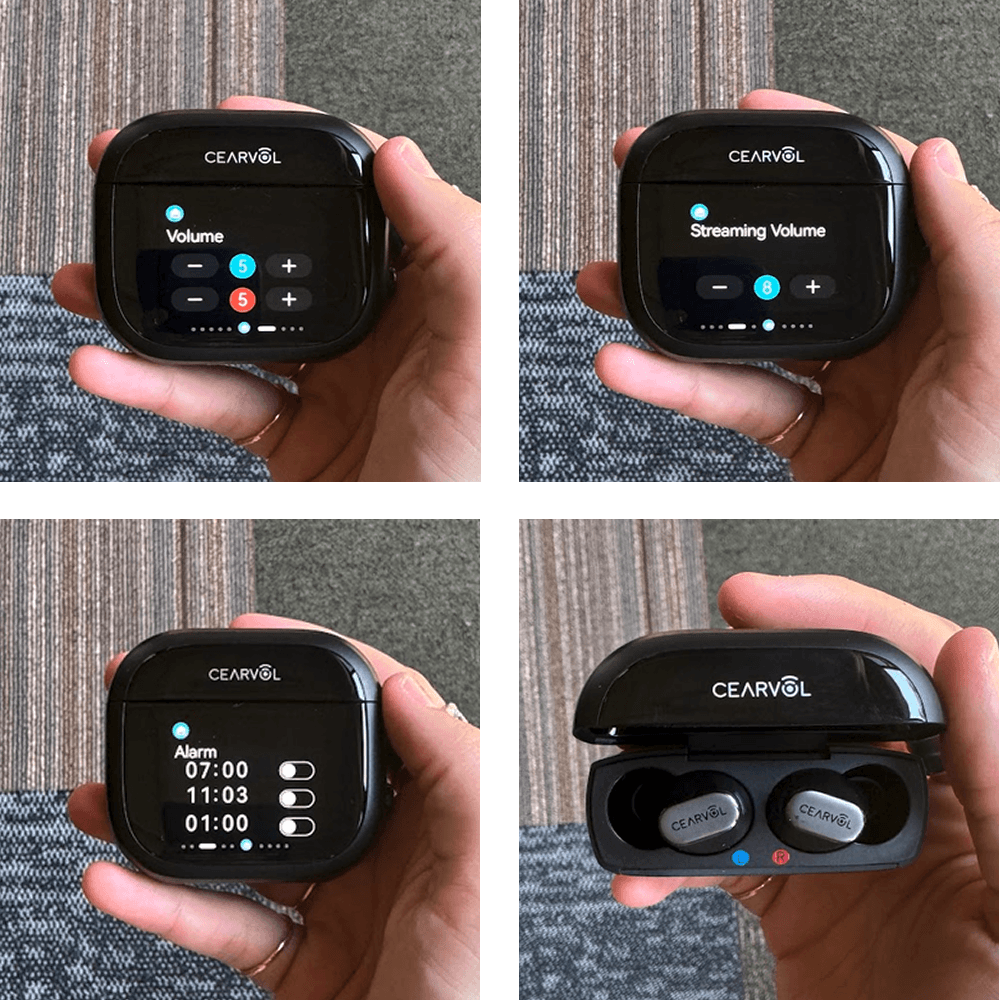
The Cearvol Wave is Cearvol’s most feature-rich hearing aid, combining an earbud-style in-the-ear (ITE) design with Bluetooth streaming, app-based customization, up to 40 dB of gain, and NeuroFlow AI 2.0 sound processing. Its touchscreen charging case is the standout feature, functioning as both a remote control and remote microphone so users can adjust settings without opening an app or place the case closer to a speaker to send their voice directly to the hearing aids. The Wave also supports AUX-IN connectivity, provides up to 28 hours of total use with the charging case, and carries an IPX5 water-resistance rating.
Dr. Jessica Hinson’s experience using the Cearvol Wave
To evaluate the Wave in everyday use, audiologist Dr. Jessica Hinson wore the hearing aids for 15 days, approximately 8–10 hours per day, testing them at home, outdoors, in restaurants, during phone calls, and while streaming music.
Overall, Dr. Hinson found the Wave to be a thoughtfully designed hearing aid with excellent usability and innovative hardware. The touchscreen charging case, Bluetooth streaming, and companion app were standout features. However, despite its impressive technology, the Wave’s hearing performance didn’t consistently match its feature set. Sound quality felt less natural than expected, and speech understanding in background noise remained challenging.
Read more about her first-hand feedback below.
Pros of the Cearvol Wave
- Innovative touchscreen charging case. The charging case doubles as a remote control and remote microphone, making it easy to adjust settings without reaching for your phone.
- Excellent Bluetooth streaming. Music and phone calls streamed reliably with good sound quality throughout testing.
- Easy-to-use companion app. The Cearvol app was intuitive to navigate and offered extensive sound customization.
- Feature-rich for the price. The Wave includes less-common features at this price, including a touchscreen charging case, remote microphone, AUX-IN connectivity, Bluetooth streaming, and extensive app controls.
Cons of the Cearvol Wave
- Sound quality wasn’t as natural as expected. Despite extensive customization, sound often felt overly processed compared with competing OTC hearing aids.
- Own voice remained overly prominent. Even after adjusting settings, Dr. Hinson found her own voice sounded louder than surrounding sounds.
- Limited improvement in background noise. Restaurant mode reduced background sounds but did not consistently make conversations easier to understand.
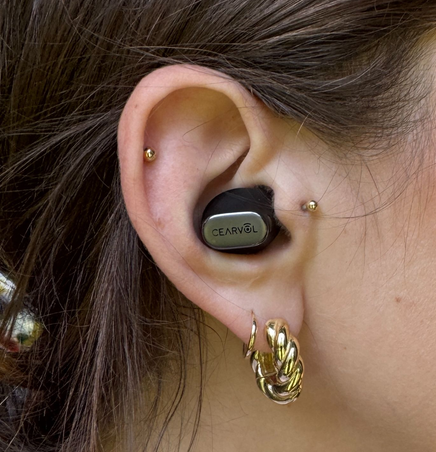
- Large in-the-ear design. The hearing aids protrude more than some competing OTC devices and may not be the best choice for users seeking the most discreet fit.
Sound quality and performance
Although the Wave offers several listening programs and sound adjustments, Dr. Hinson found the overall listening experience to be less natural than expected.
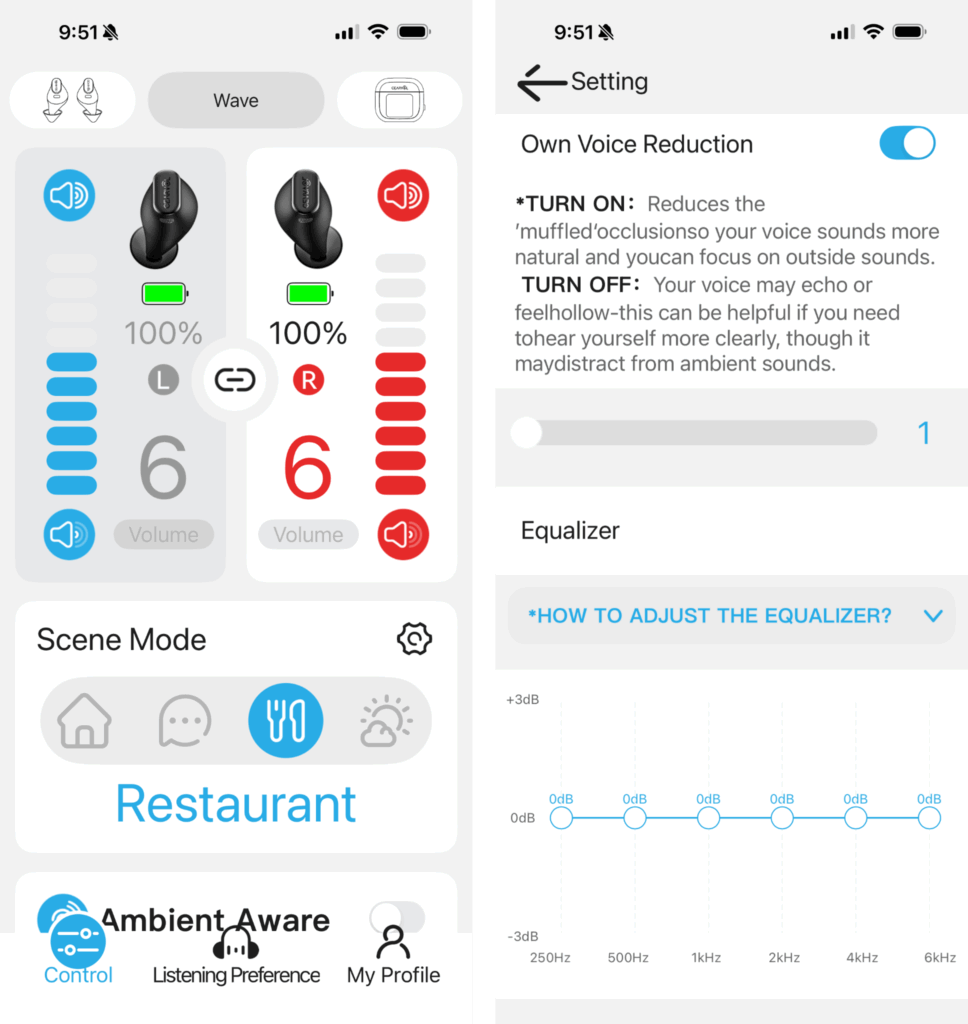
The biggest challenge was own-voice perception. Throughout the evaluation, her own voice consistently sounded louder than surrounding sounds, even after adjusting amplification and trying different listening programs. Lowering the overall volume made her voice more comfortable but also reduced the amplification of speech and environmental sounds.
Performance in background noise was similarly mixed. During restaurant testing, Restaurant mode reduced ambient noise but didn’t noticeably improve speech clarity. Background sounds became quieter, but conversations could still be difficult to understand.
The differences between listening programs were also subtler than expected. Indoor mode provided the most balanced listening experience, but switching between programs didn’t consistently produce meaningful improvements in real-world listening.
Overall, the Wave impressed us more for its hardware, controls, and connectivity than its sound processing.
Bluetooth streaming, app, and charging experience
Bluetooth streaming and usability were the strongest aspects of the Cearvol Wave during testing. Music and phone calls streamed reliably with clear audio, stable connections, and smooth transitions between streaming and everyday listening.
The charging case proved to be much more than a charging accessory. Its touchscreen interface functions as a portable remote control, allowing users to adjust volume, switch listening programs, and activate the remote microphone without opening the Cearvol app. Dr. Hinson found the interface intuitive and appreciated having multiple ways to control the hearing aids.
The built-in remote microphone is a useful feature for situations where a speaker is farther away. The case can be placed closer to the person speaking and transmit their voice to the hearing aids.
The Cearvol app was similarly easy to use. Pairing was straightforward, and the app offered sufficient sound adjustments without feeling overwhelming. Users who enjoy fine-tuning their hearing aids will appreciate the level of customization available, while those who prefer a simpler experience can largely rely on the default settings.
Overall, the Wave delivered a polished user experience, particularly for shoppers who prioritize streaming, connectivity, and convenient controls.
Who should buy the Cearvol Wave?
The Cearvol Wave is best suited to adults with mild to moderate hearing loss who value connectivity, customization, and convenient controls.
You may want to consider the Cearvol Wave if:
- Bluetooth streaming is important to you. Music and phone-call streaming were among the strongest aspects of our hands-on testing.
- You enjoy customizing your hearing aids. The Cearvol app offers extensive controls for adjusting sound settings and listening programs.
- You don’t want to rely solely on your smartphone. The touchscreen charging case provides quick access to volume, listening programs, and other controls.
- You want a remote microphone. The charging case can be placed closer to a speaker to transmit their voice directly to the hearing aids.
The Cearvol Wave may not be the best choice if:
- You frequently struggle to hear conversations in noisy places. Speech understanding in restaurants and other challenging environments was one of the Wave’s weaker areas in our testing.
- Natural sound quality is your top priority. Own-voice perception and overall sound quality were less natural than we expected.
- You want a discreet hearing aid. The Wave’s earbud-style design is larger and more visible than many invisible hearing aids and smaller ITC alternatives.
- You want hearing aids that adapt seamlessly to changing environments. The Wave offers several listening programs, but we found that switching programs didn’t always produce meaningful improvements in real-world listening.
Cearvol Wave Lite

Cearvol Wave Lite
-
$299
-
Rechargeable
-
Mild to moderate hearing loss
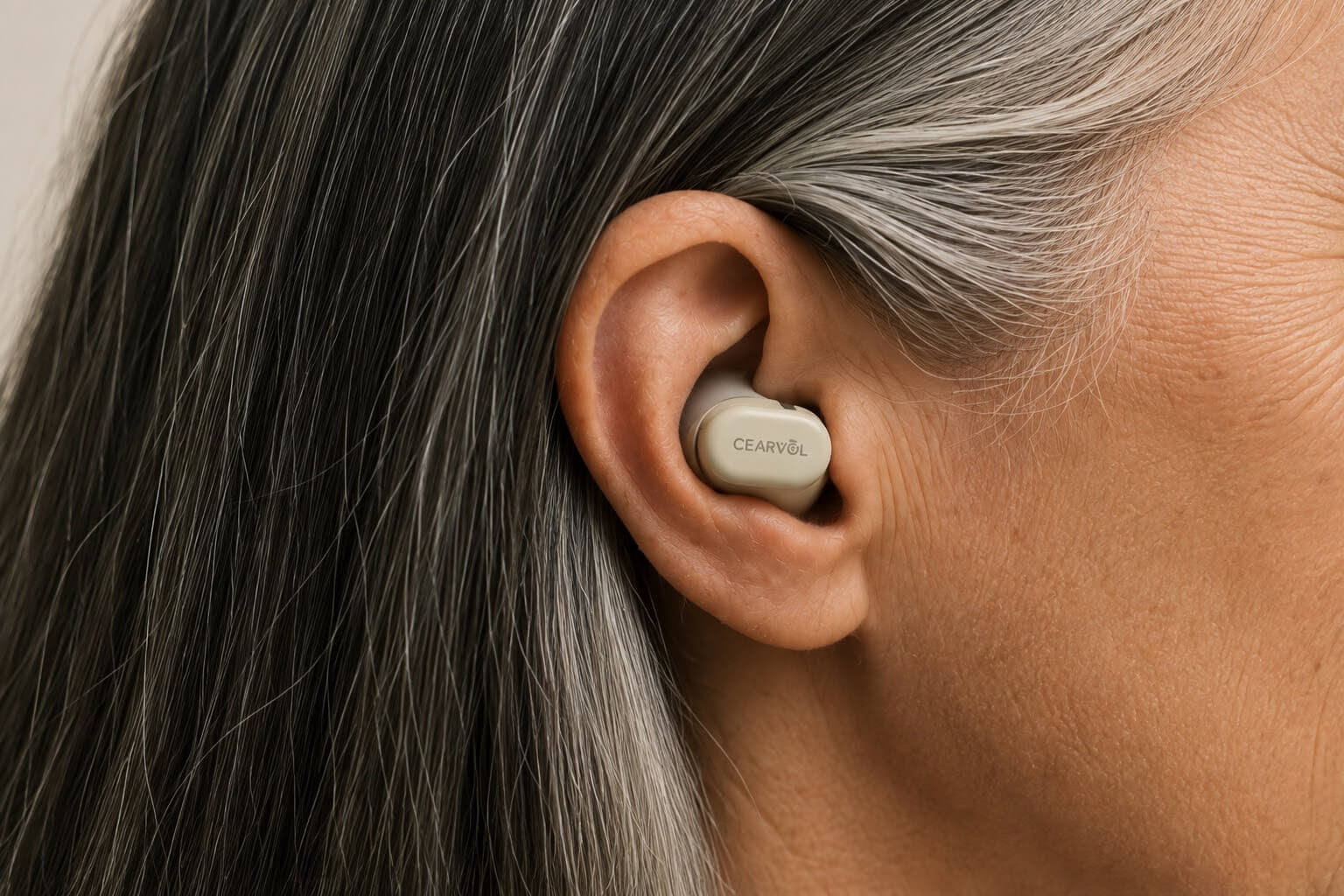
The Cearvol Wave Lite is a lower-cost alternative to the Wave that keeps many of its core hearing and connectivity features while doing away with the touchscreen charging case and remote microphone. Both models offer NeuroFlow AI 2.0 sound processing, up to 40 dB of gain, Bluetooth streaming, dual-device connectivity, AUX-IN, and app-based personalization.
One of Wave Lite’s biggest strengths on paper, specifically at under $300, is connectivity. It supports Bluetooth streaming for music and calls and dual-device connectivity allows users to stay connected to two compatible devices at once. AUX-IN provides another option for sending audio from compatible sources, such as TVs and in-flight entertainment systems, directly to the hearing aids.
The Wave Lite also offers four listening modes — Indoor, Outdoor, Restaurant, and Conversation — designed for different environments.
Cearvol advertises up to 22 hours of total use with the Wave Lite charging case, with a 15-minute fast charge providing up to three hours of use. Like the Wave, the Wave Lite carries an IPX5 water-resistance rating.
The main reason to choose the Wave Lite over the Wave is price: At $299, it costs about $100 less. The trade-off is a simpler charging case without the Wave’s touchscreen controls or integrated remote microphone.
Pros of the Cearvol Wave Lite
- Many of the Wave’s core features for less. The Wave Lite retains Bluetooth streaming, dual-device connectivity, AUX-IN, app-based personalization, and NeuroFlow AI 2.0 sound processing for about $100 less.
- Bluetooth and dual-device connectivity. Users can stream music and phone calls and remain connected to two compatible devices.
- App-based personalization. The Cearvol app provides an in-app hearing test and personalized sound adjustments.
- Multiple listening modes. Four modes — Indoor, Outdoor, Restaurant, and Conversation — provide settings for different listening environments.
Cons of the Cearvol Wave Lite
- No touchscreen charging case. The Wave provides significantly more control directly from its case.
- No remote microphone. The Wave Lite lacks the remote microphone built into the Wave’s charging case.
- Shorter advertised battery life than other Cearvol options. Cearvol lists up to 22 hours with the case, versus 28 hours for the Wave and 50 hours for the Nano 2.
- Less discreet than the Nano 2. Its earbud-style design is more visible than the Nano 2’s ITC design.
Who should buy the Cearvol Wave Lite?
The Cearvol Wave Lite may be worth considering for adults who want many of the Wave’s core features without paying extra for its touchscreen case and remote microphone.
You may want to consider the Wave Lite if:
- Want Bluetooth streaming at a lower price. It supports streaming for music and calls for about $100 less than the Wave.
- Frequently use multiple Bluetooth devices. Dual-device connectivity allows the hearing aids to remain connected to two compatible devices.
- Want multiple ways to listen to external audio. In addition to Bluetooth, AUX-IN connectivity provides another option for compatible TVs and other audio sources.
- You want app-based personalization. The Cearvol app provides an in-app hearing test and controls for adjusting your hearing profile.
The Wave Lite may not be the best choice if:
- You want Cearvol’s most advanced controls. The Wave’s touchscreen charging case lets you make adjustments without opening the app.
- You want a remote microphone. This feature is built into the Wave’s charging case but isn’t available with the Wave Lite.
- You prioritize discretion. The Nano 2’s smaller ITC design sits farther inside the ear.
- Battery life is a top priority. Cearvol advertises longer total battery life with the Nano 2 charging case.
Cearvol Nano 2

Cearvol Nano 2
-
$249
-
Rechargeable
-
Mild to moderate hearing loss
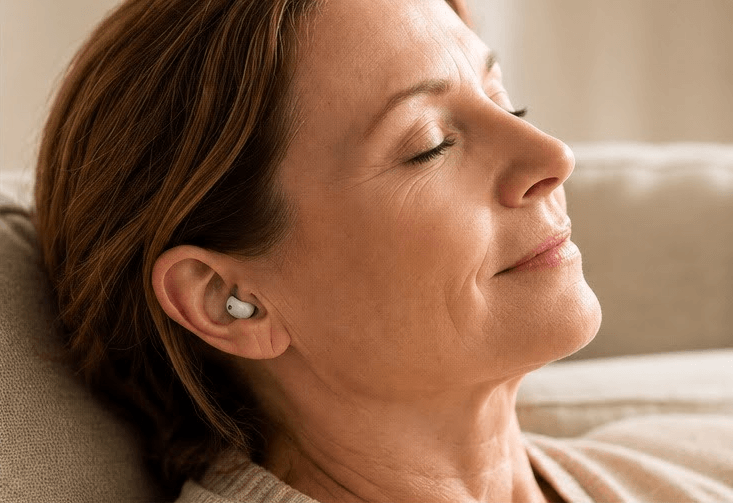
The Cearvol Nano 2 is the smallest and least expensive hearing aid in Cearvol’s current lineup. Unlike the earbud-style Wave and Wave Lite, the Nano 2 uses a more discreet in-the-canal (ITC) design. At $249, it may appeal to shoppers who prioritize size, price, and battery life over Bluetooth audio streaming.
Despite its lower price, the Nano 2 includes Cearvol’s NeuroFlow AI 2.0 sound processing and app-based personalization. Users can choose from three preset hearing levels or complete the in-app hearing test to create a personalized My Fit profile based on their hearing results. Settings can also be adjusted through the charging case, so you don’t always need to reach for your phone.
Unlike the Wave and Wave Lite, the Nano 2 does not support Bluetooth audio streaming for music or phone calls. It does, however, offer built-in tinnitus masking sounds and a rechargeable case that provides UV sanitization and up to 50 hours of total battery life.
Pros of the Cearvol Nano 2
- Discreet ITC design. The Nano 2 sits farther inside the ear than the larger Wave and Wave Lite.
- Lowest price in Cearvol’s current lineup. At $249, it costs $50 less than the Wave Lite and nearly $150 less than the Wave.
- App and case controls. Users can personalize their hearing profile through the Cearvol app or make adjustments from the charging case.
- Long battery life. Cearvol advertises up to 16 hours per charge and up to 50 hours total with the charging case.
Cons of the Cearvol Nano 2
- No Bluetooth audio streaming. Unlike the Wave and Wave Lite, the Nano 2 cannot stream phone calls, music, or other media directly.
- No remote microphone. It lacks the remote microphone built into the Wave’s charging case.
- No AUX-IN connectivity. The Nano 2 doesn’t offer the Wave and Wave Lite’s additional option for sending audio from compatible external sources.
- Fewer connectivity features overall. Shoppers who prioritize streaming and connectivity will get more from the Wave or Wave Lite.
Who should buy the Cearvol Nano 2?
Cearvol Nano 2 may be a good fit for adults who prioritize discretion, affordability, and battery life over Bluetooth connectivity.
You may want to consider the Nano 2 if:
- You want a more discreet hearing aid. Its compact ITC design sits farther inside the ear than the Wave and Wave Lite.
- You’re looking for Cearvol’s lowest-priced option. At $249, it costs less than both the Wave Lite and Wave.
- Battery life is important to you. Cearvol advertises up to 16 hours per charge and up to 50 hours with the charging case.
- Want tinnitus masking. The Nano 2 includes built-in masking sounds.
The Nano 2 may not be the best choice if:
- You want Bluetooth audio streaming. Unlike the Wave and Wave Lite, the Nano 2 can’t stream music or phone calls.
- You want a remote microphone. This feature is available with the Wave.
- You want AUX-IN connectivity. The Wave and Wave Lite offer this option for compatible external audio sources.
- Connectivity is a top priority. The Wave and Wave Lite offer a broader range of streaming and connectivity features.
Cearvol vs. competitors
Cearvol competes with OTC hearing aid brands such as Jabra Enhance, ELEHEAR, and Audien. The Cearvol Wave stands out for packing Bluetooth streaming, extensive app controls, and a touchscreen charging case with a built-in remote microphone into a device priced under $400.
However, features aren’t the only consideration when choosing a hearing aid. In our hands-on testing, the Wave impressed us more for its connectivity and controls than for natural sound quality and speech understanding in background noise.
Here’s how the Cearvol Wave compares with several other popular OTC rechargeable hearing aids:
| Feature | Cearvol Wave | Jabra Enhance Select 700 | ELEHEAR Beyond | Audien Atom Pro 2 |
|---|---|---|---|---|
| Price | $397 | $1,995 | $431 | $289 |
| Bluetooth streaming (calls and music) | ✅ | ✅ | ✅ | ❌ |
| App controls | ✅ | ✅ | ✅ | ❌ |
| Remote microphone | ✅ (charging case) | ❌ | ❌ | ❌ |
| Speech in noise | Mixed | Excellent | Very good | Fair |
| Sound quality | Fair | Excellent | Very good | Fair |
| Best for | Connectivity & controls | Overall performance | Value & customization | Budget & simplicity |
Final verdict on Cearvol hearing aids
Cearvol packs an impressive range of features into OTC hearing aids priced under $400, particularly with the Wave’s touchscreen charging case, which doubles as a remote control and remote microphone. In our hands-on testing, the Wave impressed us with its Bluetooth streaming, customization, and ease of use. However, sound quality felt less natural than expected, and speech understanding in background noise remained challenging.
The Wave may be worth considering if connectivity, customization, and convenient controls are priorities. The Wave Lite offers many of the same core features for less, while the Nano 2 trades Bluetooth streaming for a smaller design, longer advertised battery life, and a lower price. If hearing conversations in background noise is your primary concern, consider comparing Cearvol with other OTC hearing aids before deciding.
Frequently asked questions
Are Cearvol hearing aids FDA-approved?
Cearvol’s OTC hearing aids are FDA-cleared over-the-counter hearing aids, meaning they meet the FDA’s requirements for OTC hearing aids intended for adults (18+) with perceived mild to moderate hearing loss. Like all OTC hearing aids, they are available without a prescription or hearing test.
Are Cearvol hearing aids good for severe hearing loss?
No. Cearvol hearing aids are OTC devices intended for adults with perceived mild to moderate hearing loss. People with severe or profound hearing loss should see an audiologist for a comprehensive hearing evaluation and may need prescription devices designed and programmed for greater hearing needs. See our guide to the best hearing aids for severe hearing loss to learn more about available options.
What's the difference between the Cearvol Wave and Wave Lite?
The Wave and Wave Lite share many core features, including NeuroFlow AI 2.0 sound processing, Bluetooth streaming, dual-device connectivity, AUX-IN, and app-based personalization. The main difference is the charging case: the Wave includes a touchscreen case that functions as a remote control and remote microphone, while the Wave Lite uses a simpler charging case. At $299, the Wave Lite costs about $100 less.
Can Cearvol hearing aids stream phone calls and music?
The Cearvol Wave and Wave Lite support Bluetooth streaming for phone calls, music, and other compatible audio. The Nano 2 connects to the Cearvol app for personalization and adjustments but does not support Bluetooth audio streaming.
Do Cearvol hearing aids come with a trial period?
Yes. Cearvol offers a 45-day risk-free trial, allowing customers to return their hearing aids if they aren’t satisfied. The company also includes a 3-year warranty on its current OTC hearing aids.
Are Cearvol hearing aids covered by insurance or Medicare?
Original Medicare generally does not cover hearing aids, although some Medicare Advantage and private insurance plans offer hearing benefits. Coverage varies by plan, so check your benefits before purchasing. Learn more in our guide to insurance and Medicare coverage for hearing aids. Cearvol also advertises HSA/FSA payment options. If cost is a concern, you can explore other programs and resources that may help you get free or low-cost hearing aids.
How do Cearvol hearing aids compare to Jabra Enhance and ELEHEAR?
Compared with leading OTC competitors like Jabra Enhance and ELEHEAR, the Cearvol Wave stands out for its innovative touchscreen charging case, Bluetooth streaming, and user-friendly controls. However, based on our hands-on testing, we found that Jabra Enhance and ELEHEAR provided more natural sound quality and stronger speech understanding in challenging listening environments.

