
Yeasound hearing aids review (2026): Tested by an audiologist
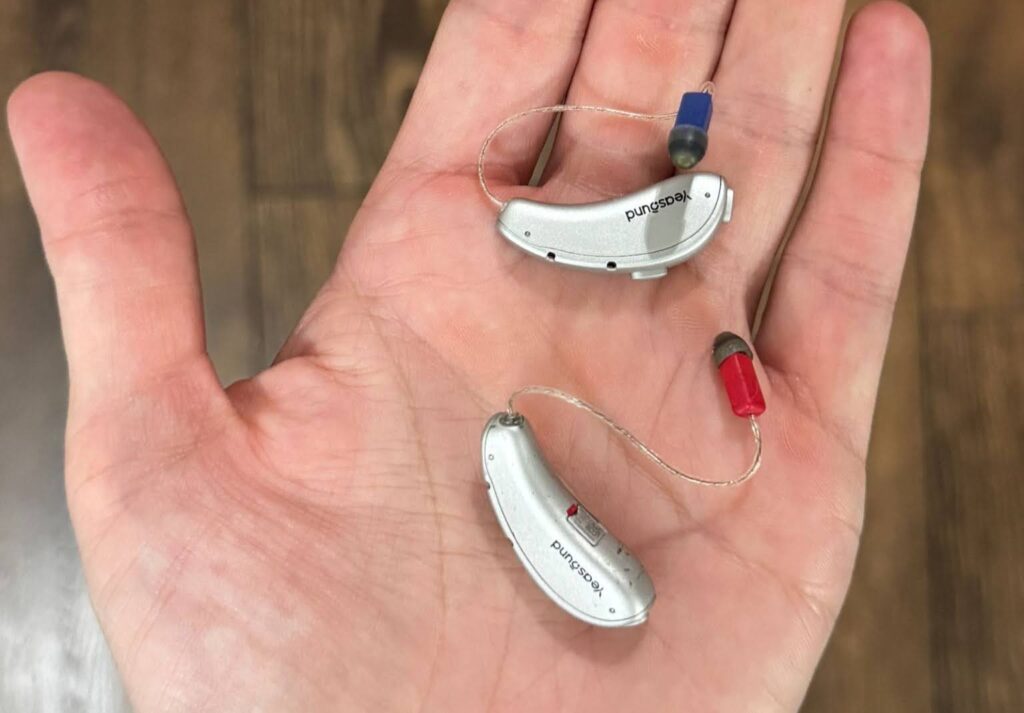
Dr. Jessica Hinson, AuD, wore the Yeasound RIC800 and Robin CIC60 for seven days each. Here’s what she found about sound quality, comfort, Bluetooth streaming, and battery life, plus how the RIC700 compares.


We’re reader-supported. When you click on our chosen products, we may receive a commission. Learn more.
Are Yeasound hearing aids worth buying? After testing the RIC800 and Robin CIC60 for seven days each, audiologist Dr. Jessica Hinson was impressed by both models’ sound quality, background-noise reduction, and reliable Bluetooth streaming. But the more expensive model wasn’t necessarily better: the RIC800 ($549) stood out for all-day comfort, while the CIC60 ($399) made conversations in noisy places easier to follow.
So, which Yeasound hearing aid is right for you? We break down the benefits, drawbacks, and real-world performance of both tested models, plus how the budget-friendly RIC700 compares based on its features and specifications.
3 key takeaways
- Yeasound offers three affordable OTC hearing aids. The RIC700 ($379), Robin CIC60 ($399), and RIC800 ($549) are rechargeable and designed for adults with mild to moderate hearing loss. All three can be purchased without a prescription.
- Our audiologist was impressed with Yeasound’s performance. Licensed, practicing audiologist Dr. Jessica Hinson, who has mild hearing loss herself, tested the RIC800 and CIC60. She praised their sound quality, noise reduction, and reliable Bluetooth streaming.
- Each model has different strengths. The RIC800 stood out for comfort and battery life, while the smaller CIC60 performed better in noisy conversations. The untested RIC700 offers a lower-cost alternative with fewer features.
Why trust audiologists.org?


How we reviewed Yeasound hearing aids
- Products tested: Dr. Jessica Hinson, AuD, wore the Yeasound RIC800 and Robin CIC60 for seven days each. We also evaluated the RIC700 using manufacturer specifications, but have not tested it firsthand.
- About our audiologist: Dr. Hinson is a licensed, practicing audiologist who has mild asymmetrical hearing loss. She brings both professional expertise and personal experience with hearing loss to her reviews.
- Real-world testing: Dr. Hinson evaluated the devices during everyday activities, including conversations, dining out, watching TV, and streaming calls and music. She also tested Bluetooth Auracast connectivity using a ReSound MultiMic+ transmitter.
- What we evaluated: Ease of setup, comfort, sound quality, speech clarity in noisy environments, Bluetooth connectivity, app features, battery life, and maintenance.
- Testing limitations: Our findings reflect one audiologist’s personal experience and hearing needs, not laboratory speech testing. Results may vary by hearing loss, ear shape, phone, and accessories.
- More detail: See our full review methodology.
Yeasound hearing aids: What to know
Yeasound currently sells three rechargeable, over-the-counter (OTC) hearing aids, including two receiver-in-canal (RIC) designs—the RIC800 and RIC700—and the newer Robin CIC60, a completely-in-canal (CIC) style. The models differ in fit, battery life, smartphone streaming, and available sound controls.
Yeasound aims to make advanced hearing technology more accessible without requiring a prescription or in-person audiologist appointment. Along with at-home hearing adjustments, the company offers a free online hearing test, remote assistance from audiologists, and an AI-powered help assistant available through its app.
All three models come with a 100-day return period and one-year limited warranty when purchased directly from Yeasound, subject to the company’s terms.
What Yeasound hearing aids have in common
- No prescription needed: All three are FDA-approved OTC hearing aids for adults with perceived mild to moderate hearing loss. They are not designed for severe or profound hearing loss.
- Rechargeable batteries: Each comes with a portable charging case, so you don’t need to replace tiny disposable batteries.
- Adjustable sound: The iYeasound smartphone app lets you change volume, listening programs, and sound settings. The available features vary by model.
- Controls without a smartphone: The RIC800 and RIC700 have buttons on the hearing aids. The CIC60’s charging case works as a remote for volume and program changes.
- Water resistance: Yeasound lists an IPX8 water-resistance rating for all three. They still shouldn’t be worn while swimming or showering.
- Buyer protection: Yeasound lists a one-year limited warranty and a 100-day trial for direct purchases. See the return terms and conditions for exclusions and procedures.
Yeasound hearing aids compared: RIC800 vs. CIC60 vs. RIC700
The table separates published specifications from Dr. Hinson’s testing and information from Yeasound’s product pages.
| Feature | RIC800 | Robin CIC60 | RIC700 |
|---|---|---|---|
| Price per pair | $549 | $399 | $379 |
| Style | Behind-the-ear RIC | In-ear CIC | Behind-the-ear RIC |
| Advertised battery life | Up to 23 hours | Up to 13.5 hours hearing | Up to 31 hours |
| Additional full charges in case | 3 | 3 | 8 |
| Phone audio streaming | Compatible iPhone and Android | Compatible iPhone and Android | Compatible iPhone only |
| AI noise reduction | Yes | Yes | No |
| Tinnitus relief sounds | Yes | Yes | No |
| Auracast audio broadcasts | Yes | Yes | No |
| Microphone-direction controls in app | Yes | No | Yes |
Quick buying guide: Choose the RIC800 for longer days and more sound controls; consider the CIC60 for a smaller in-ear fit and the speech-in-noise experience Dr. Hinson preferred; compare the RIC700 if price matters most and you have an iPhone or don’t need phone audio streaming.
Yeasound RIC800 review: Best for all-day comfort and control

Yeasound RIC800
-
$549
-
Rechargeable
-
Mild to moderate hearing loss
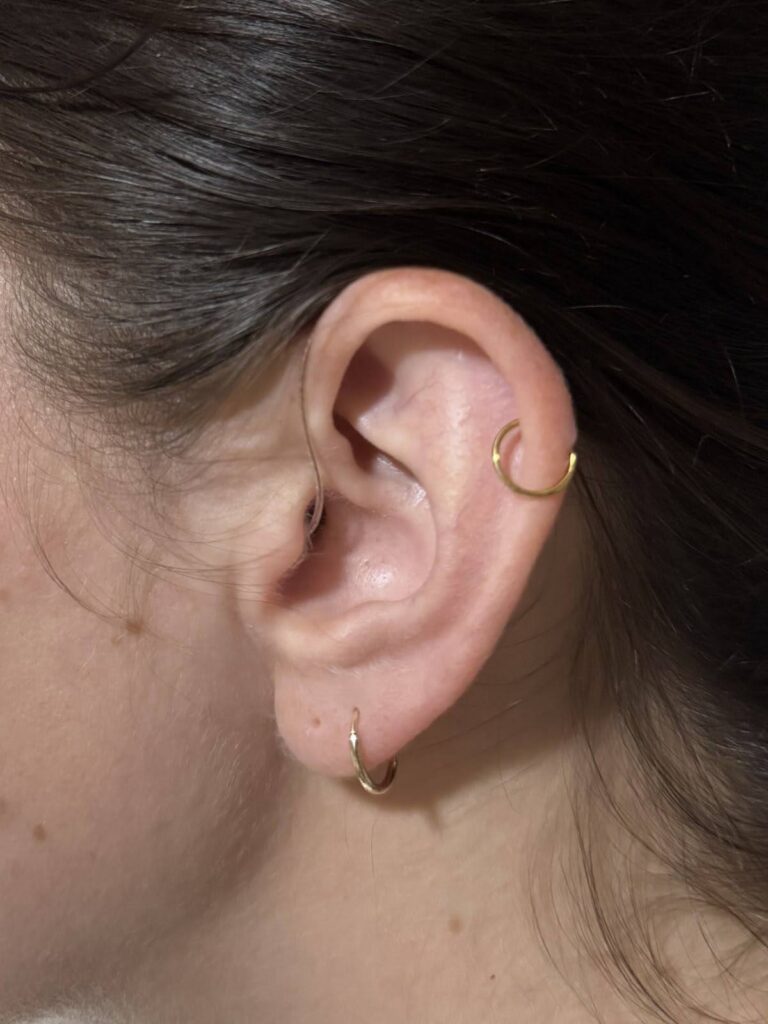
The RIC800 is the most expensive of Yeasound’s three models, but still only costs $549 per pair. Its behind-the-ear design combines Bluetooth phone streaming, automatic listening adjustments, directional microphones, and tinnitus relief sounds. In our test, comfort and battery life were its clearest advantages.
What our audiologist experienced
“I had one of the best experiences with the Yeasound RIC800. Easy app use, consistent streaming, improved hearing in background noise, and overall comfort made this a great device to try. Those with high frequency loss would benefit most, but low frequency loss could also benefit with the correct dome. There are more features available when paired to an iPhone than Android, so that is a consideration for tech-savvy hearing aid candidates.” — Dr. Jessica Hinson, AuD (wear-test feedback)
Setup and comfort
Dr. Hinson unpacked the hearing aids, paired her iPhone, downloaded the app, and completed the hearing assessment in 16 minutes. Setup was straightforward, especially with the AI assistant, although she found the hearing test longer than expected.
Comfort was a standout. She wore the RIC800 for up to 20 hours a day during the seven-day test, including active outings, without slippage or feedback. Even with small ear canals, she found the small closed hearing aid domes secure. The device is somewhat longer than some RIC alternatives but she still found them fairly discreet.
Sound quality and hearing in noise
Dr. Hinson most often used Noisy mode with extra background-noise reduction. She noticed a meaningful difference when she increased that setting, which isn’t always the case with lower-priced hearing aids. She also watched TV comfortably using the TV listening program and focused microphone setting.
Adaptive mode made gentle automatic adjustments, while other programs had to be changed manually. One minor drawback: her own voice sounded slightly echoey.
Bluetooth, Auracast, and app controls
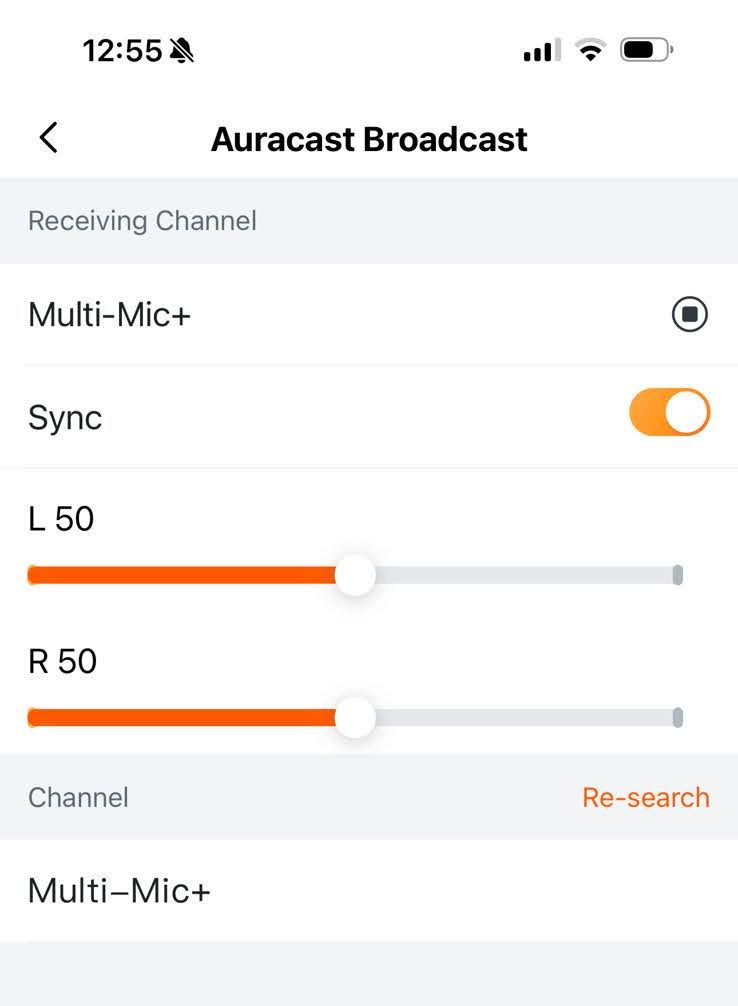
Dr. Hinson experienced stable Bluetooth connections during calls and media streaming, without noticeable lip-sync delay or tinny distortion. Streaming volume was adjustable, but the app did not provide a separate sound-quality equalizer for streamed audio. She also successfully connected to a ReSound MultiMic+ Auracast transmitter, which broadcasts sound wirelessly to compatible hearing aids.
The iYeasound app offered equalizer, noise reduction, microphone direction (all-around, forward, and focused), and ear-by-ear tinnitus-sound options. She appreciated that breadth of control. The physical button along the bottom of the hearing aid, however, was awkward to operate without moving the device on her ear.
Battery and maintenance
Yeasound advertises up to 23 hours per charge. During testing, the low-battery alert sounded at approximately 20 hours. The portable case was reliable and displayed useful battery-status lights.
Maintenance was less convenient: Dr, Hinson mentioned that the ear tips were difficult to change, and the colored wax guards made it hard to tell when they were clogged. She says that someone with limited hand dexterity may appreciate help with cleaning and replacement parts.
RIC800: Pros and cons
| Pros | Cons |
|---|---|
| Comfortable and secure during long days | Lower button awkward to press |
| Meaningful app-adjustable noise reduction | Own voice sounded slightly echoey |
| Stable Bluetooth and successful Auracast test | Domes difficult to replace |
| Mic directionality adjustable in app | Wax guards hard to inspect |
| Longer battery life than CIC60 in wear test | Not suitable for severe hearing loss |
Who are Yeasound RIC800 hearing aids best for?
The RIC800 is worth considering if you want a comfortable behind-the-ear hearing aid for long days, use your phone for calls or music, and like having more control over background noise. It may be less convenient if changing small parts is difficult for you.
Our audiologist’s verdict: A comfortable, capable OTC hearing aid with unusually helpful sound controls for the price. Its main drawbacks are slightly unnatural own-voice sound and fiddly maintenance.
Yeasound Robin™ CIC60 review: Best for discreet in-ear hearing

Yeasound Robin™ CIC60
-
$399
-
Rechargeable
-
Mild to moderate hearing loss
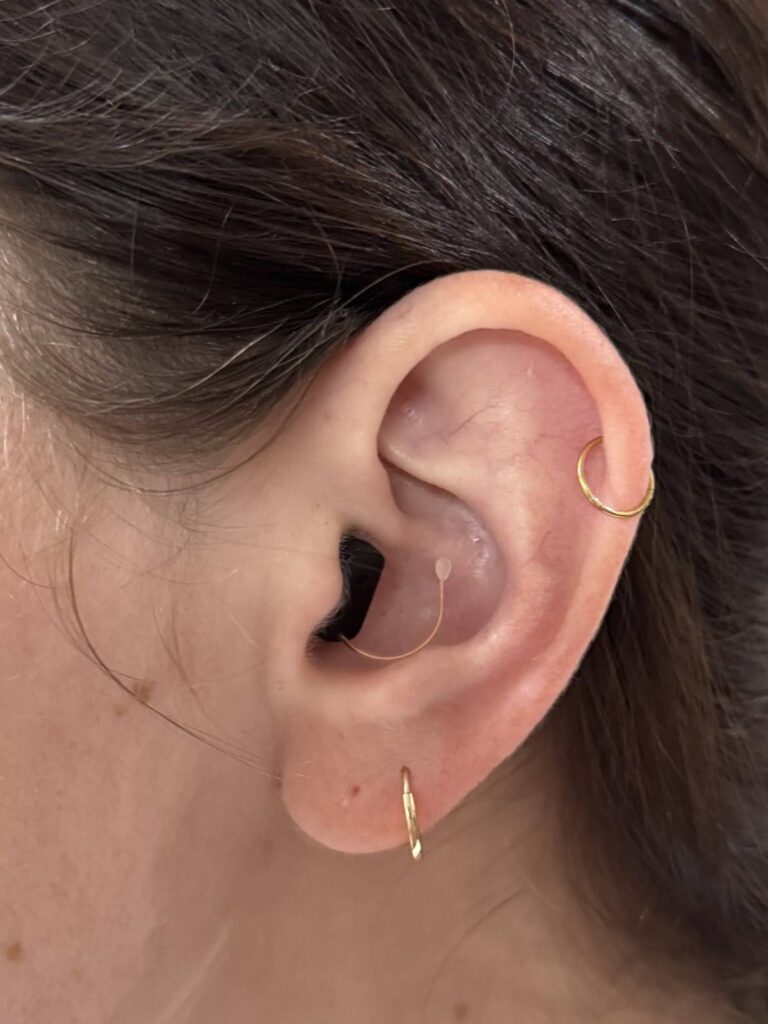
The Robin CIC60 fits mostly inside the ear rather than behind it. Along with Bluetooth streaming and automatic noise adjustments, it has a charging case that doubles as a remote control. Dr. Hinson especially liked how it handled conversations in noisy places.
What our audiologist experienced
“This has to be my favorite OTC CIC hearing aid I have experienced. Great sound quality, easy to use app, stable streaming with no delay, and auracast capability are just a few product highlights. GREAT bang for your buck.” — Dr. Jessica Hinson, AuD (wear-test feedback)
Setup, fit, and everyday comfort
After opening a snug-fitting retail box, Dr. Hinson changed the domes and completed setup on her iPhone in about seven minutes, having already taken the hearing test for her RIC800 wear-test. She wore the hearing aids for seven days, typically 12–14 hours per day, depending on streaming. The supplied four dome sizes made finding an initial fit easier.
Unlike the RIC800, the CIC60 became uncomfortable after several hours in her small ear canals, even with smaller ear tips. The devices remained secure, without feedback or falling out, but she recommends particular caution for people with very narrow ear canals. Although more discreet than a conventional behind-the-ear hearing aid, the black CIC60 was still visible from the side.
Sound quality and background noise
The CIC60 particularly impressed Dr. Hinson in restaurants. Its Adaptive mode automatically changed settings as the background sound shifted. She could hear those changes happening, but they weren’t distracting. She found speech easier to follow in noise than with the RIC800, and her own voice sounded more natural.
Bluetooth, Auracast, and app controls
Calls, music, and video streamed reliably with no noticeable audio lag; Dr. Hinson reported a stable connection at a distance of roughly 30 feet in her environment. She also described excellent audio when connecting to her ReSound MultiMic+ Auracast transmitter.
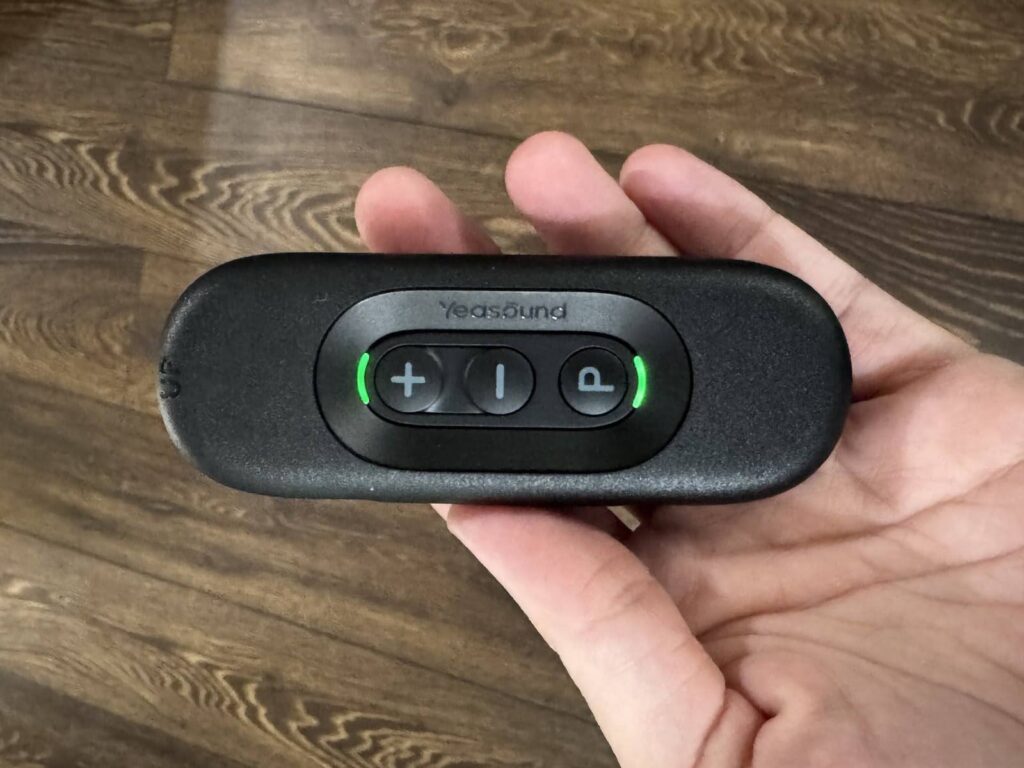
As with the RIC800, the app allowed volume, equalizer, listening-mode, noise-reduction, and six tinnitus-sound options, including separate settings for each ear. Unlike the RIC800, the CIC60 did not offer app-adjustable microphone directionality. Instead of tiny buttons on the aids, its charging case has easy-to-reach volume and program controls, which is a useful option if you prefer not to use a smartphone.
Battery life and maintenance
Yeasound quotes up to 13.5 hours in hearing mode and seven hours in Bluetooth streaming mode. Dr. Hinson experienced 11–14 hours per charge, with shorter life when she streamed more. The case holds up to three additional full pair charges, but she sometimes found that the hearing aid’s antenna wire prevented it from closing properly. Double-check the lid before putting the case in a bag.
Robin CIC60: Pros and cons
| Pros | Cons |
|---|---|
| Strong speech clarity in background noise during testing | Potential soreness in small ear canals |
| Own voice sounded natural | Shorter battery life when streaming |
| Stable Bluetooth and successful Auracast test | No app-adjustable mic directionality |
| Smaller in-ear design | Charging case can be difficult to close securely |
| Charging case doubles as a remote | Only one-year standard warranty |
Who are Yeasound Robin CIC60 hearing aids best for?
The CIC60 is a good candidate for adults who want a smaller, in-ear device and a straightforward way to adjust volume without reaching for their phones. It may be especially attractive for those who frequently eat out or talk in moderately noisy spaces. It is less ideal for very small ear canals or for long days of frequent audio streaming.
Our audiologist’s verdict: Dr. Hinson called the CIC60 her favorite OTC completely-in-canal hearing aid she had experienced at the time of testing. Its unusually good speech-in-noise performance and case-based remote control were the highlights, with fit and battery life the main caveats.
Yeasound RIC700: Best budget option

Yeasound RIC700
-
$379
-
Rechargeable
-
Mild to moderate hearing loss
At $379 per pair, the RIC700 is Yeasound’s most affordable hearing aid. It offers basic noise reduction, smartphone sound adjustments, and a rechargeable behind-the-ear design. However, it lacks some of the RIC800’s more advanced features, including automatic adaptive listening and Android audio streaming.
Sound quality and hearing in noise
The RIC700 offers noise reduction and listening programs for everyday situations and noisy environments. You can also adjust microphone direction to focus on sounds in front of you.
Unlike the RIC800 and CIC60, it doesn’t offer AI noise reduction or an automatic adaptive listening program.
Bluetooth and app controls
The RIC700 streams calls and music directly from compatible iPhones, but not Android phones. Both iPhone and Android users can use the iYeasound app to adjust volume, sound settings, and listening programs.
The RIC700 also lacks the Auracast connectivity and tinnitus relief features found in Yeasound’s more expensive models.
Battery life and maintenance
Yeasound advertises up to 31 hours per charge, plus eight additional full charges from the portable case. A full charge takes approximately three hours, and the included charging base has a drying function.
RIC700: Pros and cons
| Pros | Cons |
|---|---|
| Most affordable model at $379 per pair | Audio streaming limited to compatible iPhones |
| Up to 31 hours of advertised battery life | No automatic adaptive listening |
| Charging case offers eight extra charges | No tinnitus relief features |
| App sound and microphone-direction controls | No Auracast connectivity |
Who are Yeasound RIC700 hearing aids best for?
The RIC700 may be a good fit for budget-conscious adults who prefer behind-the-ear hearing aids and primarily need help with everyday conversations and TV listening. It’s best suited for iPhone users or those who don’t need to stream audio from their phones.
What our audiologist thinks
Dr. Hinson says, “With the same push button orientation, my qualms with design remain. I really enjoyed the adaptive program in the 800 model as well as the Bluetooth streaming, so ultimately I think the 800 is worth the price increase especially for those with an Android phone.”
Our experience with the iYeasound app
Dr. Hinson found the iYeasound app easy to use, with simple controls on the home screen and more advanced settings for those who want them. She also appreciated the customization options, although the in-app hearing test took longer than expected.
Here’s what to know:
- Personalized sound settings: Adjust volume, listening programs, background-noise reduction, and sound quality. The RIC800 and CIC60 also offer tinnitus relief sounds.
- Easy controls: The RIC800 and RIC700 let you focus its microphones toward someone speaking in front of you.
- Phone compatibility: All three models support app controls on compatible iPhones and Android phones. However, only the RIC800 and CIC60 stream calls and music directly from both. The RIC700’s audio streaming is limited to compatible iPhones.
Which Yeasound hearing aid should you buy?
The best Yeasound hearing aid depends on your budget, lifestyle, and hearing needs. All three models cost $549 or less per pair, but each offers different advantages.
- Choose the RIC800 ($549) if you want all-day comfort, longer battery life, and more control over background noise. It was Dr. Hinson’s preferred model for extended wear.
- Choose the Robin CIC60 ($399) if you prefer a more discreet in-ear hearing aid. Dr. Hinson found conversations easier to follow in noisy places, although the fit may be uncomfortable for smaller ears.
- Consider the RIC700 ($379) if you want the most affordable hearing aid and are looking for basic features and iOS compatibility.
The pros and cons of Yeasound hearing aids
What we like
- Affordable prices: All three models cost $549 or less per pair.
- Impressive sound quality: Dr. Hinson praised the noise reduction and reliable Bluetooth streaming on both tested models.
- Easy adjustments: The iYeasound app lets you personalize sound settings, while the CIC60’s charging case doubles as a remote.
- Rechargeable convenience: Every model includes a portable charging case.
- Buyer protection: Eligible direct purchases include a 100-day trial and one-year limited warranty.
What to consider
- Fit and comfort vary: The CIC60 caused soreness in Dr. Hinson’s small ear canals after several hours.
- Battery life differs: The CIC60 lasted 11–14 hours during testing, compared with approximately 20 hours before the RIC800’s low-battery warning.
- Some usability challenges: The RIC800’s ear tips and wax guards were difficult to maintain, while the CIC60’s charging case didn’t always close securely.
- Phone compatibility varies: The RIC700 streams calls and music only from compatible iPhones, while the other models support compatible Android phones, too.
- Limited warranty coverage: The standard one-year warranty is shorter than some competitors’ warranties.
Frequently asked questions
Are Yeasound hearing aids good?
In Dr. Hinson’s seven-day tests, both the RIC800 and Robin CIC60 offered dependable audio streaming, adjustable background-noise reduction, and good value for the price. She preferred the RIC800 for long-wear comfort, while the CIC60 performed better for her in noisy conversations. Neither model is ideal for everyone: ear fit, smartphone compatibility, and battery demands matter.
Are Yeasound hearing aids FDA-approved?
Yeasound markets the RIC800, Robin CIC60, and RIC700 as FDA-registered OTC hearing aids. “FDA-registered” is not the same thing as “FDA-approved” or “FDA-cleared.” We have not independently verified model-specific FDA marketing authorization; do not describe these models as FDA-approved or FDA-cleared without supporting records. OTC hearing aids are regulated by the FDA and sold for adults 18 and older with perceived mild to moderate hearing loss.
Do Yeasound hearing aids work with Android and iPhone?
Yeasound lists compatible iOS and Android music/call streaming for the RIC800 and Robin CIC60. The RIC700’s music and call streaming is limited to compatible iOS devices, although the app is also listed for Android. Confirm device compatibility with Yeasound before purchasing.
Can Yeasound hearing aids connect to Auracast?
RIC800 and CIC60 are Auracast compatible. Dr. Hinson successfully used her RIC800 and CIC60 with a ReSound MultiMic+ Auracast transmitter, but compatibility depends on the specific broadcast source, firmware, and connection setup. The RIC700 is not compatible with Auracast.
Do Yeasound hearing aids help with tinnitus?
The RIC800 and Robin CIC60 offer in-app tinnitus relief sounds, including separate adjustments for each ear. These features may help mask or reduce awareness of tinnitus for some users; they do not cure it. The RIC700 does not offer tinnitus relief features.
How long do Yeasound hearing aid batteries last?
Official product specifications state up to 23 hours for the RIC800, 13.5 hours for the CIC60 in hearing mode (seven hours while streaming), and 31 hours for the RIC700. During Dr. Hinson’s wear tests, the RIC800 gave a low-battery alert at about 20 hours, while the CIC60 lasted around 11–14 hours depending on streaming.
Yeasound RIC800 vs. Elehear Beyond Pro: Which is better?
Both are rechargeable OTC hearing aids with Bluetooth streaming and noise reduction. The Elehear Beyond Pro stands out for sound-level monitoring and language translation. The Yeasound RIC800 offers strong speech clarity in noisy environments and Auracast connectivity.
Dr. Hinson’s take: “Both have their strengths. I’d recommend the Beyond Pro for people who work in loud environments, need language translation, or want more tinnitus relief options. The RIC800 may be a better fit for those who struggle with conversations in background noise or want Auracast connectivity.”
What is Yeasound’s trial and return policy?
Yeasound advertises a 100-day trial and a one-year limited warranty for eligible direct purchases. Its full return policy requires contacting support and returning the hearing aids and included accessories in acceptable condition.