
Age-Related Hearing Loss (Presbycusis): What’s Happening and What to Do About It

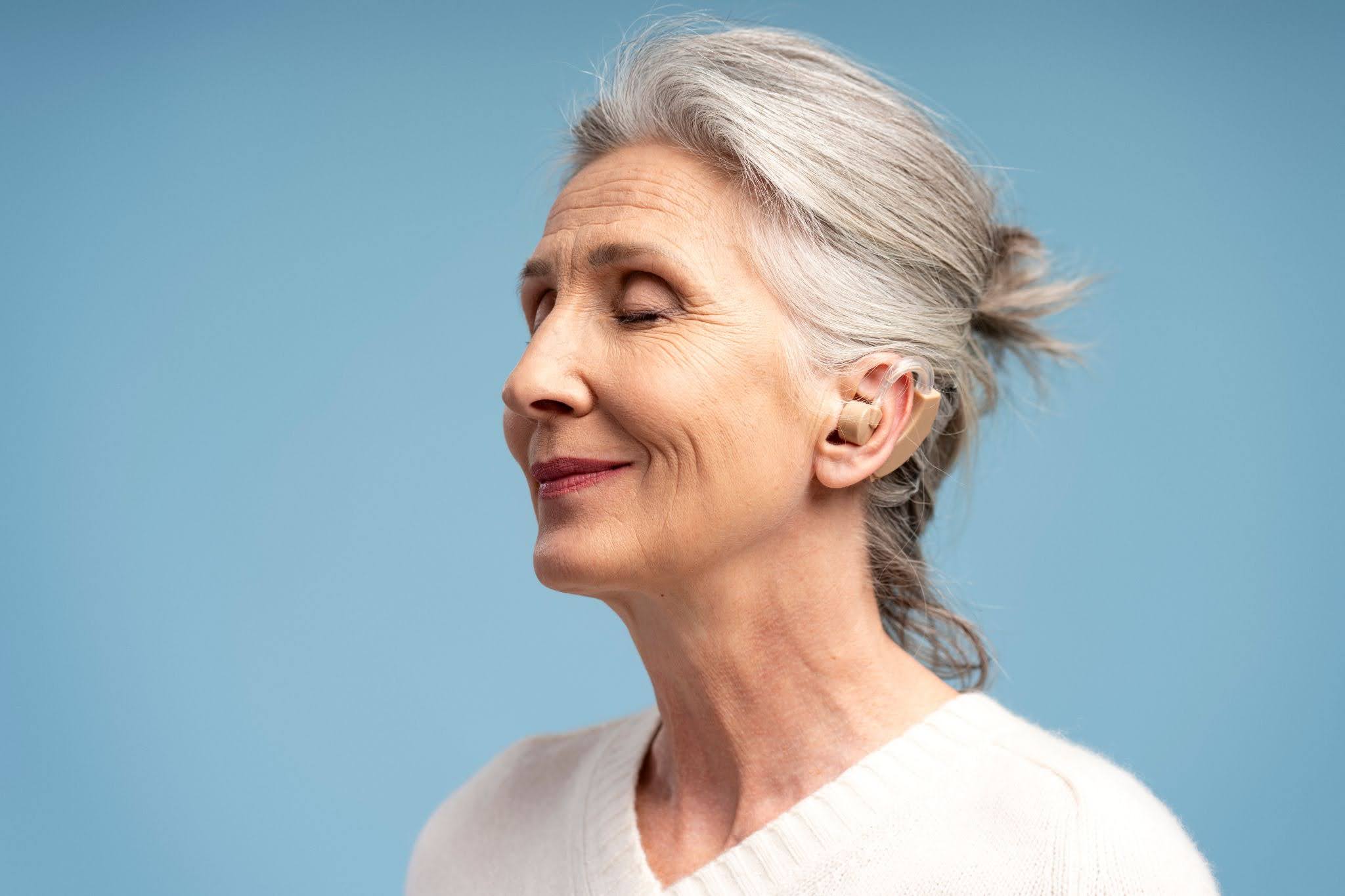
If you’re over 60 years of age and have noticed that you’re asking people to repeat themselves more often, struggling to follow conversations in noisy restaurants, or reaching for the TV remote to turn up the volume, you’re not alone. Age-related hearing loss, known clinically as presbycusis, is one of the most common health conditions affecting older adults. It’s gradual, typically painless, and often goes unrecognized for years.
Understanding what’s happening in your ears — and why it’s happening — is the first step toward protecting your hearing and improving communication.
The 3 key takeaways
- Age-related hearing loss is extremely common — About one in three adults ages 65 to 74 has hearing loss, and prevalence increases with age.
- The earliest signs are often subtle — Difficulty hearing speech in noise, asking for repetition, and turning up the volume are common early symptoms.
- Treatment can make a meaningful difference — Hearing aids, communication strategies, and early intervention can improve hearing, reduce listening effort, and support quality of life.
How common is age-related hearing loss?
According to the National Institute on Deafness and Other Communication Disorders (NIDCD), approximately one in three adults ages 65 to 74 has hearing loss. Among adults 75 and older, nearly one in two is affected.
More recent research suggests the true burden may be even greater in older age groups. A JAMA study found that 65.3% of U.S. adults age 71 and older had hearing loss and by age 90, that figure climbs to 96.2%. Despite this, less than 30% of older adults with hearing loss reported using hearing aids.
This could be partially attributed to the fact that the average person waits seven to ten years after first noticing symptoms before seeking help — a delay that carries real consequences, as we’ll explore below.
What causes hearing loss as we age?
Age-related hearing loss isn’t caused by a single thing. It’s the cumulative result of several biological processes that unfold over decades.
Changes in the inner ear
The cochlea — the fluid-filled, spiral structure that converts sound into electrical signals — contains thousands of microscopic sensory hair cells. These cells do not naturally regenerate in humans, so hearing loss caused by hair-cell damage is typically permanent.
Over time, the hair cells responsible for processing high-frequency sounds tend to degrade first. This is why age-related hearing loss almost always begins with difficulty hearing higher-pitched sounds and understanding speech clearly, particularly in noisy environments.
Additionally, the stria vascularis, a structure that helps maintain the inner ear’s chemical balance, becomes less efficient with age. Changes in the auditory nerve and other hearing pathways may further reduce the brain’s ability to process sound accurately.
Cumulative noise exposure
A lifetime of sound exposure takes a toll. The National Institute on Occupational Safety and Health (NIOSH) has established that repeated exposure to sounds above 85 decibels can cause permanent hearing damage over time.
Many adults with age-related hearing loss also have some degree of underlying noise-induced hearing loss layered on top of age-related changes, making the two difficult to fully disentangle.
Vascular and metabolic factors
Blood flow to the inner ear diminishes with age. Conditions associated with poor vascular health — including high blood pressure, diabetes, and smoking — are recognized risk factors for accelerated hearing decline because the cochlea is highly metabolically demanding and sensitive to changes in its blood supply.
Research has found a strong association between cardiovascular risk factors and hearing loss. One large study reported that adults with two or more cardiovascular disease risk factors had 92% higher odds of hearing loss compared with those without these risk factors. Maintaining cardiovascular health may therefore play an important role in preserving hearing as we age.
Additionally, emerging research suggests that fluctuations and declines in estrogen during perimenopause and menopause may contribute to hearing changes in some women, potentially through effects on cochlear function, blood flow, and auditory processing.
Genetic predisposition
Genetics may help explain why some people develop significant age-related hearing loss in their 60s while others retain relatively good hearing well into their 80s. A family history of early-onset hearing loss is a recognized risk factor, and researchers continue to study the genes that may influence how hearing changes with age.
Ototoxic medications
Some medications can damage the inner ear and contribute to hearing loss. These are known as ototoxic medications and include certain chemotherapy drugs (particularly cisplatin), some loop diuretics, and high doses of aspirin. In older adults who take multiple medications, ototoxicity may accelerate age-related hearing changes or worsen existing hearing loss.
The early signs: what presbycusis sounds like
Age-related hearing loss is typically bilateral (affecting both ears) and gradual — which is part of why it’s so easy to miss in its early stages. The brain often compensates for mild hearing loss remarkedly well, making it easy to overlook until communication becomes noticeably more difficult.
Common early signs include:
- Difficulty hearing certain speech sounds — High-frequency consonants such as”s,” “f,” “th,” “sh,” and “v” are often the first sounds to become unclear. You may hear someone speaking but struggle to understand exactly what was said.
- Trouble hearing in background noise — Conversations in restaurants, family gatherings, and other noisy environments become increasingly difficult, even when one-on-one conversations in quiet settings remain manageable.
- Frequently asking people to repeat themselves — This is especially common when listening to women and children, whose voices typically contain more high-frequency sound information.
- Tinnitus — Ringing, buzzing, or hissing in the ears commonly occurs alongside age-related hearing loss.
- Turning up the volume — The television, phone, or other devices may gradually need to be set louder than others prefer.
- Listening fatigue — Concentrating on conversations can become exhausting because the brain is working harder to fill in missing information.
If these experiences sound familiar, a comprehensive hearing evaluation can help determine whether hearing loss is present and identify the most appropriate next steps.
Diagnosing age-related hearing loss
Age-related hearing loss is diagnosed through a comprehensive hearing evaluation performed by an audiologist. The cornerstone of that evaluation is pure-tone audiometry — a hearing test that measures the softest sounds you can detect across a range of frequencies. The result is plotted on a graph called an audiogram.
In age-related hearing loss, the audiogram typically shows a sloping pattern: hearing is relatively preserved in the low frequencies (lower-pitched sounds) but gradually worsens in the high frequencies, where many important speech sounds occur.
Speech audiometry is another important part of the evaluation. This testing measures how accurately you can understand words when they are amplified to your threshold, and helps distinguish between difficulty hearing (a sensitivity issue) and difficulty understanding (which may involve central auditory processing as well). Your audiologist will use both sets of results to guide recommendations.
The link between hearing loss and cognitive decline
A growing body of research has found that untreated hearing loss is associated with accelerated cognitive decline, social isolation, and depression in older adults. One of the most influential recent studies is the ACHIEVE study, a major 2023 clinical trial published in The Lancet, which found that hearing intervention significantly reduced cognitive decline in a subset of older adults at elevated risk.
The relationship between hearing and cognitive health is complex and still being studied. It does not mean hearing aids prevent dementia, but it does suggest that treating hearing loss has benefits that extend well beyond hearing itself.
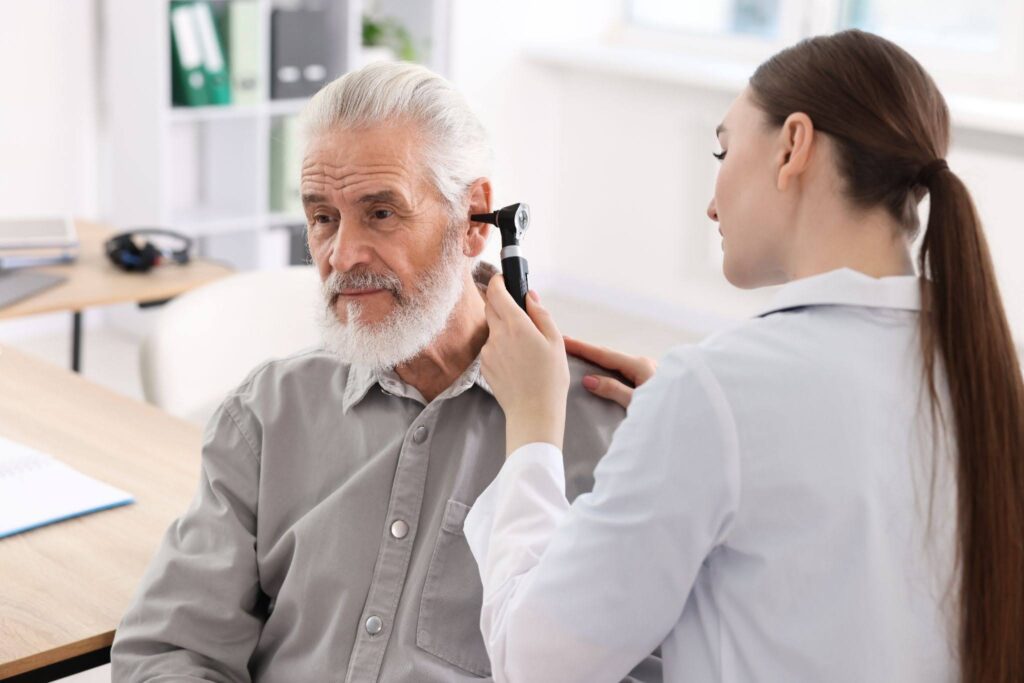
From an audiologist: what patients often misunderstand about age-related hearing loss
Jessica Hinson, Au.D., working audiologist and a member of our medical review board, shares her perspective:
“One of the biggest misconceptions about age-related hearing loss is that people will immediately notice when it begins. In reality, hearing loss usually develops so gradually that many people adapt to it without realizing it.
By the time many people seek help, symptoms are so severe they can’t be ignored.
This is why regular hearing evaluations become increasingly important as we age, particularly for adults with risk factors such as a family history of hearing loss, cardiovascular disease, diabetes, significant noise exposure, use of ototoxic medications, or conditions such as Ménière’s disease, otosclerosis, or meningitis.
Another commonly overlooked symptom is listening fatigue.
Many people assume they are simply getting older, becoming more introverted, or feeling more tired than they used to. In reality, untreated hearing loss forces the brain to work harder to fill in missing sounds, use context clues, and separate speech from background noise. That extra effort can be exhausting.
In my experience, one of the first benefits many patients notice after treating their hearing loss is reduced listening fatigue and increased energy throughout the day.
Those in their 50’s should start scheduling annual hearing exams and being mindful of early signs of hearing loss, so that they can seek treatment sooner.
Early identification and treatment often lead to better long-term outcomes and an easier adjustment to hearing aids if they become necessary.”
Treatment: what helps with age-related hearing loss
While age-related hearing loss cannot currently be reversed, effective treatments can improve communication, reduce listening effort, and enhance quality of life. Treatment typically focuses on amplification, communication strategies, and hearing rehabilitation.
Hearing aids
Hearing aids are the primary treatment for age-related hearing loss and one of the most effective tools available for improving communication. Modern devices do not simply make everything louder. Instead, they provide targeted amplification to the frequencies where hearing has declined (typically the high frequencies) while leaving sounds you hear well relatively unaffected.
Features such as directional microphones, noise reduction technology, rechargeable batteries, Bluetooth streaming, and smartphone connectivity can help users navigate the everyday situations where age-related hearing loss is most noticeable, including conversations, phone calls, and noisy environments.
Many adults with perceived mild-to-moderate hearing loss may also be candidates for over-the-counter (OTC) hearing aids, which became available following FDA rulemaking in 2022. However, prescription hearing aids fitted and verified by an audiologist using real-ear measurement remain the standard of care, particularly for moderate or greater hearing loss and for patients with more complex listening needs.
Cochlear implants
For adults with severe-to-profound hearing loss who do not receive adequate benefit from hearing aids, cochlear implants may be an option. Unlike hearing aids, which amplify sound, cochlear implants bypass damaged parts of the inner ear and directly stimulate the auditory nerve.
Cochlear implant candidacy has expanded significantly in recent years, allowing more adults with age-related hearing loss to qualify. An audiologist can determine whether a cochlear implant evaluation is appropriate.
Auditory rehabilitation and communication strategies
Hearing aids are often most effective when combined with auditory rehabilitation and communication strategies. These approaches help individuals maximize their hearing, improve communication confidence, and reduce listening fatigue.
Examples include speechreading (lipreading), choosing optimal seating and room positioning, reducing background noise when possible, and making direct communication requests such as, “Please face me when you speak.” Small adjustments like these can make conversations easier and improve day-to-day communication success.
When to seek an evaluation
Adults should consider a baseline hearing evaluation by age 50 and follow-up testing periodically thereafter, particularly if they have risk factors for hearing loss. Anyone who notices a change in hearing, tinnitus, or balance should schedule an evaluation promptly.
If you are over 60 and have not had your hearing assessed recently, a hearing evaluation is a simple step that can provide valuable information about your hearing health. Early identification and treatment are associated with better communication outcomes, easier hearing aid adaptation, and reduced listening effort.


Frequently asked questions
At what age does age-related hearing loss typically begin?
The biological changes that lead to presbycusis often begin in the 30s and 40s but typically don’t produce noticeable hearing difficulty until the 60s and 70s. High-frequency sensitivity declines gradually and continuously from mid-adulthood, which is why regular hearing checkups become more important as you age. Some individuals notice changes earlier, particularly if they have additional risk factors like significant noise exposure or a family history of hearing loss.
Can age-related hearing loss be prevented?
Presbycusis itself cannot be fully prevented — biological aging of the cochlea is inevitable. However, you can meaningfully slow its progression by protecting your ears from loud noise throughout your life, managing cardiovascular risk factors like blood pressure and diabetes, and being cautious with ototoxic medications when alternatives exist. Consistent use of hearing protection in loud environments is one of the most effective ways to protect long-term hearing health.
Is age-related hearing loss the same as nerve deafness?
Presbycusis is a form of sensorineural hearing loss, which is the broader category that includes damage to cochlear hair cells and the auditory nerve. “Nerve deafness” is an older, informal term sometimes used interchangeably with sensorineural hearing loss. In presbycusis, the cochlear hair cells are the primary site of damage, though neural changes also occur with aging.
Do hearing aids really help with age-related hearing loss?
Yes. Research published in peer-reviewed journals and decades of clinical experience support the effectiveness of hearing aids for age-related hearing loss. The adjustment period is real (most people need several weeks to acclimatize), but the long-term benefits in speech understanding, communication, and quality of life are well established.
How quickly does age-related hearing loss progress?
Progression varies considerably between individuals. On average, studies suggest a decline of approximately 1 dB per year in the high frequencies beginning in mid-life, though this rate is influenced by genetic factors, noise history, and overall health. An audiologist can track your audiogram over time to monitor progression and adjust your treatment plan accordingly.