
Best Hearing Aids of 2026: Tested and Vetted by Audiologists
Choosing a hearing aid isn't about finding the most expensive model—it's about finding the right one for your hearing loss, lifestyle, and budget. We tested today's leading OTC and prescription hearing aids to help you compare the best options.


We’re reader-supported. When you click on our chosen products, we may receive a commission. Learn more.
Key takeaways
- The best hearing aid depends on your specific needs — Great options exist in both the OTC and prescription categories, but the right choice depends on your hearing loss, lifestyle, listening needs, and budget. Our favorite hearing aids of 2026 include Jabra Enhance Select M3, Elehear Beyond, and Phonak Audéo Infinio Ultra Sphere.
- Today’s OTC hearing aids offer more value than ever — Our staff audiologists are OTC-friendly because they recognize that OTC hearing aids now include features like rechargeable batteries, Bluetooth streaming, app-based customization, and adaptive noise cancelling at affordable prices. OTC is an excellent option for moderate hearing loss.
- When in doubt, see an audiologist — A licensed audiologist can determine the cause and severity of your hearing loss, help you decide whether an OTC or prescription hearing aid is appropriate, and optimize your device for the best possible hearing. Search our audiologist directory to find a provider near you.
Hearing aids have changed dramatically over the past few years. Today’s best devices offer better speech clarity, Bluetooth streaming, rechargeable batteries, and AI-powered sound processing, whether you choose an over-the-counter or prescription model.
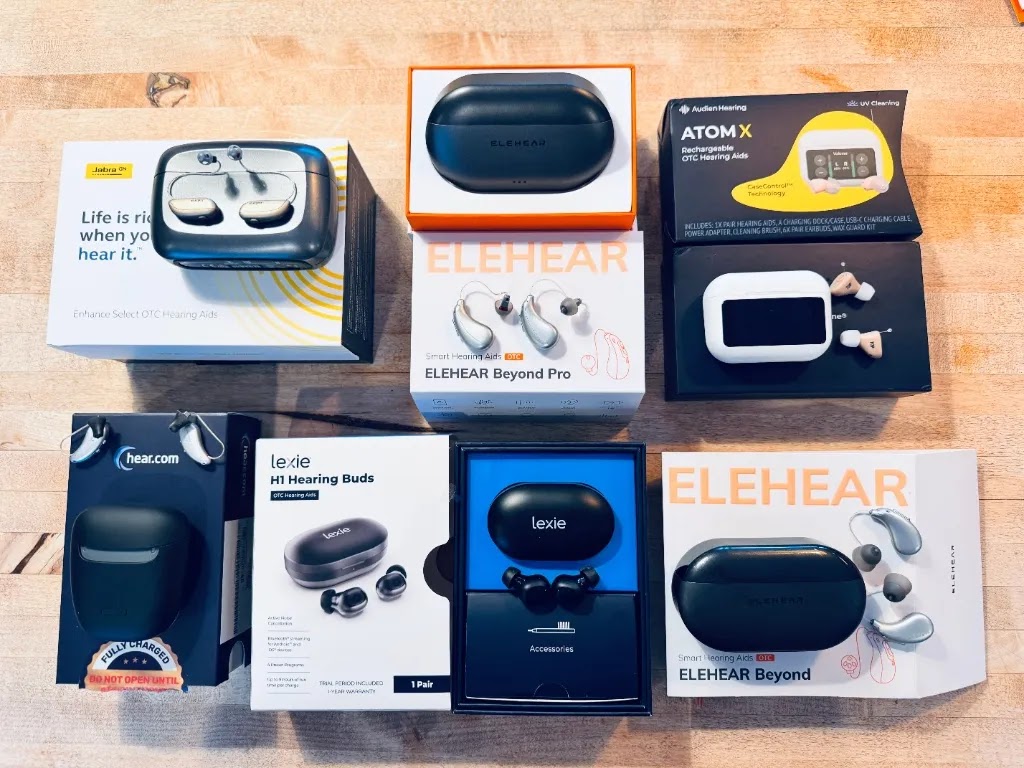
To help you narrow your options, we evaluated more than 70 hearing aids using hands-on testing by audiologists. These are the top 12 hearing aids we recommend in 2026.
Top performers of 2026
Our audiologists' standout picks across price, features, and support — based on hands-on testing and manufacturer data.

Jabra Enhance Select M3
SoundScape™ with Auto Focus, TapControl™, and up to three years of remote support from licensed audiologists — our top pick overall.

Elehear Beyond
A budget-friendly RIC with Bluetooth streaming, a built-in tinnitus-masking sound library, and HSA/FSA eligibility.
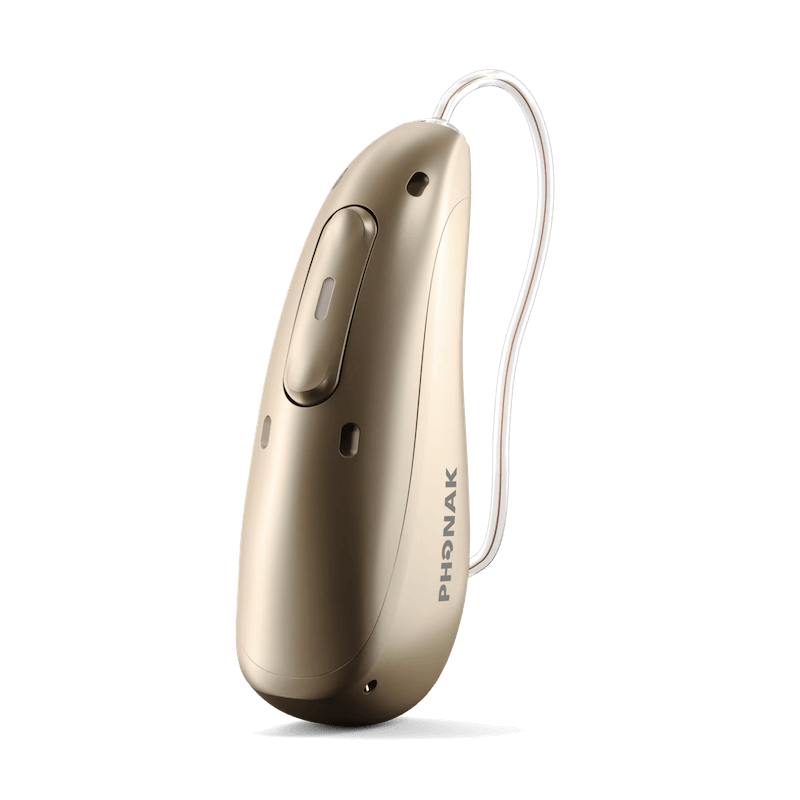
Phonak Audéo Sphere™ Infinio
Phonak's flagship prescription RIC, powered by the DEEPSONIC™ AI dual-chip processor for standout speech clarity in noise. Best for moderate to severe hearing loss.
Presenting the best hearing aids we tested in 2026
- Best overall: Jabra Enhance Select M3
- Best value: Elehear Beyond
- Our audiologists’ pick: Phonak Audéo Infinio Ultra Sphere
- A solid budget hearing aid: Audien Atom X
- Best Prescription Runner Up: Oticon Intent
- Best for background noise: ReSound Vivia
- Most advanced features: Starkey Omega AI
- Best for tinnitus relief: Widex Moment
- Best invisible Rx hearing aid: Signia Silk Charge&Go IX
- Best custom hearing aids: Oticon Zeal
Comparing the best hearing aids of 2026
| Brand | Type | Price | Warranty | Financing |
|---|---|---|---|---|
| Jabra Enhance Select M3 ★ Top Pick | OTC | $1,995 | 100-day trial, 1-yr warranty | Yes |
| Elehear Beyond ★ Top Pick | OTC | $431 | 45-day trial, 1-yr warranty | Yes |
| Audien Atom X | OTC | $389 | 45-day trial, 1-yr warranty | Yes |
| Phonak Audéo Infinio Ultra Sphere ★ Top Pick | Rx | $3,498+ | Depends on provider | Varies by insurance/provider |
| Oticon Intent | Rx | $3,698+ | Varies by provider & tech level | Clinic/provider specific |
| Starkey Omega AI | Rx | $2,998 | Depends on provider | Varies by insurance/provider |
| Widex Moment | Rx | $2,798+ | Depends on provider | Varies by insurance/provider |
| Signia Silk Charge&Go IX | Rx | $2,498 | Depends on provider | Varies by insurance/provider |
| ReSound Vivia 9 | Rx | $3,198 | Depends on provider | Varies by insurance/provider |
| Oticon Zeal | Rx | $4,598+ | Depends on provider | Varies by insurance/provider |
Detailing the best hearing aids of 2026
Best overall: Jabra Enhance Select M3
Jabra Enhance Select M3
- $1,995
- Rechargeable
- Mild to Moderate Hearing Loss
Why we picked Jabra Enhance Select M3
The Jabra Enhance Select M3 is built on rebranded ReSound prescription-grade technology, making it one of the most medically sophisticated OTC options available today. Because it pairs in-app self-tuning with ongoing access to remote fine-tuning from licensed audiologists, it delivers a level of clarity and personalization that most OTC hearing aids can’t match.
Speech enhancement is a major strength: Jabra’s onboard digital processors automatically separate speech from background noise, a capability rarely seen in OTC devices. Their updated SoundScape™ with Auto Focus processing helps prioritize speech while preserving awareness of surrounding sounds, making conversations sound more natural in busy environments.
Bluetooth streaming is seamless for calls, podcasts, and media, and the sound signature mirrors ReSound’s prescription line, which emphasizes natural, low-distortion audio. Plus, battery life reaches up to 30 hours on a single charge depending on usage, and the portable charger includes additional on-the-go recharges.
With the Jabra Enhance Select mobile app, users can easily adjust their hearing aid settings and request remote fine-tuning from the Jabra Enhance audiology team. You also get access to Jabra’s 3-year remote care plan, which is one of the longest support windows in the OTC category.
Because it blends medical-grade processing, a 100-day risk-free trial, and long-term audiologist access, the Select M3 is the strongest overall pick in our 2026 hearing aid reviews.
SAVE $200 w/ CODE: AUD200
What we like
- Available Online: The Jabra Enhance Select M3 can be ordered online, providing convenience and accessibility. Customers can also schedule a video appointment with a specialist for personalized advice or take an online hearing test that is used to customize the device you purchase.
- Long-Term Remote Care: Jabra Enhance Select is known for its industry-leading support, including three years of follow-up care with remote adjustments from licensed audiologists.
- TapControl™ is Seamless: The Jabra Enhance Select M3 includes TapControl™ allowing users to answer calls, stream music, or access their voice assistant with a simple double-tap on the device.
- Easy & Affordable Financing Options: Jabra Enhance provides flexible financing options, including 0% APR for 12 to 36 months and qualified buyers pay just $65 per month making it easier to afford high-quality hearing aids.
What we don’t like
- Not Suitable for Severe or Profound Hearing Loss: As with most OTC hearing aids, the Jabra Enhance Select M3 is best for mild to moderate hearing loss. Those with severe or profound hearing issues should consult an audiologist for prescription devices.
- Only Available in Behind-the-Ear Styles: The Select M3 is only available in a receiver-in-canal (RIC) style which may not suit everyone. Although the micro design is among the smallest options on the market, those who prefer in-the-ear (ITE) designs or have difficulty with BTE devices may need to consider other options.
- Requires Some Tech Savvy: Users who are not comfortable with smartphones may find the app and remote care features challenging. A bit of a learning curve may be required for older users or those less familiar with technology.
What our audiologists say

Jabra Enhance hearing aids are developed by ReSound, giving them the look and feel of prescription hearing aids. She recommends the M3 to anyone with mild to moderate hearing loss who struggles to understand speech in quiet and low-noise environments.

Jabra Enhance is my favorite OTC hearing aid option, and I wouldn’t hesitate to recommend it to patients because of the ReSound technology, strong warranty, generous trial period, and access to remote adjustments from a licensed hearing care professional.

You are ultimately getting a medical-grade hearing aid with professional support since this is a rebranded ReSound hearing aid.” She also appreciates that Jabra Enhance offers multiple color options to better accommodate patient preferences.
Best budget hearing aid: Audien Atom X
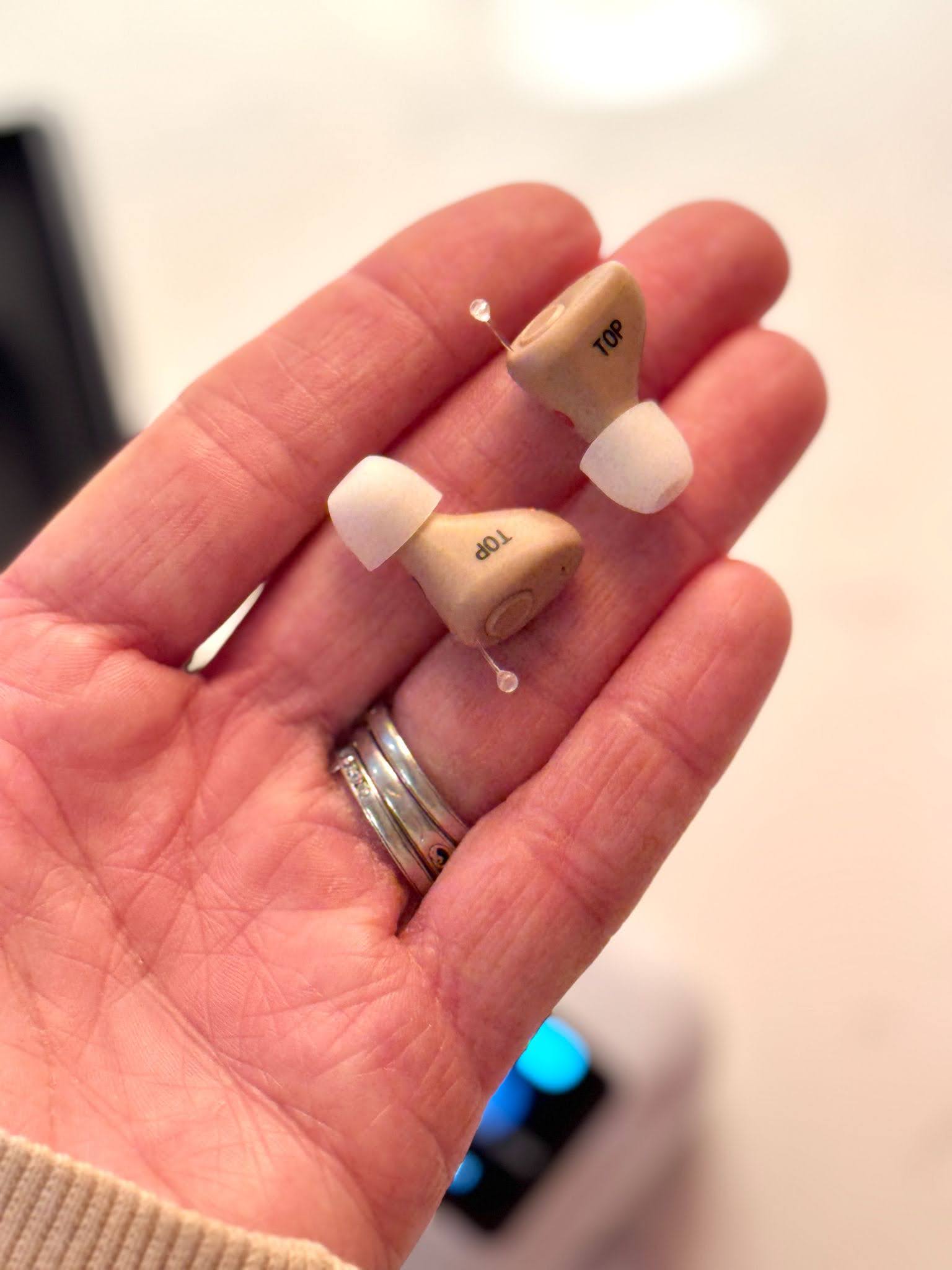
Audien Atom X
- $389
- Rechargeable
- Mild to Moderate Hearing Loss
Why we picked the Audien Atom X
The Audien Atom X is our budget pick for adults looking for a simple, rechargeable OTC hearing device at one of the lowest price points in this roundup. Compared with previous Audien models, it adds Bluetooth streaming, hands-free calling, and a redesigned charging case, making it a more feature-rich option for first-time users on a tight budget.
That said, our testing and audiologist feedback suggest its biggest strengths are affordability and simplicity—not speech clarity in challenging listening environments. For adults with mild hearing difficulties who mainly want a little extra volume at home or in other quiet settings, the Atom X may be a reasonable entry point. Those who regularly struggle in restaurants, group conversations, or other noisy environments will likely benefit from a more advanced OTC or prescription hearing aid.
What we like about the Audien Atom X
- Bluetooth streaming with hands-free calling. This is a meaningful upgrade for an entry-level OTC device and brings the Atom X in line with features usually reserved for pricier models.
- Touchscreen charging case. The easy-to-use case doubles as a remote control, allowing users to adjust volume and listening modes without relying on a smartphone app. This may be especially helpful for those with limited dexterity or anyone who prefers not to use a smartphone.
- Excellent feedback control. Despite its budget price, feedback management performed well during testing, helping reduce the whistling that can occur with some entry-level devices.
- Respectable battery life. At roughly 12 hours per charge, battery life holds up well given the added wireless features.
- Built-in UV cleaning. A nice bonus for hygiene and device longevity that isn’t common at this price point.
What we didn’t like
- Limited speech clarity, especially in background noise. The Atom X performed below average for speech understanding in both quiet and noisy environments. Adults who frequently communicate in restaurants, social gatherings, or other challenging listening situations will likely benefit from a more advanced hearing aid.
- Not personalized to your hearing loss. Unlike many OTC hearing aids, the Atom X cannot be programmed to a hearing test or customized to match an individual’s hearing loss, limiting its ability to improve speech clarity. This was one of our audiologists’ biggest concerns.
- Visible in-ear design. Unlike more discreet completely-in-canal styles, the Atom X’s design is more noticeable, which may matter to wearers concerned about visibility.
- Best suited to quiet environments. The Atom X is most appropriate for adults with mild hearing loss who spend much of their time at home or in other quiet settings. It is unlikely to provide enough benefit for active lifestyles or more complex hearing needs.
What our audiologists say
Overall, Audien Atom X is a cost-efficient economy hearing device geared towards those with mild hearing loss. I wouldn’t recommend them specifically for noise reduction or speech clarity functions, considering the devices do not take your hearing test into account; however, they could be a good option for those who simply need a little volume. However, if you don’t have large, straight, ear canals, I would recommend Audien’s BTE model, the Ion Pro.
Audien Atom X may be a reasonable starting point for sedentary people with mild hearing loss who spend most of their time at home or in other quiet environments. However, this is essentially an amplifier with limited adjustability — active users and those who frequently encounter background noise will likely need a more advanced hearing aid.
“Audien markets themselves as hearing aids, however these are really just amplifiers. They have an in the ear and behind the ear model, both of which are rechargeable. Unfortunately, these cannot be programmed to a hearing test and have no way to even apply app-based hearing screening results, like many other OTC models.”
Best Value: Elehear Beyond
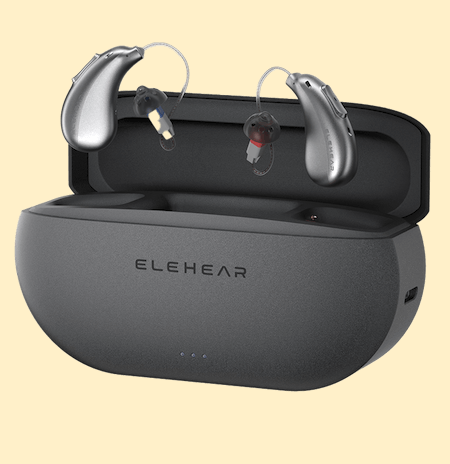
Elehear Beyond
- $431
- Rechargeable
- Mild to Moderate Hearing Loss
Why we picked Elehear Beyond
If you’re looking for an affordable hearing aid that doesn’t skimp on essential features, Elehear Beyond is a standout. At just under $500 per pair, it delivers a level of functionality that rivals devices twice its price. With built-in Bluetooth streaming, a rechargeable battery, and a user-friendly companion app, and lifetime professional support with remote fine-tuning, Beyond works well for tech-comfortable users who want control without complexity.
One feature that sets the Beyond apart is the ELEHEAR app with ElePro™, which provides remote audiologist support, personalized guidance, and remote fine-tuning. In our testing, we were particularly impressed by the app’s 22 high-quality tinnitus masking sounds, which can be layered into personalized soundscapes while streaming music. The app also includes customizable listening modes, frequency adjustments, remote sound capture, and hearing aid controls, offering a level of personalization that’s uncommon among OTC hearing aids in this price range.
A quick note on Beyond Pro: Elehear also offers Beyond Pro, a higher-end upgrade to the standard Beyond with stronger noise reduction, better speech focus, and improved feedback control. Our reviewers found that when comparing Elehear Beyond vs. Beyond Pro, Beyond Pro performed noticeably better in restaurants and busy social settings, making it a worthwhile step up if you want clearer speech without moving into prescription-level pricing.
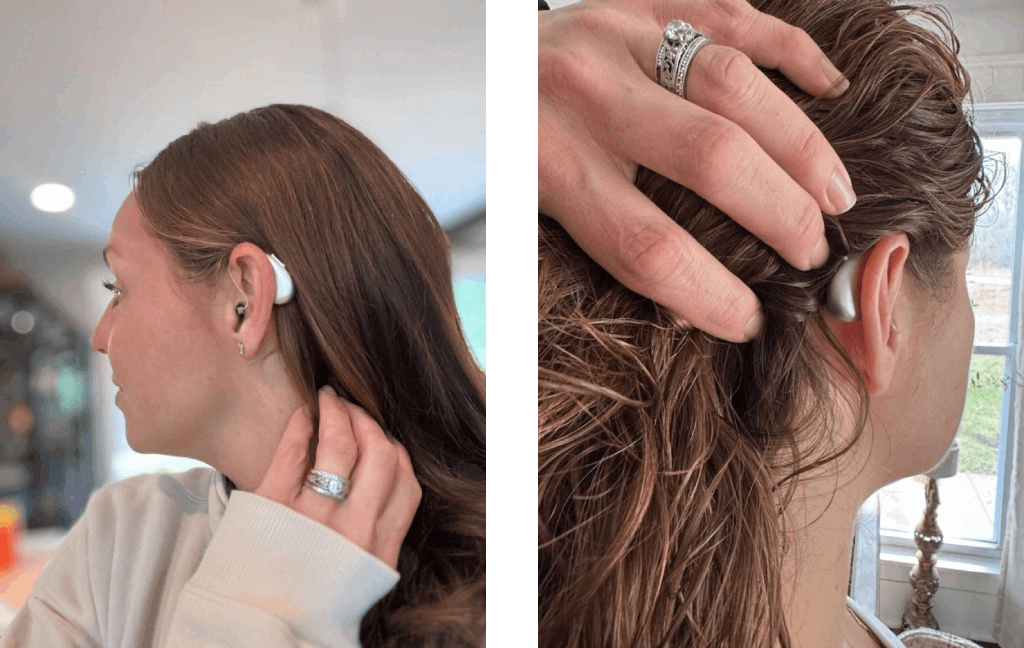
What we like about Elehear Beyond
- Excellent tinnitus masking. Elehear Beyond offers 22 high-quality tinnitus masking sounds, and during testing they were among the best we’ve experienced in an OTC hearing aid. The masking sounds can even continue while streaming music, making it easy to layer relaxing audio with tinnitus relief.
- Comfortable for all-day wear. The lightweight receiver-in-canal (RIC) design remained comfortable throughout extended testing. Multiple ear dome sizes made it easy to achieve a secure, comfortable fit during testing.
- Impressive value for the price. For under $500 per pair, the Beyond includes Bluetooth streaming, AI-powered background noise reduction, rechargeable batteries, tinnitus management, and lifetime professional support with remote fine-tuning—a feature that’s uncommon among budget OTC hearing aids.
- Strong speech clarity in everyday environments. During testing, background noise was noticeably reduced while speech remained clear and natural during conversations in typical everyday environments.
What we don’t like about the Elehear Beyond
- The app has a learning curve. While setup took less than 30 minutes, some customization features weren’t intuitive to find. Less tech-savvy users may need additional time to learn the app’s controls.
- Not ideal for highly active lifestyles. With an IPX5 water-resistance rating, the Beyond can handle light sweat and splashes but isn’t designed for heavy exercise or prolonged exposure to moisture. Our reviewer also noticed slight movement noise while walking and jogging.
- Bluetooth inconsistency. Bluetooth range was occasionally inconsistent during testing, requiring the phone to remain relatively close for a stable connection.
What our audiologists say
I recommend the Elehear Beyond for adults with mild hearing loss and no more than moderate high-frequency hearing loss. Tech-savvy users will benefit most from the user-friendly app, tinnitus masking features, rechargeable design, and AI-powered noise reduction, making it a strong value for budget-conscious adults seeking an OTC hearing aid.
Our audiologists’ pick: Phonak Audéo Infinio Ultra Sphere
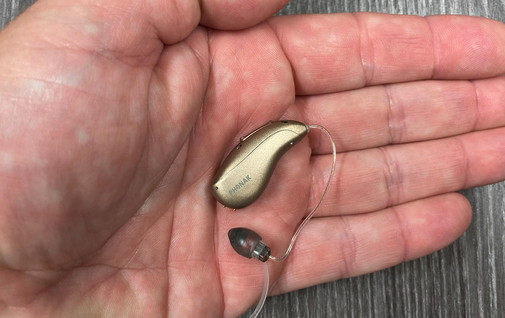
Phonak Audéo Infinio Ultra Sphere
- $3,498+
- Rechargeable
- Mild to Profound Hearing Loss
Why we picked the Phonak Audéo Infinio Ultra Sphere
The Audéo Infinio Ultra Sphere is Phonak’s flagship prescription hearing aid and one of the strongest-performing premium hearing aids we’ve evaluated. What sets the Sphere apart is its exceptional speech understanding in background noise—a listening situation where many hearing aids still struggle.
Its dual-chip architecture combines Phonak’s standard sound processor with a dedicated AI chip that continuously identifies speech and suppresses competing background noise in real time. In practice, this is the kind of technology that can make a real difference for someone trying to follow a conversation at a busy restaurant or family gathering, arguably the single most difficult listening situation for those with hearing loss.
The tradeoff is that using AI-powered Spheric Speech Clarity 2.0—especially alongside Bluetooth streaming—consumes more battery than a typical hearing aid. However, many users find the improved speech clarity well worth the shorter runtime in challenging listening environments.
What we like about the Phonak Audéo Infinio Ultra Sphere
- Class-leading speech clarity in noise, thanks to its dedicated AI-powered Spheric Speech in Loud Noise technology. This dedicated AI noise-separation chip is where the Ultra Sphere separates itself from nearly every other prescription device we’ve tested.
- Excellent performance in quiet environments too. Speech clarity in quiet settings also scored well above the category average, so the device doesn’t trade one strength for another.
- Strong music and media streaming. Bluetooth audio streaming quality tested above average, a meaningful bonus for wearers who use their hearing aids for calls, podcasts, or music throughout the day.
- Designed to reduce maintenance. The new EasyGuard receiver design helps protect against earwax buildup, which may reduce the need for repairs and maintenance over time.
What we didn’t like
- Feedback handling lags behind the category. In our testing, feedback (whistling/squealing) management scored below the category average — worth discussing with your audiologist if you’ve had feedback issues with prior hearing aids.
- Own-voice comfort is mixed. Some wearers may notice their own voice sounding different or less natural, particularly during the initial adjustment period.
- Premium price point. Pricing varies by technology level, provider, and bundled services, but most patients can expect to pay approximately $6,000–$7,000 per pair, making it one of the most expensive hearing aids in our roundup.
- Larger form factor. The dual-chip design makes this device noticeably larger than many other receiver-in-canal hearing aids, which may matter for wearers prioritizing discretion.
What our audiologists say
The Infinio Sphere has made a real impact on the hearing aid landscape because of its strong performance in background noise. Patients who struggle in situations with heavy background noise and multiple speakers have shown significant improvement in speech understanding while wearing the Sphere. She would recommend the Sphere for those who aren’t bothered by a larger body style or own-voice processing.
The Phonak Infinio Sphere performs best for people whose primary concern is hearing in background noise, and she appreciates its “360 hearing.” However, she notes that the device is larger than most receiver-in-canal hearing aids, and users who stream frequently from their phone may prefer other options because of intermittent Bluetooth performance.
Best prescription hearing aid runner-up: Oticon Intent

Oticon Intent
- $3,698+
- Rechargeable
- Mild to profound Hearing Loss
Why we picked the Oticon Intent
The Oticon Intent is Oticon’s flagship receiver-in-canal prescription hearing aid, and it earned a runner-up spot in our audiologists’ pick category on the strength of its overall performance and its distinctive approach to adaptive sound. Where most premium devices lean on microphone arrays and noise-classification software alone, Intent adds four built-in sensors which continuously analyze conversation activity, head movement, body movement, and the surrounding acoustic environment to help prioritize the sounds you’re trying to hear.
Combined with excellent speech understanding, outstanding feedback management, and strong Bluetooth performance, the Intent delivers exceptional all-around performance for adults with mild to profound hearing loss.
What we like
- Excellent speech understanding in quiet and noisy environments. The Intent performed exceptionally well in our testing, delivering clear speech across a wide range of listening situations.
- Outstanding feedback management. Feedback (whistling) was virtually nonexistent during testing, making the Intent a great choice for active users.
- Adapts to how you naturally communicate. Unlike traditional hearing aids that respond only to sound, the Intent uses four onboard sensors to monitor conversation activity, head movement, body movement, and the surrounding environment. This allows it to automatically adjust based on where your attention is focused.
- Excellent Bluetooth streaming and connectivity. Calls, music, and other streamed audio sounded clear and natural during testing, and the Intent supports direct streaming from compatible Apple and Android devices, along with a range of Oticon wireless accessories.
What we don’t like
- Own-voice comfort may take some adjustment. Own-voice perception was one of the Intent’s weaker areas and some wearers may notice their own voice sounds less natural than with other premium hearing aids, making this an important discussion point during the fitting process.
- Premium price. The Intent sits at the upper end of the prescription hearing aid market. Pricing varies by technology level and provider, but it is generally one of the more expensive options available.
- Bulkier than some competitors. The redesigned housing that accommodates the sensor array is slightly larger than prior Oticon RIC models, which may be a factor for wearers who use glasses or masks regularly.
What our audiologists say
Recommends the Oticon Intent for those looking for a top-tier device that excels in speech clarity and connectivity. However, she adds that those seeking even more suppression in noise would be better served with the Infinio Sphere.
The Oticon Intent is one of the most reliable hearing aids she’s worked with and performs particularly well in managing background noise. She emphasizes that proper programming is critical to achieving the best results, and says patients have reported significant improvements in their quality of life after being fit with the device.
Most advanced features: Starkey Omega AI
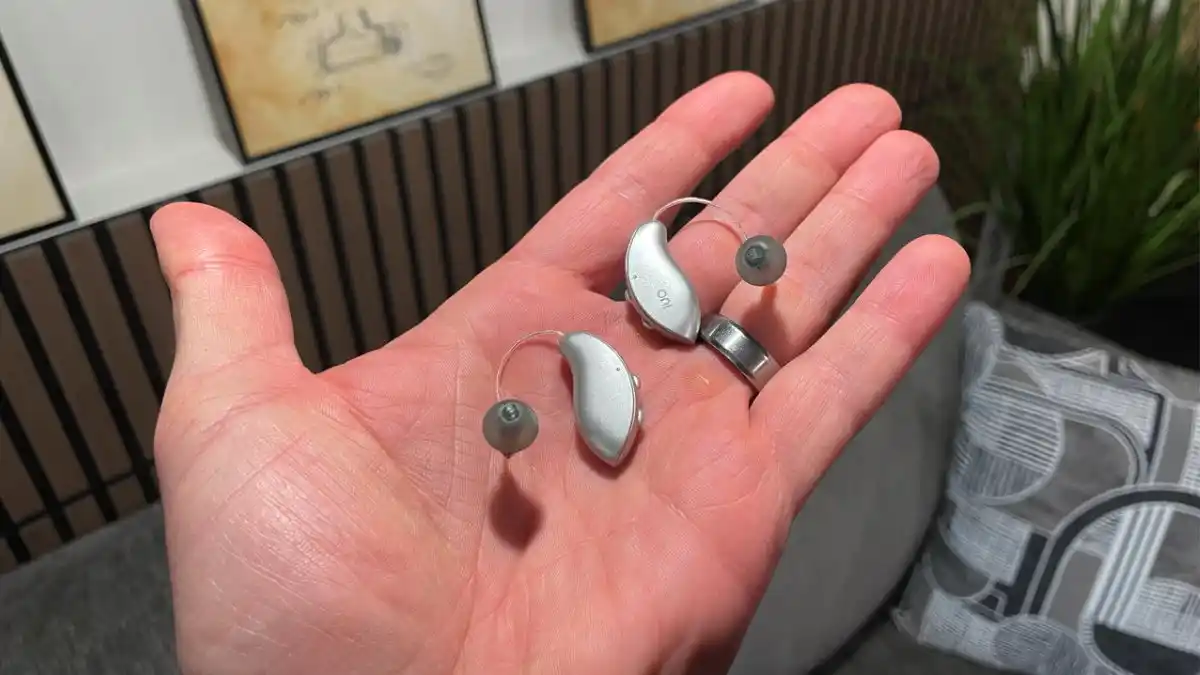
Starkey Omega AI
- $2,998
- Rechargeable
- Moderate to Severe Hearing Loss
Why we picked Starkey Omega AI
The Starkey Omega AI is Starkey’s current flagship prescription hearing aid, launched in October 2025 as the successor to the Genesis AI and Edge AI lines. We featured the Starkey Genesis AI as one of the best hearing aids of 2025 previously, and this new iteration has only gotten better with more advanced features. It’s available through audiologists and hearing care professionals at a typical price range of $4,000+ per pair, depending on the technology tier and provider. audiologists.org maintains a partnership with remote care provider, Injoy Hearing, and they offer the Omega AI 20 for $2,998 saving our readers over $1,000 per pair! Essentially, Starkey’s Omega AI excels at every variable within our testing protocol: real-world speech performance, feedback management, connectivity, battery life, and more. Independent testing of the Starkey Omega AI corroborates that this device has earned its reputation as one of the best prescription hearing aids available on the market today. Here’s where the Omega AI stood out in our testing—and where we think there is still room for improvement.
What we like
- Exceptional real-world speech performance. The device’s Dual-Network AI Engine processes sound using two simultaneous deep neural networks that together allow the hearing aid to adapt continuously to changing acoustic scenes. In busy settings like restaurants or family gatherings, users report noticeably cleaner speech without the “tunnel” effect that some directional systems produce.
- Outstanding feedback management. Whistling and feedback in certain environments is handled exceptionally by Starkey’s advanced technology, which ultimately means that hearing aid wearers can seamlessly go between various environments without sacrificing performance.
- Robust wireless connectivity. The Omega AI supports Bluetooth Low Energy (LE) Audio for streaming from iOS and compatible Android devices, hands-free calling, and multi-device pairing. The device also pairs with Apple Watch and is compatible with Starkey’s full accessory ecosystem, including remote microphones and TV streamers.
- Impressive battery life. Rechargeable models offer up to 51 hours of runtime per charge, which is among the longest in the industry. Premium charging cases can provide additional charges on the go.
- Genuinely useful wellness and safety ecosystem. Starkey has built a health monitoring platform into the Omega AI that goes well beyond hearing. The device includes a built-in motion sensor for activity tracking, automatic fall detection with configurable emergency contact notification, and we love that because it empowers confidence for people with hearing loss and their caregivers. We think of this fall detection feature as a marrying of the hearing aid industry with medical alert systems in a way that’s seamless and extraordinarily helpful.
What we don’t like
- Own-voice comfort is average. The sound of your own voice through amplification is something many new hearing aid wearers find disorienting at first.
- Extensive features require investment to master. The interface can feel cluttered, and first-time users may need several follow-up appointments and experimentation time before they’re getting the complete and seamless experience. Plan for a bit of a learning curve.
- Small physical controls. The buttons on the receiver-in-canal (RIC) models can be stiff and small, which may present challenges for users with arthritis or reduced finger dexterity.
What our audiologists say
Starkey hearing aids focus on clarity of speech while maintaining good background noise reduction. She also likes the My Starkey app for its wellness features, including Fall Alert, Reminders, Activity and Engagement tracking, and Translator.
Starkey is a tried-and-true hearing aid manufacturer that offers options for most hearing aid users. They are especially well-known for producing excellent custom hearing aids, even for patients with more challenging ear anatomy.
Best for tinnitus relief: Widex Moment

Widex Moment
- $2,798+
- Rechargeable
- Moderate to Severe Hearing Loss
Why we picked Widex Moment
Widex Moment hearing aids stand out for their industry-leading tinnitus relief and calming sound experience. Built with Widex’s Zen and SoundRelax™ programs, these hearing aids help reduce the perception of tinnitus through gentle, fractal tones and natural soundscapes. In addition to its comfortable fit and rich sound quality, the Moment line provides meaningful relief for individuals coping with chronic ringing or buzzing in the ears.
What we like
- A tinnitus management powerhouse. Zen and SoundRelax™ sound therapy programs deliver soothing, customizable tones that help mask or reduce the perception of tinnitus. These tones can be streamed directly through the Moment app or adjusted in real time based on user preference. The Moment series includes built-in access to Widex Zen therapy without needing additional hardware, giving users an easy, on-device way to manage tinnitus symptoms.
- Relaxing soundscapes. Users can blend calming background sounds—like soft chimes or ocean waves—with environmental sound to ease stress and promote relaxation throughout the day.
- Easy-to-use mobile app. The Widex Moment app offers direct access to tinnitus sound programs, volume adjustments, and relaxation tools—all in a clean, user-friendly interface.
- AI-enabled. These hearing aids are equipped with an artificial intelligence program called SoundSense Learn™ that recommends optimal listening levels based on the user’s current surroundings.
What we don’t like
- Issues with Bluetooth connectivity. Some users have trouble getting their Widex Moment hearing aids to successfully pair with their smartphones, particularly when they change locations.
- Battery life impacted by tinnitus streaming. Battery life can shorten with continuous tinnitus therapy streaming. Prolonged use of Zen or SoundRelax™ programs may reduce overall runtime, requiring more frequent recharging or battery changes.
- Many models aren’t rechargeable. Of the eight models that make up the Widex Moment line, only two are available with rechargeable batteries.
What our audiologists say
Recommends Widex Moment for music lovers and people with tinnitus. She also notes that Widex has expanded its lineup with smaller rechargeable behind-the-ear models, although rechargeable custom in-the-ear options are still unavailable.
Praises Widex’s ability to produce clear, natural sounds, and notes they have many different styles to fit a variety of patient needs.
Widex is an excellent choice for patients who need sophisticated amplification while also managing tinnitus with its Zen sound therapy. She also notes that Widex has some of the shortest processing times on the market, making it a particularly good option for people who wear a cochlear implant or bone conduction device in the opposite ear.
Best invisible Prescription hearing aid: Signia Silk Charge&Go IX
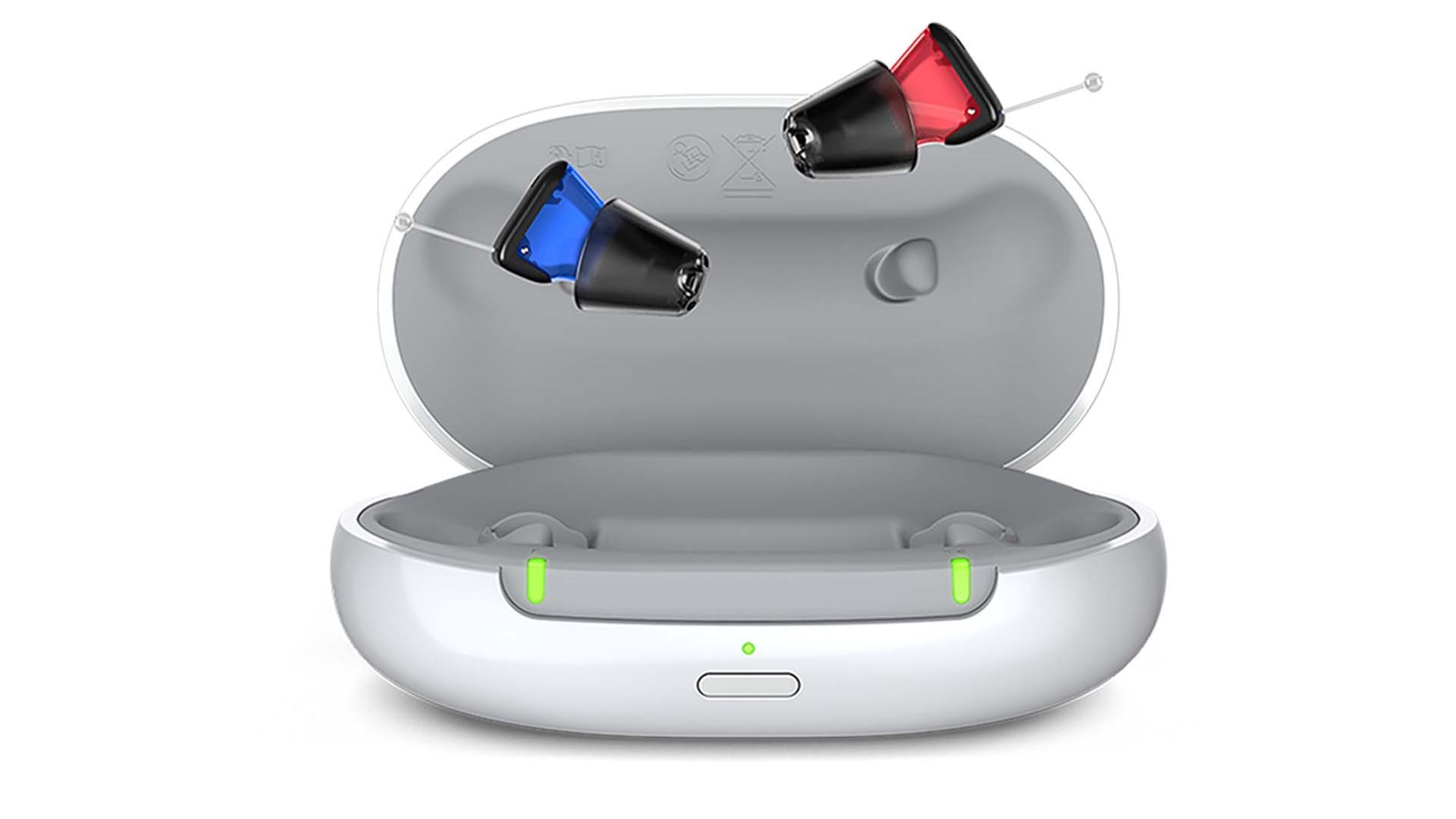
Signia Silk Charge&Go IX
- $2,498
- Rechargeable
- Mild to Moderate Hearing Loss
Why we picked Signia Silk Charge&Go IX
The Signia Silk Charge&Go IX is one of the only rechargeable, completely-in-canal (CIC) prescription hearing aids on the market. Unlike most CIC devices that require disposable batteries, Silk Charge&Go IX provides overnight rechargeable power, premium speech-in-noise performance, and a tiny, highly discreet fit.
Because it uses silicone Click Sleeves instead of custom earmolds, Silk fits most ear canals comfortably without needing a custom impression — making it faster to fit and easier to replace. The new IX chip enhances speech clarity in busy environments and supports Bluetooth-free, phone-based control through the Signia app.
For adults who want the smallest possible prescription hearing aid without giving up rechargeable convenience, the Silk Charge&Go IX is currently one of the strongest options available.
What we like
- Rechargeable CIC design. This is one of the only ultra-small, completely-in-canal prescription hearing aids with a built-in rechargeable battery instead of tiny disposable ones.
- Instant-fit silicone sleeves. Soft Click Sleeves create a comfortable in-canal seal straight out of the box without needing a custom mold.
- Improved speech in noise. The Integrated Xperience (IX) platform enhances speech clarity in restaurants, meetings, and group conversations.
- Discreet appearance. The device sits deeper in the ear canal than most RIC models, making it nearly invisible in everyday use.
What we don’t like
- No Bluetooth streaming. Silk Charge&Go IX does not support direct audio streaming for calls or music.
- Not ideal for severe hearing loss. This model is designed for mild to moderate hearing loss and will not meet the needs of those with more significant or complex hearing challenges.
- Small size can mean tricky handling. The tiny CIC form factor may be difficult for users with dexterity challenges to insert or remove.
What our audiologists say
Signia is one of her favorite brands for patients seeking small, effective devices with excellent app-based controls.
Signia consistently delivers high-quality technology across styles, and the Silk line is no exception. She highlights that Signia devices offer strong speech clarity and customer support, noting that their devices “improve quality of life and help users better access the world around them through sound.”
Signia’s Silk devices are some of the most innovative solutions on the market. “This device combines the acoustic and cosmetic benefits of an invisible in-the-ear device and the comfort of a RIC device, as the sleeves are pliable and feel less occlusive. It’s my favorite in-the-ear product to fit, and the rechargeable devices are flying off the shelf.”
Best for background noise: ReSound Vivia
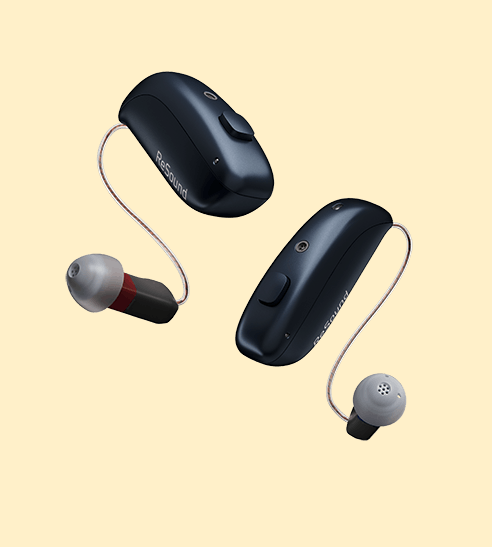
ReSound Vivia
- $3,198
- Rechargeable
- Mild to profound Hearing Loss
Why we picked ReSound Vivia
The ReSound Vivia (available in technology levels 9, 7, 5, and 4) is ReSound’s newest hearing aid platform and our top pick for people who frequently struggle to hear conversations in noisy environments. The Vivia family introduces ReSound’s latest sound processing technology, while the premium Vivia 9 adds a dedicated Deep Neural Network (DNN) chip designed to further improve speech clarity when competing sounds are present.
Like previous premium ReSound hearing aids, the Vivia automatically analyzes the listening environment and adjusts its settings in real time, reducing the need for manual program changes throughout the day.
What we like about the ReSound Vivia
- Excellent hearing in background noise. The Vivia family is specifically designed to improve speech understanding in noisy environments, while the premium Vivia 9 uses a dedicated DNN chip to further separate speech from competing sounds.
- Discreet design. The Vivia is available in ReSound’s compact, yet comfortable, microRIE style—which they say is the world’s smallest AI hearing aid.
- Bluetooth LE Audio compatibility. The Vivia supports Bluetooth LE Audio for high-quality streaming, hands-free calls, and compatibility with the latest wireless audio technology.
- Easy access to Auracast broadcasts. ReSound’s Auracast Assistant simplifies connecting to compatible public and private Auracast™ audio streams through the ReSound Smart 3D app.
- Find My Hearing Aids feature. The ReSound Smart 3D app helps users locate misplaced hearing aids using their last known location—a practical feature that has proven valuable for recovering lost devices.
What we don’t like about the ReSound Vivia
- Premium price. Like all prescription hearing aids, the ReSound Vivia is pricey, typically ranging from $2,598 to $3,198 per pair.
- Battery life is shorter when using the premium AI speech-in-noise mode. Frequent use of the Hear in Noise program can significantly reduce battery life compared with the standard All Around listening program.
- Requires professional fitting. The Vivia is only available through a hearing care professional, requiring a hearing evaluation and in-person fitting.
What our audiologists say
“The ReSound Vivia performs exceptionally well in background noise and other complex listening environments. It offers four technology levels to fit different budgets and numerous receiver options to accommodate a wide range of hearing losses, including ReSound’s unique M&RIE (Microphone & Receiver-In-Ear) receiver, which places a microphone inside the ear for better sound localization while reducing wind and hair noise. For patients seeking the most advanced speech-in-noise performance, the premium Vivia 9 also features a dedicated AI chip to further enhance speech clarity.”
“ReSound is one of the top 6 manufacturers and has some great tools for the hearing-impaired, including state-of-the-art devices, accessories, and smartphone apps.” Regarding the ReSound Vivia, she adds: “I’d recommend it, particularly for patients with a Cochlear implant on the other side. It does Bluetooth really well, offers rechargeable technology, works hand-in-hand with Cochlear implants, and is usually ideal for people with good low-frequency hearing and sloping high-frequency hearing loss—otherwise, the sound quality can be a little tinny.”
Best custom hearing aid: Oticon Zeal

Oticon Zeal
- $4,598+
- Rechargeable
- Mild to Severe Hearing Loss
Why we picked the Oticon Zeal
The Oticon brand of hearing aids boasts a reliable, ever-improving portfolio made specifically with the user in mind. Designed with an onboard Deep Neural Network, the Oticon Zeal is the only in-the-ear hearing aid that offers a database of up to 12 million real-world sounds scenes to better mimic the world around you and provide a more natural listening experience.
The Oticon Zeal is a genuinely new category of hearing aid. Oticon calls it “NXT In-the-Ear” designed to close the long-standing gap between fully invisible, low-feature completely-in-canal devices and the more capable (but visible) receiver-in-canal style. It runs on the same processing chip and AI sound engine found in Oticon’s Intent platform, which means wearers get premium speech-in-noise processing in a shell that sits deep enough in the canal to be nearly unnoticeable.
We picked it for this slot because it solves a frustration many patients have voiced for years: wanting a hearing aid that’s genuinely hard to see without giving up rechargeability, Bluetooth streaming, or strong sound quality.
What we like about the Oticon Zeal
- Rare combination of size, rechargeability, and Bluetooth. The Zeal successfully combines three features many patients have long wanted in an in-the-ear hearing aid: a compact design, rechargeable batteries, and Bluetooth connectivity
- Surprisingly powerful for its size. Despite its compact design, Dr. Hinson notes the Zeal can accommodate many people with mild to moderately severe hearing loss—a capability that’s uncommon among instant-fit in-the-ear hearing aids.
- Premium Oticon technology in a discreet package. Zeal brings the advanced technology of the Oticon Intent into a compact in-the-ear design.
- Auracast-ready connectivity. The Zeal supports Auracast broadcast audio, letting wearers connect directly to compatible audio systems in public venues as that infrastructure rolls out.
What we didn’t like
- Not the right fit for every ear. The Zeal’s larger, deeper shell may not fit every ear comfortably, particularly those with narrow or unusually shaped ear canals. In some cases, achieving a secure fit may require a custom earmold, which can make the device sit farther out of the ear and reduce its discreet appearance.
- Small size can make insertion challenging. Although the Zeal is designed to be discreet, some users—particularly those with dexterity challenges—may find it difficult to insert.
- Premium price with limited tiers. The Zeal is currently available only in Oticon’s top technology tier, starting at around $5,000 per pair.
- Not suitable for profound loss. Zeal works best for people with mild to moderately severe hearing loss, while those with profound hearing loss will need a more powerful device.
What our audiologists say
The Oticon Zeal combines three features many patients have long wanted in an in-the-ear hearing aid: a compact design, rechargeable batteries, and Bluetooth connectivity. She also notes that, despite its small size, the Zeal can accommodate many people with mild to moderately severe hearing loss—a capability that’s uncommon among non-custom in-the-ear hearing aids. While it may not be the right fit for every patient, she says it’s an excellent option for those who want great sound quality in a small, rechargeable package with smartphone connectivity.
“Oticon is a trusted hearing aid manufacturer that makes hearing aids for both children and adults. They have a large portfolio with products that can fit anything from mild to severe hearing loss. Oticon is constantly improving and making products that are reliable and user-friendly. They put a lot of research and development into their products, and it definitely shows. As a provider, I rarely see complaints regarding Oticon products.”
“The Oticon Zeal has the great technology of the Intent in a compact size; however, it doesn’t fit most ears.” In her experience, the Signia Silk fits better in most patients’ ears, but the Oticon Zeal has the benefit of Bluetooth technology.
Over-the-counter (OTC) hearing aids
Despite hearing loss being a widespread problem in the United States, the high price tags of Rx hearing aids have made it difficult to manage the condition. That all changed in 2022 when the FDA created the over-the-counter hearing aid category, which doesn’t require a prescription. Since then, a wide variety of these assistive listening devices have found their way onto the market to treat mild to moderate hearing loss for a fraction of the cost of prescription devices that can be anywhere from $2,000 to $8,000 per pair. This includes products from powerhouse tech brands like Sony as well as previously Rx-only brands like Eargo and Audien.
Pros
- They are more affordable. With prescription hearing aids costing patients as much as $8,000 a pair, over-the-counter devices are a welcomed alternative to those looking to their hearing loss without breaking the bank. And while over-the-counter aids can still ring up a hefty bill — with some devices in the $2,000 to $3,000 range — you can also find them under $1,000, with some as low as $100 a pair for a device that may be suitable for someone with very mild heating challenges.
- They can be purchased directly by customers. While there are certainly benefits to going through a local audiologist to treat your hearing loss, some may not require it. Over-the-counter hearing aids save you trips to the audiologist for hearing exams, diagnosis, and fittings, which can eat into your deductible.
- Many of them can be self-fitted and customized. Over-the-counter hearing aids usually come with a set of different hearing aid domes to fit the device on your own. Likewise, the settings are typically more user-friendly than an Rx hearing aid and can be programmed on your own.
Cons:
- They don’t treat severe hearing loss. Those with severe or profound hearing loss will still want to consult an audiologist to treat their condition, as over-the-counter hearing aids are only intended for adults with perceived mild to moderate hearing loss. It’s also important to note that the FDA only regulates over-the-counter hearing aids for adults, and they should not be used for children or anyone under the age of 18.
- They have fewer features. While OTC hearing aids generally include fewer advanced features than prescription devices, some OTC models now offer Bluetooth streaming, app-based tuning, or directional microphones.
- You won’t have access to in-person care. While not having to go back and forth to the audiologist is a perk in many ways, it also means you’ll have to rely on the remote care offered by over-the-counter hearing aid brands for adjustments to your device or consultations about your condition. Likewise, you’ll be resorting to online hearing tests that cannot provide a detailed audiogram like an in-person facility.
Prescription hearing aid considerations
Pros:
- They are more technologically advanced. Prescription hearing aids offer some of the most innovative hearing aid features on the market, ranging from directional microphones that can allow for targeted speech recognition, telecoils that allow you to connect to hearing loops (in loop-enabled venues), and wireless Bluetooth connectivity to stream media directly to your devices.
- They treat more severe cases of hearing loss. The FDA only approved over-the-counter hearing aids for adults with mild to moderate hearing loss. That means children and those with severe or profound hearing loss don’t stand to benefit from them. Luckily, prescription devices have the technology necessary to better manage these more extreme cases.
- They can be better customized to you. Over-the-counter hearing aids come with a set of domes in different sizes to choose from, which may or may not be sufficient for your needs. Prescription hearing aids can be fitted by a professional to your unique ear for a comfortable fit. Likewise, your audiologist can program the device according to your audiogram.
Cons:
- They are expensive. Like most medical products, prescription hearing aids are extremely expensive, making them inaccessible to many in need of hearing loss treatment. These devices can cost users between $2,000 to $8,000 a pair, and most insurance plans don’t cover them.
- They require professional calibration. Between your in-person hearing test, diagnosis, fittings, customizations, and routine maintenance, prescription hearing aids will require frequent visits with your audiologist, whether online or in person.
Hearing aid styles
Before you start looking into hearing aids, you should familiarize yourself with the different styles these devices are offered in. Each type of hearing aid is designed to address different clinical needs as well as customer priorities in terms of design or comfort. Here are the four styles of hearing aids available to users:
- Behind-the-ear (BTE). The image that comes to most people’s minds when they think of a hearing aid is a bulky tube tucked behind the ear with a wire that hooks around to an ear mold outside the canal. The behind-the-ear (BTE) is the largest hearing aid style, though newer models have been slightly more discreet. BTEs tend to have the most power packed into them.
- Receiver-in-canal (RIC). Similar to the behind-the-ear style, receiver-in-canal (RIC) hearing aids have a hearing aid body that rests behind the ear, with the key difference being the receiver rests inside the ear canal without the aforementioned mold. The body also tends to be smaller than that of a BTE, making the devices more subtle.
- In-the-ear (ITE). In-the-ear (ITE) hearing aids sit in the outer portion of the ear and are available in full-shell or half-shell designs. They can include advanced features like Bluetooth or telecoil, but their battery life and amplification power can be lower than larger behind-the-ear models, depending on the ear size and shape.
- In-the-canal (ITC). In-the-canal (ITC) hearing aids are smaller than ITE devices and fit partly in the ear canal for a more discreet look. They offer fewer onboard features and shorter battery life than ITE models but can still support wireless streaming and noise reduction depending on the brand.
- Completely-in-canal (CIC). As the name suggests, completely-in-canal (CIC) devices rest entirely inside the ear canal of the wearer, making them virtually invisible. These are the smallest style of hearing aids and are popular among users who don’t want to alert others to their condition. They have a tiny retrieval wire that hangs just outside of the ear for removal.
Hearing loss basics
Common types of hearing loss
Perhaps the biggest consideration you should take into account when choosing hearing aids is the type of hearing loss that you experience. This comes down to one’s ability to hear frequencies, which can affect what they can and can’t hear while out in the world.
- Low-frequency hearing loss. If you have trouble hearing frequencies below 2,000 Hz, you likely are experiencing low frequency hearing loss. Examples of low frequency sounds that may be difficult to hear include vowel sounds, rumbling thunder, or a refrigerator hum.
- High-frequency hearing loss. Those who struggle to hear frequencies between 2,000 and 8,000 Hz likely have high frequency hearing loss. This can make it hard to hear women’s and children’s voices, birds chirping, and certain high-pitched consonants like “s” and “h.”
- Conductive hearing loss. In some cases, sound waves can’t travel to the inner ear because of hearing loss that occurs in the outer or middle ear. This is called conductive hearing loss, and can be caused by an obstruction in the ear canal like wax build-up or a foreign object, as well as trauma to the eardrum.
- Sensorineural hearing loss. Damage to the inner ear can or nerves that travel from your ear to your brain can result in sensorineural hearing loss, a condition that makes it difficult to process soft sounds. Sensorineural hearing loss requires immediate medical intervention for the best chance to avoid it becoming permanent.
Degrees of hearing loss
You’ll always want to know the degree of hearing loss you’re experiencing before choosing a hearing aid. Over-the-counter devices are only FDA-approved to manage mild to moderate cases in adults, while prescription hearing aids can address more extreme cases of the condition. This comes down to your ability to interpret tones at different decibels, which can be determined via a hearing test taken online or at an audiologists office.
Here are the four degrees of hearing loss:
- Mild hearing loss. When taking a hearing test, tones will be played at a variety of different decibels. If you can make out tones between 25 and 40 dB, you likely have mild hearing loss and can understand some speech with a difficulty to interpret softer sounds.
- Moderate hearing loss. In the case of moderate hearing loss, you can hear tones between 41 and 55 dB, making it hard to understand most conversational speech.
- Severe hearing loss. The next step above moderate hearing loss is a severe degree of the condition, in which you can hear between 56 and 90 dB. Those with severe hearing loss can’t understand speech at all and can only interpret loud noises.
- Profound hearing loss. The most extreme degree of hearing loss is a profound case of the condition, in which you can only hear about 90 dB. This makes even loud noises difficult to hear, like planes and alarms. Profound hearing loss is most common in seniors over the age of 65, but can affect younger people as well.
Hearing aids and tinnitus
If you or someone close to you experiences tinnitus, then you’re aware of how frustrating the condition can be. People with tinnitus hear non-existent external noise, typically in the form of ringing or buzzing sounds. It is a common condition for those who suffer hearing loss, and can be the result of trauma to the ear, an infection, or simply aging.
While there is no known cure for tinnitus, it can be managed with hearing aids. These devices distract you from tinnitus sounds through amplification of speech and other real world noise. Some devices will even play a fractal tone sporadically as a form of masking to turn your attention away from the head ringing. Many hearing aid brands also have mobile app features for tinnitus relief with different types of white noise.
How to buy hearing aids
According to a recent study, many older adults struggle to purchase and use hearing aids because of the stigma and cost. But treating hearing loss with either over-the-counter (OTC) or prescription devices can reduce depression, increase motivation, and help you stay more connected to the people and activities you love.
Since the FDA introduced an official OTC hearing aid category in 2022, the market has expanded quickly. After reviewing this 2026 hearing aid review guide and deciding on the best fit for you, it’s time to actually purchase one. To assist you, our team of health writers and audiologists published a comprehensive article for how to choose a hearing aid.
The assistive listening device market is highly saturated, making it overwhelming for first-time users to know where to begin. How you go about buying a hearing aid depends largely on some of the considerations mentioned above, like the degree of hearing loss you experience or the style that best fits your condition. But you’ll also need to know the different avenues available to consumers.
- Ask your doctor. Whether you’re going the prescription route of the over-the-counter route, a doctor can help guide you on the best hearing aid for your unique case of hearing loss and make product recommendations. They can also advise you on whether or not it is necessary for you to see a specialist for a professional audiogram versus an online test done at home.
- Stick to reputable brands. Unfortunately, a lot of low-quality hearing aids on the market won’t address your listening needs. There’s also a lot of brands that market their devices as hearing aids when really they’re amplifiers, which just boost the volume on outside sounds without any filtering or background noise reduction. This is why our team of audiologists and product reviewers conduct hand-on hearing aid brand reviews to recommend reputable brands.
- Read up on return policies. It may take a bit of time to know if a hearing aid is a good fit for you. Companies that offer 30-day or longer trials give you the chance to truly test drive your device before deciding if you want to keep it.
Frequently asked questions
Do more expensive hearing aids work better?
More affordable hearing aids typically mean less active processors, which can prove difficult for those with more severe hearing loss. In fact, over-the-counter hearing aids are not recommended for those with severe to profound hearing loss.
How much does a single hearing aid cost?
Most OTC hearing aids are sold in pairs, but a single prescription hearing aid costs, on average, between $1,000 and $3,500, depending on the features and technology that come with the devices.
Are behind-the-ear hearing aids better than in-the-ear hearing aids?
As long as your hearing aid is programmed to match the deficits demonstrated in your hearing assessment, this largely depends on your preference. If you want a more discreet option, go with in-the-ear devices. However, behind-the-ear hearing aids work just as well and come in a variety of colors to match skin and hair tones.
Does Medicare cover hearing aids?
Medicare on its own does not cover hearing aids or exams for fitting hearing aids. However, some Medicare Advantage Plans offer additional benefits that cover hearing care costs.
What types of batteries do hearing aids use?
There are two main types of batteries that come with hearing aids: disposable or rechargeable. Disposable batteries have to be discarded and replaced after a certain amount of time, while rechargeable devices can be powered overnight similar to a smartphone or wireless earbuds.
What’s the average cost of a hearing aid?
The cost of hearing aids varies widely. There is a big average price difference between prescription over-the-counter hearing aids. Rx devices cost much more, with price tags ranging from $2,000 to $8,000. OTCs, on the other hand, can be anywhere from $100 to $3,000.
What is the best hearing aid for clarity of speech?
Our team of audiologists found the Jabra Enhance Select 500 to be the best hearing aid when it comes to speech clarity. The device’s “Speech Clarity Mode” allows for clear speech recognition in loud environments.
Does Medicare or insurance cover hearing aids?
While Medicare does not cover hearing aids, some Medicare Advantage plans do. Some health insurance plans cover the devices, though it is not common.