
Horizon Go IX Hearing Aid Review (2026) | Medically Reviewed
Prescription hearing aids from Hear.com with audiologist-guided fitting, evaluated through real-world, hands-on testing.

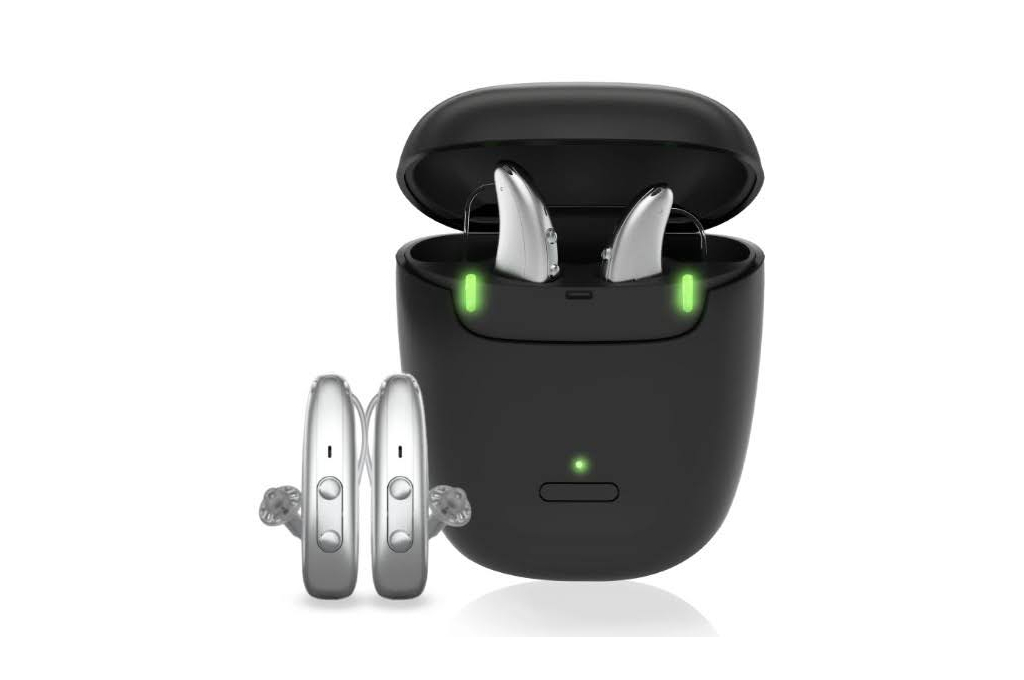
People with hearing loss now have more ways than ever to purchase hearing aids, including over-the-counter devices, traditional clinic-based care, and prescription hearing aids accessed through online hearing care services. While OTC options can work for some people with mild hearing loss, prescription hearing aids are often recommended when hearing needs are more complex or when professional fitting and follow-up care are important.
Horizon Go IX hearing aids are prescription devices offered through hear.com, which connects users with licensed audiologists for testing, fitting, and ongoing support. In this review, we look at how Horizon Go IX performs in everyday listening situations, what the audiologist-guided process is actually like, and who this type of hearing aid is best suited for.
How We Test Hearing Aids
At audiologists.org, every hearing aid is evaluated using a standardized, hands-on review process.
Our testing includes:
- real-world use across everyday listening environments (quiet, conversation, noise, and streaming)
- evaluation of comfort, fit, sound quality, app usability, and battery performance
- review of findings by licensed audiologists
What Our Product Tester Said About Horizon Go IX Hearing Aids
As part of our standardized review process, Horizon Go IX hearing aids were evaluated through hands-on, real-world use and documented using our internal product testing form.
Here’s what our tester, Sarah Graybill, noted during everyday use across multiple environments:
- Comfort and fit: During testing, the devices remained comfortable during full-day wear, including extended conversations and streaming. The fit felt secure and stable, without noticeable pressure points, even while wearing glasses.
- Sound clarity: Speech sounded clear and natural in quiet settings and one-on-one conversations without feeling overly amplified or artificial.
- Speech in noise: In moderate background noise, such as restaurants and group conversations, speech remained easier to follow compared to unaided listening, while background noise felt present but controlled rather than aggressively suppressed.
- App experience: Setup was straightforward, and the app allowed for easy volume and listening-mode adjustments without requiring technical expertise.
- Everyday usability: Bluetooth connectivity remained stable during phone calls and media streaming, with smooth transitions between listening and streaming modes.
These observations reflect first-hand testing and are reviewed by licensed audiologists to ensure recommendations are appropriate and accurate.

Horizon Go IX
-
$2,000-$5,000 per pair
-
Rechargeable
-
Mild to severe hearing loss
About hear.com
Hear.com, a partner of Signia, is a hearing care marketplace founded in 2012 that connects people with licensed audiologists and prescription hearing aids from a wide range of manufacturers.They work with many major hearing aid brands and help guide users through a free consultation, hearing testing, device selection, and follow-up care.
hear.com partners with audiologists at more than 2,000 locations across the U.S. and also offers at-home care options in some cases. Their Hearing Success Program includes regular check-ins, sound adjustments, and maintenance as users adapt to their hearing aids over time.
About Horizon Hearing Aids
Horizon hearing aids are hear.com’s in-house line of prescription hearing aids, first introduced in 2021 and developed using insights from millions of hearing care consultations.The current Horizon IX lineup, which replaced the earlier AX generation, is offered in three different technology levels (1IX, 5IX, 7IX) and two styles: Go IX (behind-the-ear) and Mini IX (completely-in-canal). A licensed audiologist recommends the most appropriate Horizon device and configuration based on hearing loss, lifestyle, and listening needs.
Horizon hearing aids typically cost between $2,000 and $5,000 per pair, which includes professional fitting and follow-up care, and are available exclusively through hear.com and its partner network of licensed audiologists.
Overview of Horizon Go IX Hearing Aid Core Features and Tech
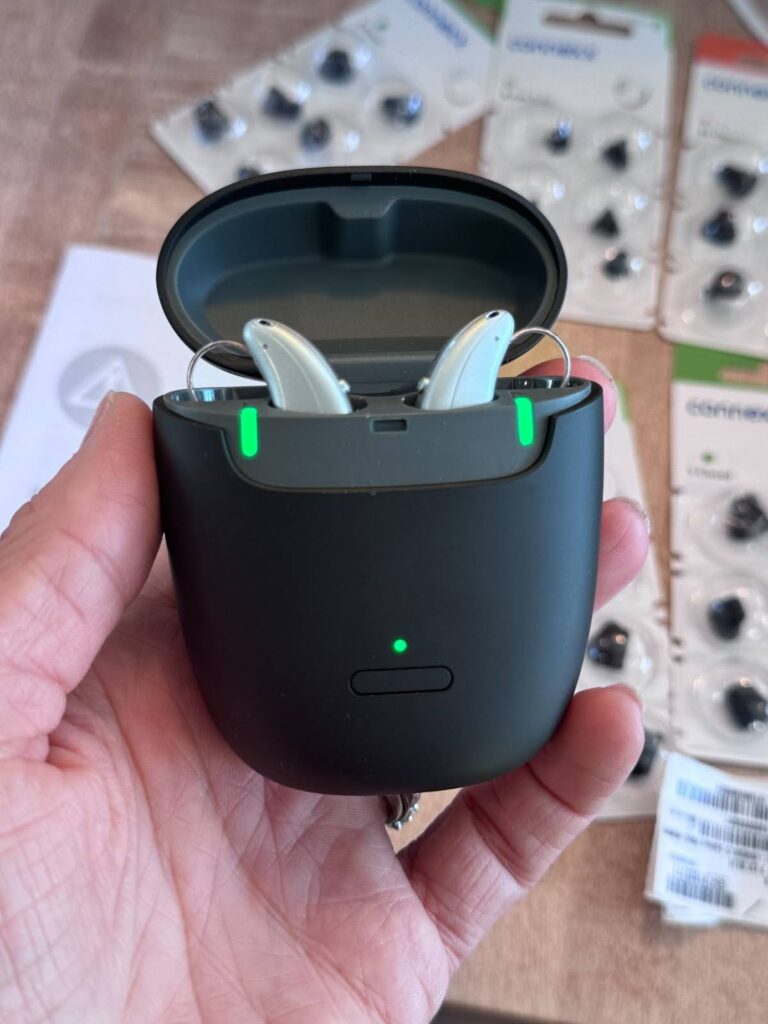
Horizon Go IX is a rechargeable, behind-the-ear prescription hearing aid designed for everyday use. It uses a dual-processor system, meaning speech and background sounds are processed separately. During testing, we noticed this helped keep conversations clearer without making surrounding noise feel overly muted.
Within the Horizon lineup, Go IX is the most advanced and versatile option while remaining surprisingly discreet, measuring approximately 2.7 centimeters smaller than an AirPod. The hearing aids offer Bluetooth connectivity for streaming audio from compatible phones, TVs, and vehicles. Users can access listening modes such as Speech Focus, Relax, and a 360-degree listening setting, and make basic adjustments using a smartphone app.They use rechargeable lithium-ion batteries and include a charging case designed to support all-day use.
Horizon Go IX hearing aids are professionally fitted and adjusted by a licensed audiologist, with in-home options available. Depending on the configuration recommended during the consultation, the devices are designed to support mild to severe hearing loss.
Horizon Go IX Hearing Aids Review at a Glance
| Feature | Horizon Go IX |
|---|---|
| Prescription or OTC | Prescription |
| Style | Receiver-in-canal (RIC) |
| Hearing Loss Range | Mild to severe |
| Battery | Rechargeable |
| Hearing test required | ✅ Yes – available through hear.com |
| Professional Fitted | ✅ Yes |
| Bluetooth Streaming | ✅ Yes – compatible with iPhone & Android |
| App Experience | ✅ Yes – available for basic adjustments |
| IP Rating | IP68 (dust- and water-resistant) |
| Trial Period | 45-day risk-free trial, money-back guarantee |
| Warranty | 3 years |
Unboxing and Setup
All hands-on testing in this review was conducted using the Horizon Go 7IX, the premium technology level within the Horizon Go IX model.
As part of our hands-on testing, we went through hear.com’s entire process, including a comprehensive in-home hearing test conducted over a video call with an audiologist. Everything needed for the appointment was shipped in advance, including the hearing aids and a tablet used for the consultation. This wasn’t a quick self-check or basic setup — it was a full evaluation designed to determine hearing needs and properly program the devices.
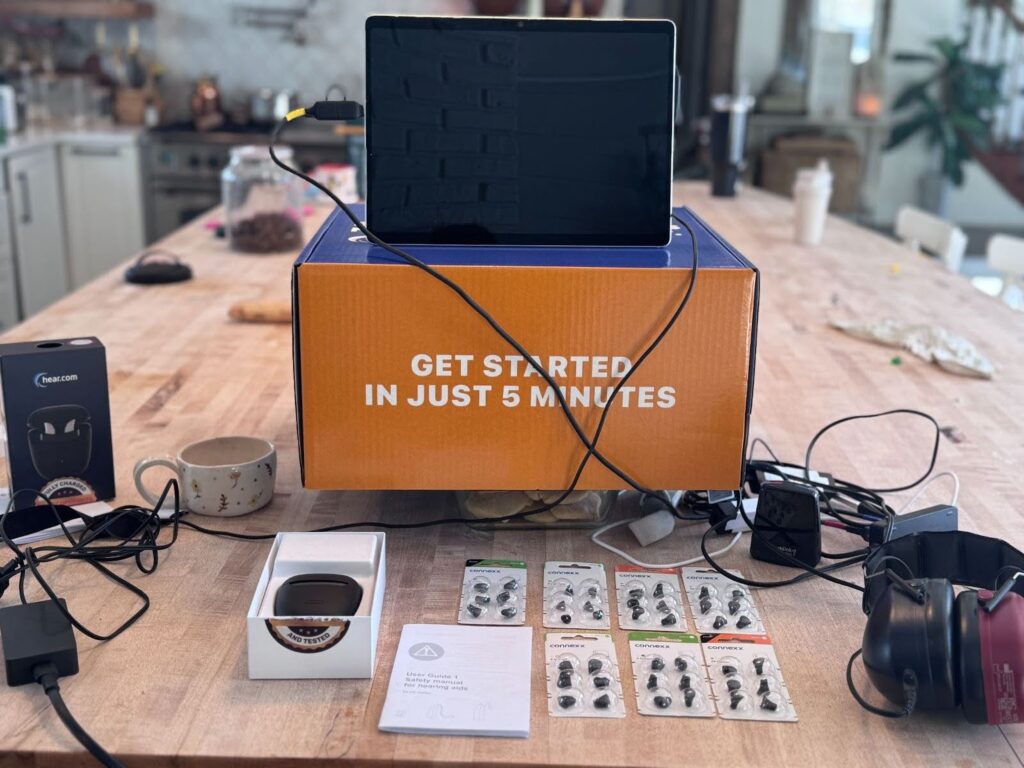
During the hearing assessment, the audiologist used several tools to understand where hearing support might be needed. This included a test that used gentle vibrations to evaluate how sound traveled through the ear and how the hearing nerve responded. During speech testing, we repeated words as they became quieter and identified speech mixed with everyday background sounds, similar to what you’d hear in an office. The audiologist shared the hearing test results using a simple chart showing hearing levels across pitches and volumes, which helped translate the data into understandable hearing-loss ranges.
Once testing was complete, the audiologist guided us through fitting the hearing aids during the same session. Controls and cleaning steps were clearly explained before being asked to sign paperwork on the tablet which officially started the 45-day trial period.
Fit and Comfort
During testing, Horizon Go IX hearing aids felt lightweight and comfortable during extended wear, and worked well with glasses. Hear.com included a starter kit with multiple dome options in different sizes, which gave us flexibility to adjust fit and comfort during the trial period.
The hearing aids stayed securely in place without slipping and were easily hidden behind the ear. One small issue we noticed was that, with longer hair, the sound of hair brushing against the devices could occasionally be amplified when turning her head. Otherwise, the devices did not shift, create pressure points, or cause noticeable fatigue by the end of the day.
Sound Performance
Overall, Horizon Go IX hearing aids delivered mostly natural-sounding audio during testing. The different listening modes performed in line with their intended purpose, though transitions between modes were manual rather than automatic. We didn’t notice echo or distortion, and speech generally sounded clear without feeling overly processed.
Performance in Background Noise
In noisy environments, like a busy home with multiple children, we noticed it was easier to focus on a single voice, even with multiple background distractions. When background noise reduction was enabled, it reduced distractions without feeling overly aggressive. Surrounding sounds remained recognizable rather than muffled, which helped maintain awareness of the environment.
App Controls and Sound Adjustments
The smartphone app felt intuitive for adjusting volume and switching between listening modes, though most advanced tuning is handled by an audiologist rather than through frequent manual adjustments. The on-device volume controls were slightly difficult to use without looking and occasionally led to accidental volume changes when repositioning the hearing aids.
During setup, the app detected two “left” hearing aids instead of a left and right pair, with limited explanation as to why this occurred. While this may have been a pairing fluke, we weren’t able to adjust volume independently for each ear, which could be a drawback for users with asymmetric hearing loss or uneven sound preferences.
Music, Streaming, and Bluetooth Connectivity
Music streaming was used frequently during testing, particularly during work and household tasks. Bluetooth connectivity was stable and easy to set up, with reliable pairing even when moving between different rooms. Audio and vocals were clear for phone calls and casual listening.
That said, music sounded more distant and less full than expected. During testing, audio streamed through only one hearing aid, which may have been related to the pairing issue. This made the listening experience feel less balanced and could become fatiguing over longer periods of time.
Battery Life and Charging
Horizon Go IX hearing aids use rechargeable lithium-ion batteries and are charged using the included charging case. Battery status was easy to monitor using LED indicators on the charging case as well as within the Horizon smartphone app, which clearly displayed charging status and remaining battery level.
According to the manufacturer, Horizon Go IX hearing aids are designed to last up to a full day on a single charge, depending on usage. During testing, we left the hearing aids out of the charging case for approximately 24 hours, and they still showed remaining charge.
Cost and Financing
Pricing for Horizon IX hearing aids varies based on hearing needs, recommended technology level, and the professional services included. On average, a pair of Horizon hearing aids ranges from $2,000 to $5,000, depending on configuration. Hear.com offers several financing options to help make costs more manageable and can also assist users in identifying and applying any available insurance benefits. All Horizon hearing aids come with a 45-day risk-free trial, giving users time to determine whether the devices are the right fit for their needs.
Horizon Go IX Hearing Aid Pros and Cons
Pros
✓ At-home virtual appointment with an audiologist.*
✓ Concierge-style experience feels supportive and premium.
✓ Lightweight, discreet, comfortable design.
✓ Helpful core listening modes and background noise reduction.
✓ 45-day trial period and strong warranty coverage.
*For those who qualify
Cons
✕ Minor technical hiccups during the hearing test and initial setup, which require some trial and error.
✕ Music streaming quality was not a standout strength.
✕ Price may be a barrier for some users.
✕ Sensitivity to occasional movement noise.
✕ No independent left/right volume control available in the app.
Horizon Go IX vs. Horizon Mini IX
Horizon Go IX and Horizon Mini IX are both prescription hearing aids from hear.com, but they’re designed for different priorities. Horizon Go IX is a discreet behind-the-ear (BTE) device available in four colors and built to support mild to severe hearing loss. Horizon Mini IX is a nearly invisible completely-in-canal (CIC) hearing aid available in two colors and designed for less complex hearing needs.
Horizon Go IX offers more advanced sound processing, Bluetooth streaming, and additional listening modes. For users who want greater flexibility and connectivity, Go IX is typically the better choice, while Mini IX may suit those with simpler needs and a strong preference for discretion.
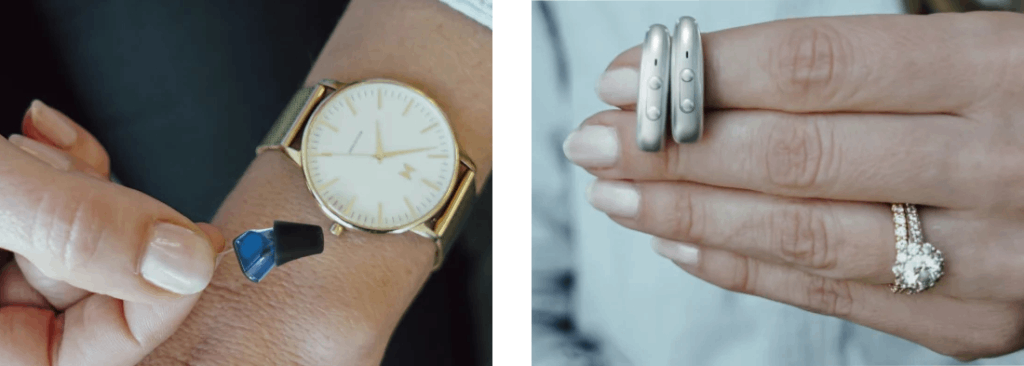
Horizon Mini IX on the left and Horizon Go IX on the right. Photo credit: hear.com
What Audiologists Say About Horizon Hearing Aids
Jessica Hinson, AuD, notes that because Horizon hearing aids are developed by Signia, a major prescription hearing aid manufacturer, they offer some of the strongest background noise reduction and speech clarity available. She emphasizes, however, that outcomes depend heavily on the skill and experience of the audiologist programming the devices. Hinson also points out that cost may be a barrier for some users and that Horizon hearing aids may be less durable than certain other prescription brands, particularly in environments with frequent sweat or humidity exposure. Overall, she considers Horizon hearing aids a strong option for individuals with more complex hearing loss who want professional audiology care delivered at home rather than in a busy clinic setting.
Who Should Purchase Horizon Go IX Hearing Aids?
Horizon Go 7IX is best for adults who want audiologist-guided care, strong speech clarity in everyday environments, and a premium, hands-on fitting experience, especially if immersive music performance isn’t a top priority. The at-home audiologist fitting, onboarding, and follow-up process may be especially appealing for first-time hearing aid users or anyone who values hands-on support.
Still exploring your options? Visit our guide on how to choose a hearing aid to explore other options and find the best fit for your hearing needs. The guide walks through key factors like hearing loss severity, lifestyle considerations, and the differences between prescription and over-the-counter devices to help you make a more confident decision.
Frequently Asked Questions
Are Horizon hearing aids covered by insurance?
Insurance coverage for hearing aids varies. Some private insurance plans and Medicare Advantage plans may offer partial hearing benefits, while Original Medicare does not cover hearing aids. Coverage details are typically reviewed during the hear.com consultation process. We recommend confirming benefits directly with your insurance provider.
Can I adjust Horizon Go IX hearing aids myself?
Users can make basic adjustments using the app or on-device controls. Advanced tuning is handled by an audiologist.
Are Horizon Go IX hearing aids rechargeable?
Yes. Horizon Go IX hearing aids come with a rechargeable battery and charging case.
Are Horizon Go IX hearing aids prescription or over the counter?
Horizon Go IX hearing aids are prescription hearing aids. They are not sold over the counter and require a hearing evaluation and fitting through a licensed audiologist via hear.com.
How do Horizon Go IX hearing aids compare to OTC hearing aids?
Horizon Go IX hearing aids differ from over-the-counter hearing aids in two main ways:
- They are professionally fit and programmed by an audiologist.
- They include ongoing support and follow-up care.
OTC hearing aids are self-fit devices intended for adults with perceived mild to moderate hearing loss and do not include professional fitting.
Is there a trial period for Horizon Go IX hearing aids?
Yes. Horizon offers a 45-day money-back trial period, allowing users to test the devices in real-world conditions. Exact terms vary and are discussed during the consultation and fitting process.

