
AI Hearing Aids: How They Work and Whether They’re Worth It

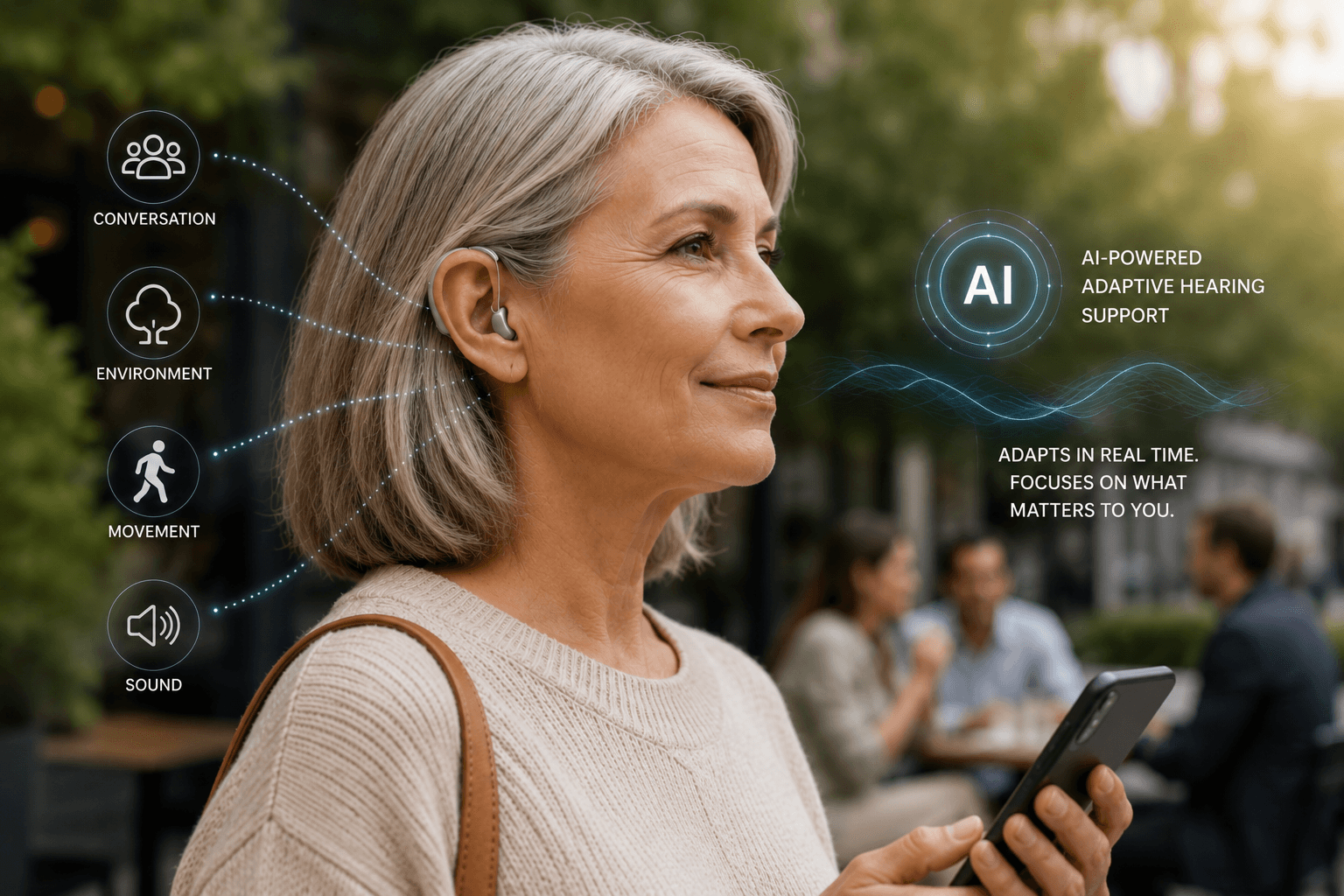
Few areas of hearing technology have advanced as quickly as hearing aids over the past decade. Today, artificial intelligence (AI) is one of the most heavily promoted features in the hearing industry. But what does AI actually do inside a hearing aid, and does it make a meaningful difference for people with hearing loss?
For many users, the answer is yes. AI-powered hearing aids can automatically adjust to changing listening environments, improve speech understanding in background noise, and reduce the need for manual adjustments throughout the day. However, understanding their value requires looking beyond marketing claims and focusing on the features that can improve real-world hearing experiences.
The 3 key takeaways
- AI hearing aids automatically adapt to changing listening environments — Advanced algorithms can adjust settings in real time, reducing the need for manual program changes.
- The biggest benefit is often improved speech understanding in noise — AI-powered features help separate speech from background sounds in challenging listening situations.
- The best hearing aid is not always the most advanced one — Proper fitting, programming, and follow-up care are often more important than choosing the highest technology level.
What “AI” actually means in a hearing aid
The term artificial intelligence (AI) is used widely in hearing aid marketing, but in most cases it refers to advanced algorithms that help hearing aids analyze sound and automatically adjust their settings in real time.
In most modern premium hearing aids, AI means machine learning algorithms — computational models trained on millions of sound samples that classify listening environments in real time and adjust the hearing aid’s processing parameters accordingly. These algorithms don’t follow a fixed rule set (“in a noisy restaurant, reduce background noise”). They recognize acoustic patterns and apply adjustments that have been statistically optimized for that acoustic signature, continuously, on a timescale of milliseconds.
Earlier hearing aids relied on rule-based processing: manually programmed settings for different environments (restaurant mode, music mode, outdoor mode) that required manual switching or basic automatic triggers. AI-driven processing is fundamentally different — it’s predictive and adaptive rather than reactive and rule-based.
How modern AI hearing aids work
Today’s AI-powered hearing aids continuously monitor the listening environment and identify different types of sound, such as conversation, background noise, music, or traffic. Based on what they detect, the devices can automatically adjust features like noise reduction, speech enhancement, and microphone directionality to improve listening comfort and clarity.
For many users, the result is fewer manual adjustments, improved performance in challenging listening situations, and a more personalized listening experience that can be refined over time through smartphone apps and audiologist fine-tuning.
Key AI features to understand before you buy
Not all AI hearing aids offer the same capabilities. While features vary by brand and technology level, the most common AI-powered functions focus on improving listening comfort, speech understanding, and personalization.
Automatic environment classification
Every major hearing aid brand now uses some form of AI-driven environment classification. The hearing aid’s microphones and onboard chip continuously sample the acoustic environment and classify it — cocktail party, one-on-one conversation, outdoor street noise, music, car interior — then apply the optimal processing preset automatically.
The sophistication of this classification varies by brand and technology tier. Premium AI platforms can distinguish dozens of acoustic environments, while entry-level automatic systems may differentiate only a handful.
Speech enhancement in noise
One of the biggest challenges for people with hearing loss is understanding speech in noisy environments. AI-powered hearing aids use advanced processing to help distinguish speech from background sounds and improve listening comfort in situations such as restaurants, meetings, and social gatherings, with considerably more precision than older directional microphone systems alone.
Brands like Phonak, Oticon, and Starkey each use distinct AI speech processing architectures, and their approaches differ meaningfully. Some optimize for speech intelligibility in a specific direction, while others attempt to preserve a broader soundscape while still enhancing speech. Which approach works better for you depends partly on your hearing profile and partly on your lifestyle — something your audiologist can help you evaluate during a trial period.
Personalized learning and user preferences
Through a companion smartphone app, you can provide feedback — adjusting volume or changing a setting in a particular environment — and the hearing aid’s AI learns to apply similar adjustments automatically the next time it recognizes that environment. Over weeks and months, the device’s defaults shift toward what works best for you specifically.
Some platforms also allow audiologists to review usage data remotely and make fine-tune adjustments to programming without requiring an in-office visit — a feature called remote fine-tuning.
Fall detection and health monitoring
Some AI hearing aids have expanded beyond strictly auditory functions into broader health monitoring. Starkey’s Genesis AI devices, for instance, include accelerometers that can detect falls and send an alert to designated contacts via a companion app. Step counting and physical activity tracking are also marketed as features in this platform.
For some users, particularly older adults with fall-risk concerns, these features may provide additional peace of mind.
Rechargeable Batteries and AI Processing Demands
Advanced AI features require additional processing power, which is one reason most premium hearing aids use rechargeable lithium-ion batteries. Battery life varies based on factors such as streaming, phone calls, and the use of advanced features, but many devices offer between 16 and 24 hours of use before recharging is needed.
Some hearing aids are still available with disposable batteries, though rechargeable models have become the industry standard.

Leading AI hearing aid platforms in 2026
The global hearing aid market is dominated by a handful of major manufacturers, each taking a slightly different approach to artificial intelligence. While the specific features vary by brand, most premium hearing aids now use AI-driven processing to improve speech understanding, automate adjustments, and personalize the listening experience.
Phonak Audéo Infinio — Phonak Audéo Infinio uses AutoSense OS to automatically adapt to changing listening environments. The premium Audéo Infinio Sphere model includes Phonak’s dedicated DeepSonic chip, which powers Spheric Speech Clarity 2.0 to help improve speech understanding in noisy settings. This dual-chip design is one of the platform’s most notable technological features.
Oticon Intent — Oticon markets Intent as the world’s first hearing aid with user-intent sensors. Its 4D Sensor technology gathers information from head and body movement, conversation activity, and the listening environment to help determine what the wearer is trying to focus on, adjusting support as listening needs change. Oticon’s broader BrainHearing™ approach emphasizes giving the brain access to the full sound environment while supporting speech clarity.
Starkey Genesis AI — Starkey Genesis AI combines automatic sound processing with app-based features through the My Starkey app. Starkey describes Genesis AI as making more than 80 million adjustments per hour and offering Edge Mode+, which uses AI to optimize sound quality on demand. The platform also includes health-monitoring features, including step counting, engagement tracking, and fall detection alerts.
Signia Integrated Xperience (IX) — Signia Integrated Xperience uses RealTime Conversation Enhancement to quickly analyze, augment, and adapt to changing conversation environments. Signia says the system analyzes the sound environment, boosts the voices of people the wearer is speaking with, and adjusts as conversations move or shift.
ReSound Nexia — ReSound’s platform emphasizes connectivity and app control alongside AI processing, including M&RIE (microphone and receiver in ear) designs that incorporate the natural acoustics of the ear itself as part of the input signal. The ReSound Smart 3D app allows users to personalize sound settings, use a “Hear in Noise” program, and request remote assistance from a hearing care professional.
Widex Moment Sheer — Widex has focused its AI and sound-processing strategy on delivering a more natural listening experience. The platform incorporates Widex PureSound™ technology, which uses ZeroDelay™ processing to reduce the timing differences that can occur when processed and direct sound reach the ear at slightly different times. Widex also offers MySound, an AI-powered feature that allows users to personalize sound settings for different listening environments.
Is AI worth the premium price?
AI hearing aids are typically positioned at the premium end of each manufacturer’s lineup and carry the highest price tags — typically $4,000–$8,000 per pair when purchased through an audiologist’s practice, depending on brand, technology level, and the services bundled with the purchase.
Whether AI is worth the additional cost depends on your hearing profile, lifestyle, listening needs, and budget:
AI may be worth the investment if you:
- Frequently move between different listening environments, such as restaurants, workplaces, outdoor settings, and phone calls
- Struggle to understand speech in background noise
- Are comfortable using smartphone apps and app-based features
- Want hearing aids that require fewer manual adjustments throughout the day
AI may be less important if you:
- Have mild hearing loss with minimal difficulty hearing in noise
- Spend most of your time in relatively quiet, predictable environments
- Prefer simpler technology and fewer app-based features
- Are working within a tighter budget
One point is worth emphasizing: a well-fitted hearing aid at a mid-tier technology level, properly programmed using real-ear measurement by a skilled audiologist, will outperform a premium AI device fitted poorly. Technology level and fitting quality are both necessary — neither alone is sufficient.
From an audiologist: are AI hearing aids worth it?
Ruth Reisman, Au.D., a licensed audiologist and medical reviewer for audiologists.org, believes AI-powered hearing aids represent a meaningful advancement in hearing technology — particularly for patients who struggle in complex listening environments.
“As an audiologist, I believe AI hearing aids do offer meaningful improvements for many patients, particularly in difficult listening environments like restaurants, meetings, and social settings. These devices can automatically adjust to changing sound environments, improve speech clarity, and reduce listening fatigue in a way that often feels more natural and seamless than older technology. While ‘AI’ can sometimes be used as a marketing term, many of the newer features do provide real-world benefits for the right patient.
That said, the technology itself is only part of the equation. Proper programming, verification, ongoing audiologic care, and aural rehabilitation therapy are all key components to successful hearing outcomes. For patients with active lifestyles or significant difficulty hearing in noise, premium AI hearing aids can absolutely be worth the investment. However, not every patient needs the highest level of technology to achieve excellent outcomes.”
How to evaluate AI hearing aids before committing
Most audiologists and hearing centers offer trial periods, often around 30–45 days. Use that time to test the hearing aids in the places where you need them most, not just in quiet settings.
During your trial period:
- Wear the devices in your most challenging listening environments.
- Keep notes on specific situations where performance impressed or disappointed you.
- Use app-based feedback tools or sound preference features, if available.
- Attend follow-up appointments so your audiologist can fine-tune based on your real-world experience.
When choosing the right hearing aid, one of the biggest factors in long-term satisfaction is the quality of the ongoing relationship with your audiologist and a willingness to fine-tune the fit over time. AI features can be helpful, but proper programming, follow-up care, and personalized adjustments often have an even greater impact on hearing outcomes.


Frequently asked questions
Do AI hearing aids work without a smartphone?
Yes. AI processing happens onboard the hearing aid chip itself and does not require smartphone connectivity to function. The smartphone app enhances AI-powered hearing aids by enabling personalized preference input, remote adjustment, and usage monitoring — but the core automatic adaptation features run independently on the device.
Are AI hearing aids available over the counter?
As of 2026, full-featured AI hearing aids from the major manufacturers are sold primarily through licensed audiologists and hearing instrument specialists. Some self-fitting OTC devices advertise AI features, but these typically offer more limited automatic adjustment and personalization features than premium prescription hearing aids. An audiologist can help you evaluate whether an OTC or prescription device is appropriate for your degree of hearing loss.
How long do AI hearing aids last?
Most modern hearing aids, including AI-powered models, are expected to last five to seven years with proper care. As AI software and hardware platforms advance rapidly, some users choose to upgrade more frequently. Your audiologist can advise on when your devices are no longer performing optimally.
Can AI hearing aids connect to my TV and phone?
Yes — most premium AI hearing aids support direct Bluetooth streaming from smartphones, and many can connect to televisions via a streaming accessory. Connectivity capabilities vary by brand and model; your audiologist can match you with a device that integrates with your specific devices.
Will AI hearing aids work for severe or profound hearing loss?
Yes, though the specific model and configuration matter. AI-powered hearing aids are available across a range of form factors, including behind-the-ear (BTE) models with greater amplification capacity suited for severe-to-profound loss. Your audiologist will match the technology to your audiogram.