
Technology’s Role in Modern Audiology

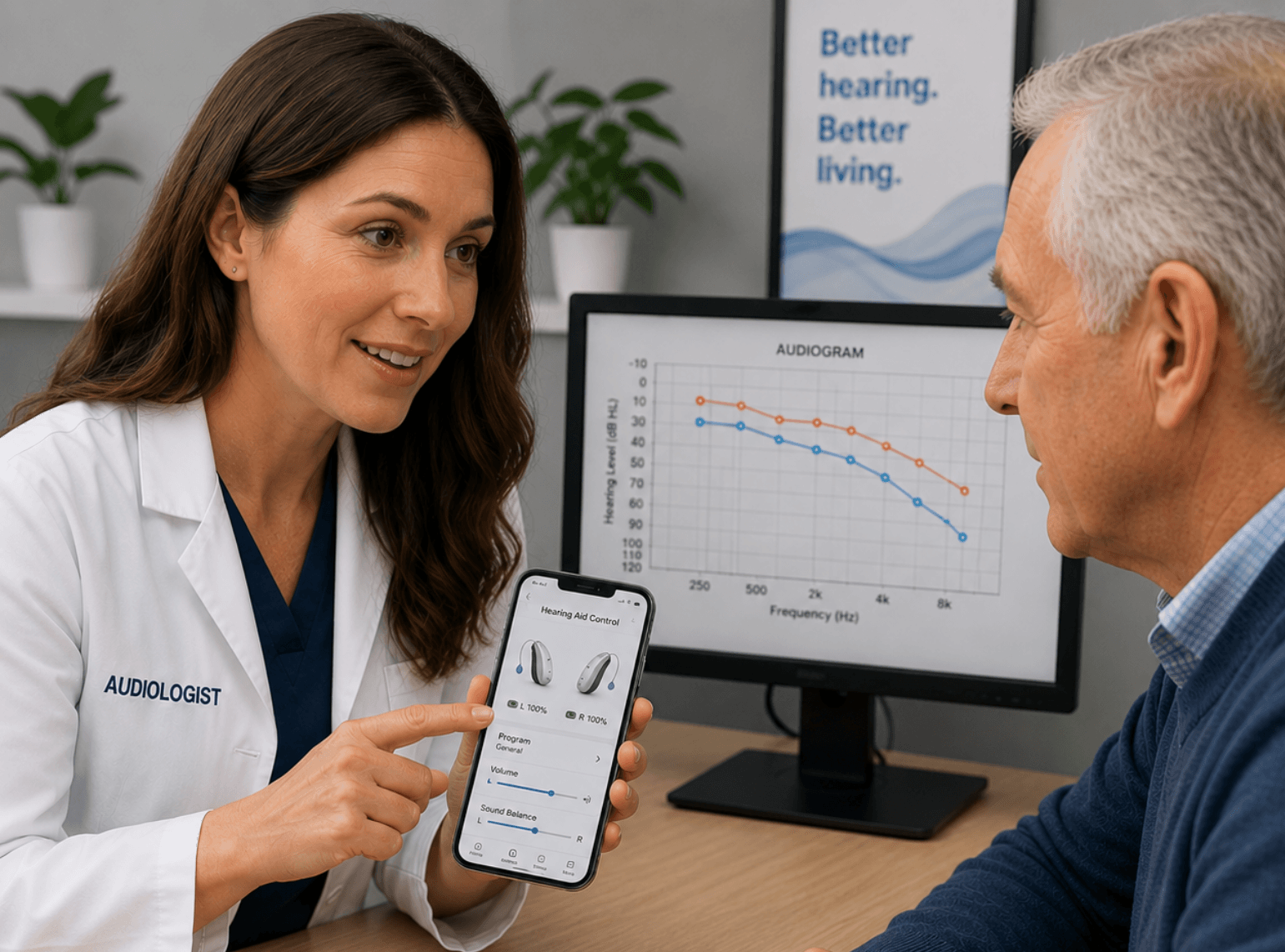
At first glance, today’s audiology office may look similar to what it did decades ago. The sound booths, headphones, and testing setups haven’t changed dramatically in appearance.
What has changed is how everything works behind the scenes.
Paper audiograms and handwritten test results have largely been replaced by integrated digital systems. Test data now flows directly into electronic records, creating clear, organized chart notes and simplifying the referral process. For patients, this often means audiogram results are easier to review, understand, and share with other providers.
The biggest transformation, however, has happened in hearing aid technology.
Modern hearing aids — some no larger than a coffee bean — are powered by advanced digital processing and, in many cases, artificial intelligence (AI). These systems allow audiologists to deliver more precise, personalized care than ever before.
This guide breaks down the key technologies used in modern audiology — what they do, how audiologists use them in clinical care today, and what they mean for your everyday hearing experience.
The 3 key takeaways
- Technology plays a big role in how your hearing care works today — From testing to hearing aids, most of what your audiologist does is supported by advanced digital tools.
- Not all hearing care, or hearing aids, are the same — Things like real-ear measurement, AI features, and more advanced fitting tools can make a real difference in how well you hear.
- The more you understand the technology, the better your results — Knowing what’s happening during your fitting and follow-up visits helps you ask the right questions and get the most out of your hearing aids.
Digital audiometry and diagnostic technology
Hearing testing remains the foundation of audiology, but the way it is performed has become more efficient and precise.
Modern audiometers are computer-based systems that present sounds, record responses, and generate audiograms automatically. Results are stored digitally and can be shared instantly with other providers.
Digital platforms have also enabled:
- Automated screening tests
- Tablet-based audiometry
- Easier integration with electronic health records
Objective hearing tests — such as auditory brainstem response (ABR) and otoacoustic emissions (OAE) — also benefit from digital processing. These systems can analyze thousands of data points quickly, making testing faster and more accessible, especially for infants and patients who cannot respond behaviorally.
This ultimately means faster testing, more accurate results, and clearer explanations of hearing profiles.
As these systems continue to improve, they may expand access to hearing testing in more community and remote settings.
Real-ear measurement: the gold standard in hearing aid verification
Real-ear measurement (REM), also called probe microphone testing, is one of the most important tools used during a hearing aid fitting.
During REM, a thin microphone is placed in the ear canal alongside the hearing aid. This allows the audiologist to measure exactly what sound is reaching the eardrum rather than relying only on manufacturer settings or software estimates.
Research has consistently shown that manufacturer “first-fit” settings often under-amplify the high frequencies that are critical for speech clarity. REM helps audiologists verify and adjust hearing aids, so amplification more closely matches evidence-based prescription targets and the patient’s individual hearing needs. Studies have also found that patients are more likely to prefer REM-verified fittings compared to manufacturer default settings.
Although REM is widely considered a best practice in hearing aid fitting, it is not performed in every clinic. Audiologist Dr. Jessica Hinson notes that hearing industry discussions have long referenced concerns that REM is still only being used by about 30% of professionals; however, she says that more audiologists appear to be adopting REM and other verification tools as clinics increasingly emphasize evidence-based fitting practices.
Digital hearing aids
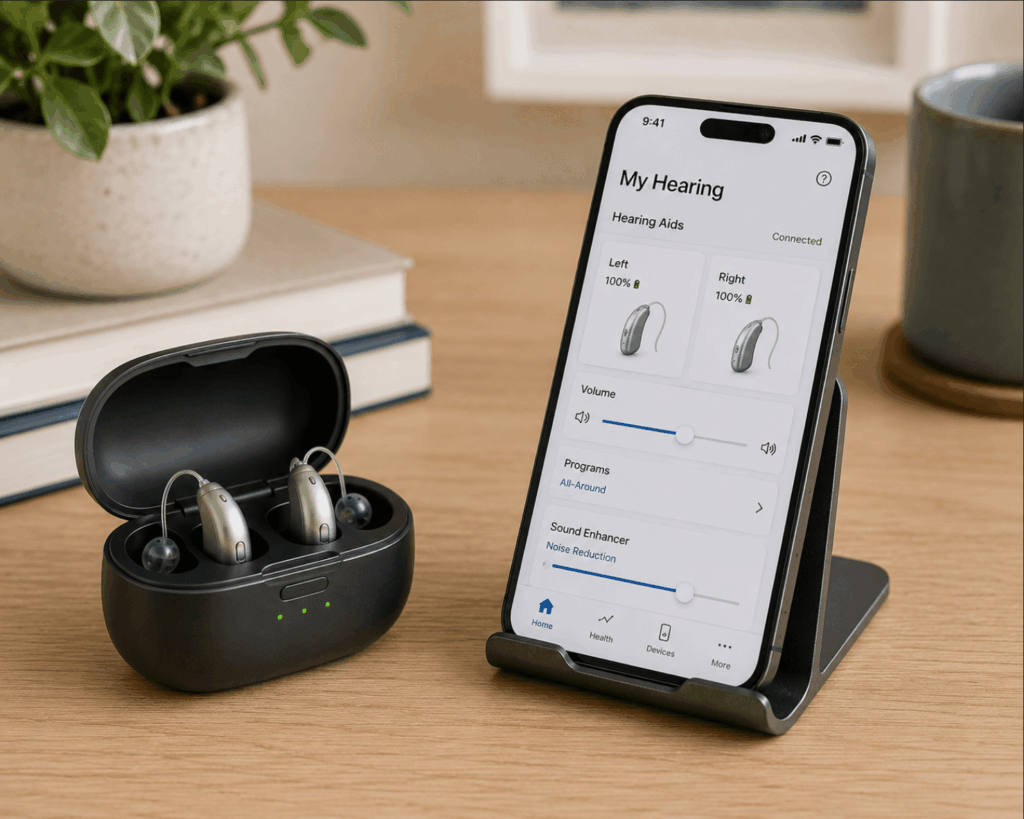
Modern hearing aids are sophisticated digital signal processors — miniaturized computers that sample incoming sound thousands of times per second, analyze it, apply programmed amplification and processing algorithms, and deliver the processed output to the ear in real time with delays measured in fractions of a millisecond. Understanding the major processing technologies helps patients evaluate what hearing aids can and cannot do, and why the difference between a basic and a premium device is not just price.
Digital signal processing
The core function of a modern hearing aid is digital signal processing (DSP): converting incoming analog sound to a digital signal, applying amplification according to the patient’s prescribed targets, and reconverting to analog for output. DSP enables frequency-specific amplification — providing different amounts of gain at different frequencies to match the individual’s audiogram precisely — which analog devices could only approximate. It also enables a range of advanced processing functions that analog technology could not support at all.
Directional Microphone Systems
Most modern hearing aids include multiple microphone inputs that can be processed to preferentially amplify sound from specific directions — typically from in front of the listener, where conversations most often originate — while reducing amplification of sound from other directions.
In noisy environments like restaurants, this directional processing can make conversation more accessible than it would be with omnidirectional amplification alone. Advanced adaptive directional systems continuously adjust the spatial focus of the microphone pattern in response to changing environments.
Noise reduction algorithms
Noise reduction systems identify steady background sounds — like fans or traffic — and reduce their impact. These features improve comfort and reduce listening fatigue, but their ability to improve speech-in-noise is often more modest than many patients expect.
Understanding this distinction helps manage expectations appropriately — noise-cancelling hearing aids may make noisy environments more comfortable, but they do not replicate normal hearing in noise.
Wireless connectivity and Bluetooth
Modern hearing aids can connect wirelessly to smartphones, TVs, tablets, and other devices using Bluetooth technology. This allows phone calls, music, videos, and other audio to stream directly into hearing aids, often improving clarity compared to listening through speakers alone. Many patients specifically look for Bluetooth hearing aids that support direct streaming and smartphone connectivity features.
Newer hearing aids increasingly use Bluetooth Low Energy (LE) Audio technology, which is designed to improve sound quality, reduce battery consumption, and support newer accessibility features. One emerging example is Auracast™ broadcast audio, which may allow public venues such as airports, theaters, lecture halls, and places of worship to stream audio directly to compatible hearing aids and earbuds.
Most hearing aids today also include apps that let you adjust volume and settings, change listening programs, locate lost hearing aids, monitor battery life, and receive remote adjustments from your audiologist.
Wireless technology has transformed hearing aids from standalone amplification devices into connected communication tools that integrate more seamlessly into everyday life.
Artificial Intelligence in hearing aids
AI in hearing aids is designed to reduce how often you need to adjust settings manually. Modern systems can recognize different listening environments — such as quiet rooms, restaurants, traffic, or group conversations — and automatically adjust sound processing to improve comfort and speech understanding.
Some hearing aids can also learn user preferences over time based on manual adjustments, gradually adapting their default settings to align with the wearer’s listening habits.
Several manufacturers have expanded AI-related features beyond sound processing into broader health and wellness tracking. Starkey, for example, introduced features through its Thrive app that include fall detection alerts, step tracking, activity monitoring, brain-health monitoring, medication reminders and more.
These features are not standard across all hearing aids, and hearing aids are not replacements for dedicated medical monitoring devices. However, they reflect a growing trend toward hearing technology that supports both communication and broader health awareness.
Rechargeable technology
The transition from disposable zinc-air batteries to rechargeable hearing aids — primarily using lithium-ion technology — has been one of the most practically significant improvements in hearing aid usability in the past decade. For many patients, particularly older adults with reduced manual dexterity, the small size of disposable batteries made changing them a significant challenge. Rechargeable hearing aids eliminate that friction. Now the user simply needs to place the device in the charging case overnight, and it is ready for a full day of use in the morning.
Modern lithium-ion rechargeable hearing aids typically deliver a full day of use — including several hours of wireless streaming — on a single charge. Portable charging cases provide additional charges for travel. The technology has matured to the point where rechargeable options are available across nearly all hearing aid styles and price tiers, making it a practical choice for most patients rather than a premium upgrade.
Cochlear implant technology
Cochlear implants are used for individuals who receive limited benefit from hearing aids alone.
Unlike hearing aids, which amplify sound, cochlear implants bypass damaged parts of the inner ear and directly stimulate the auditory nerve using electrical signals. Modern systems include an internal implanted component and an external sound processor worn behind the ear or on the head.
Many cochlear implant users also wear a hearing aid in the opposite ear — known as bimodal hearing. Audiologist Dr. Jessica Hinson notes that some cochlear implant manufacturers now partner with hearing aid companies to create compatible systems that work together more seamlessly. In some cases, users can stream phone calls and audio to both ears simultaneously and manage both devices through a single smartphone app rather than switching between separate systems.
Modern cochlear implant processors also incorporate many of the same technologies found in advanced hearing aids, including directional microphones, noise reduction, Bluetooth streaming, and wireless connectivity.
Although cochlear implants can be life-changing for many recipients, they do not restore natural hearing. Ongoing research continues to focus on improving speech understanding in background noise, music perception, and overall sound quality.
Teleaudiology
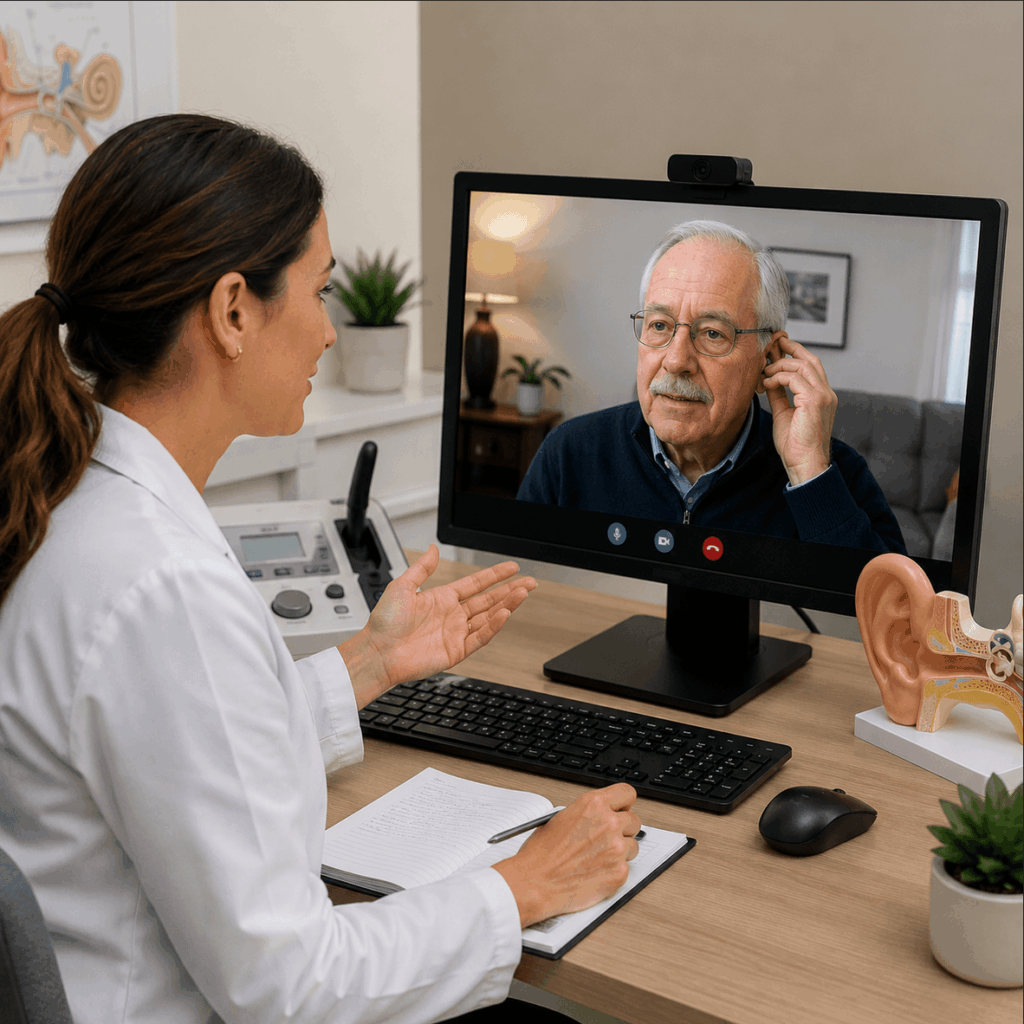
Teleaudiology allows certain hearing healthcare services to be provided remotely using video platforms, smartphone apps, and connected hearing technology.
Today, teleaudiology is commonly used for:
- Hearing aid follow-up appointments and remote adjustments
- Tinnitus counseling
- Auditory rehabilitation and communication training
- Hearing screenings and, in some cases, remote hearing testing using validated systems
One of the biggest public health benefits of teleaudiology is improved access to care. Remote services can help patients who live far from an audiology clinic, have mobility limitations, or prefer the convenience of receiving certain services from home.
The rapid expansion of telehealth during the COVID-19 pandemic also accelerated adoption of remote hearing care. Research suggests that for some services — particularly hearing aid follow-up care and counseling — teleaudiology can provide outcomes similar to in-person visits when used appropriately.
Smartphone integration
Smartphones now play a central role in modern hearing care. In addition to controlling hearing aids and streaming audio, smartphones also support hearing screening tools that allow users to check their hearing at home.
Some validated apps, like the Mimi Hearing Test, can provide reasonably accurate estimates of hearing thresholds under the right testing conditions. However, results can be affected by background noise, headphones, and testing environment, so these remote self-assessments are best viewed as screening tools rather than replacements for a comprehensive hearing evaluation.
Consumer technology companies have also expanded hearing-related accessibility features. Devices such as Apple AirPods and smartphones now include features like sound exposure monitoring, live listening assistance, and, in some cases, over-the-counter hearing support functions.
These technologies have helped lower the barrier to awareness by allowing people to get an indication of their hearing status easily and privately, potentially prompting clinical follow-up for those who discover a concern.
The over-the-counter hearing aid category
OTC hearing aids, introduced in 2022, created a new category of self-fitting hearing aids for adults with perceived mild-to-moderate hearing loss that can be purchased without a prescription or in-person fitting.
OTC devices must meet FDA performance and labeling requirements, including defined output limits designed to prevent over-amplification, and are available through pharmacies, electronics retailers, and online channels.
The technology in OTC hearing aids varies significantly. Some devices include advanced features such as Bluetooth streaming, smartphone apps, directional microphones, and rechargeable batteries, while others function more like basic sound amplifiers with limited customization options.
The OTC category has expanded access to hearing technology for many adults, particularly those seeking lower-cost or more convenient entry points into hearing care. However, choosing between OTC vs. prescription hearing aids still depends heavily on the individual’s hearing loss, communication needs, medical history, and comfort with self-fitting technology.
While OTC devices can help some users, they do not replace a comprehensive hearing evaluation. A full audiologic assessment can identify medically significant hearing problems, determine the exact type and degree of hearing loss present, and help patients understand whether OTC or professionally fit prescription devices are more appropriate for their situation.
What technology cannot replace
Even with major advances in hearing technology, hearing care still depends on clinical expertise. Hearing aids cannot diagnose the cause of hearing loss, smartphone tests cannot identify medical conditions, and remote care cannot fully replace a physical examination when one is needed.
Technology has improved access, convenience, and personalization in audiology, but it works best when guided by a trained hearing professional. The most effective hearing care combines advanced technology with accurate diagnosis, individualized treatment, and ongoing clinical support.
Why hearing technology matters
Technology’s role in modern audiology is expansive and growing. Digital audiometry, AI-powered hearing aids, real-ear measurement, cochlear implants, teleaudiology, and consumer hearing health platforms have collectively transformed a profession that began with tuning forks and paper audiograms into one of the most technologically sophisticated areas of non-physician healthcare.
For patients, that transformation is largely good news — more precise diagnosis, more capable devices, more accessible care, and a future in audiology that holds genuine promise of biological solutions to hearing loss that current technology can only manage rather than correct. Understanding the technology behind modern audiology helps you make better decisions, ask better questions, and engage more productively with the care that these remarkable tools, in the right clinical hands, can deliver.


Frequently asked questions
What is the difference between a basic and a premium hearing aid?
The core function — amplification based on the patient’s audiogram — is present at all price tiers. What distinguishes premium devices is the sophistication of the processing: more advanced directional microphone systems with better performance in complex noise environments, more refined AI-based scene classification and automatic adjustment, more Bluetooth streaming channels and connectivity options, and — in some cases — health monitoring features. Premium devices also typically offer more flexibility in fine-tuning by the audiologist, which matters for complex hearing loss configurations. Whether the performance difference justifies the cost difference depends on the individual patient’s lifestyle, listening demands, and degree of hearing loss.
How does Bluetooth streaming work in hearing aids?
Modern Bluetooth-enabled hearing aids connect wirelessly to smartphones, televisions, and other compatible devices, allowing audio to be streamed directly into the hearing aids rather than being transmitted acoustically through the air (which introduces background noise and distance-related degradation). Many hearing aids use a proprietary near-field protocol for low-latency connections with specific devices, alongside standard Bluetooth for broader compatibility. Some hearing aid companion apps allow users to adjust volume, programs, and settings from their phone — effectively giving the hearing aid wearer direct control over their devices without needing to visit the audiologist for minor adjustments.
Is teleaudiology appropriate for my hearing care?
For many routine audiology services — hearing aid follow-up and fine-tuning, tinnitus counseling, auditory rehabilitation, and hearing screening — teleaudiology can deliver outcomes comparable to in-person care. Services that require physical examination — cerumen management, middle ear assessment, pediatric behavioral audiometry, vestibular testing — are not well-suited to remote delivery. The best approach depends on your specific clinical needs, your comfort with technology, and the availability of telehealth services from qualified audiologists in your area. Your audiologist can advise whether telehealth is appropriate for your situation.
What is the difference between a hearing aid and a cochlear implant?
A hearing aid amplifies sound — it makes incoming acoustic signals louder and more tailored to the wearer’s audiogram, but it still relies on the wearer’s cochlear hair cells to convert sound into the nerve signals the brain can interpret. A cochlear implant, by contrast, bypasses the damaged cochlea entirely and delivers electrical stimulation directly to the auditory nerve via a surgically implanted electrode array. Cochlear implants are indicated for individuals with severe to profound sensorineural hearing loss for whom hearing aids provide insufficient benefit — patients whose hair cell damage is too extensive for amplification to overcome. The two technologies address fundamentally different levels of auditory system function.
Can I use an OTC hearing aid instead of seeing an audiologist?
For some adults with mild-to-moderate hearing loss who are motivated, technology-comfortable, and have no complicating medical or audiological factors, OTC devices can provide meaningful benefit. However, purchasing an OTC device without a professional evaluation means bypassing a process that can identify medically significant conditions, characterize your hearing loss accurately, and ensure the device you select is appropriate for your specific audiometric profile. At a minimum, a comprehensive audiological evaluation before or alongside OTC device use is a sound investment — it gives you the information you need to make a genuinely informed choice rather than a guess about your own hearing.